
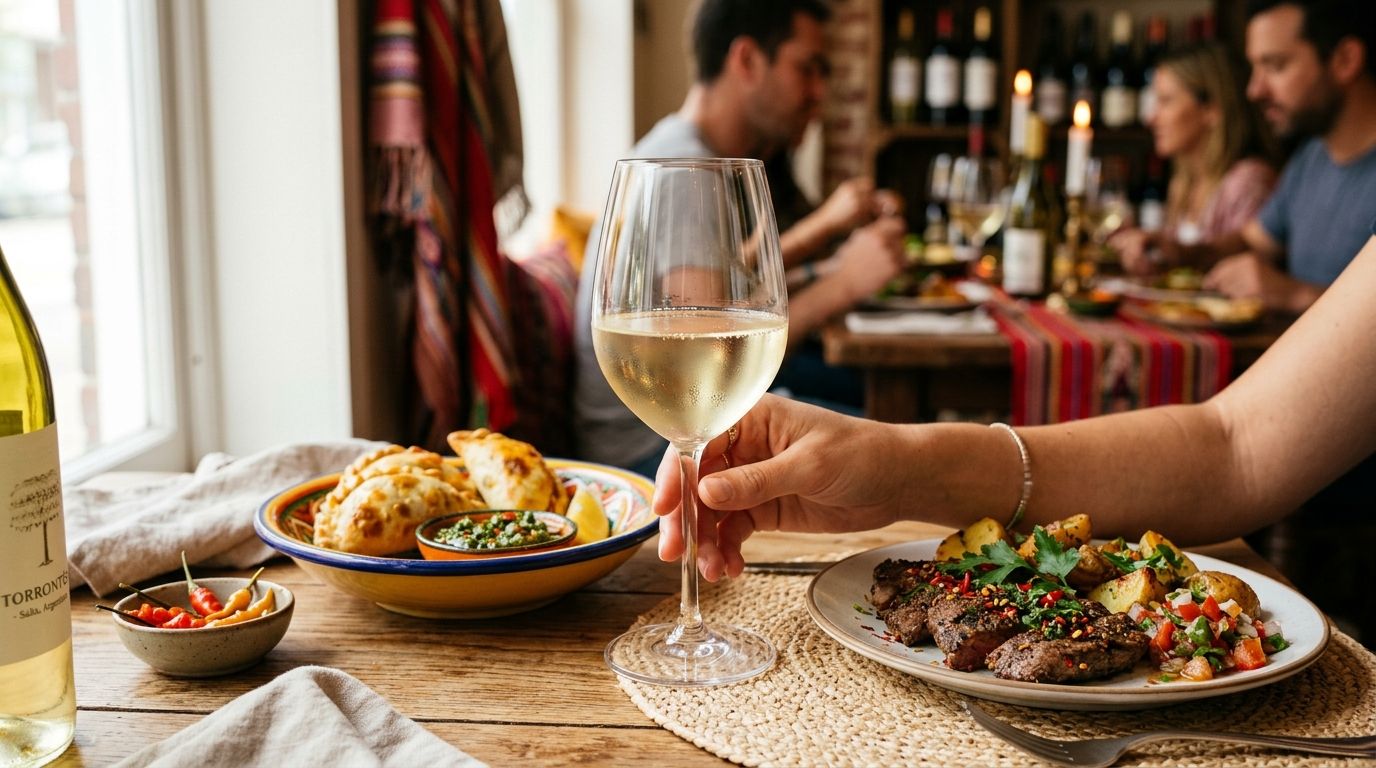
Torrontés wine for spicy Latin cuisine works because its floral aromatics and bracing acidity cut through capsaicin heat instead of fighting it, cooling the palate between bites of chili-forward dishes. Home cooks plating ceviche, mole, elote, or tacos al pastor need a white that survives cumin, achiote, and fresh chile without turning bitter or syrupy-sweet — most reds and oaked whites can't do that job.
- Torrontes wine cuts chili heat with floral lift and bright acid — Buy for spicy Latin cuisine nights in 2026.
- Serve it colder than a Chardonnay, around 45-50°F, or the aromatics turn flat against heat.
- Riesling and Gewurztraminer are the closest substitutes when a table wants more sweetness against spice.
- A mixed tasting flight beats betting one bottle on a menu that runs from ceviche to mole.
Why Torrontés matters for spicy Latin cuisine
Capsaicin, the compound behind chili heat, binds to pain receptors on the tongue and gets worse with alcohol and tannin — a well-known reason big reds feel harsher next to a fiery salsa. Torrontés sidesteps both problems: it's almost always fermented dry-to-off-dry with low tannin, so there's nothing structural to clash with the burn.
The grape's signature is a nose that reads like Muscat — orange blossom, peach, a little white pepper — because Torrontés is a cross of Muscat of Alexandria and Criolla Chica, grown mainly in Argentina's high-altitude Cafayate Valley in Salta. That altitude keeps acid levels up even as the fruit ripens, which is the exact combination — aromatic lift plus real acidity — that Latin cuisine's chili-cumin-citrus profile calls for. Search behavior around spicy food pairing skews toward people who already own the protein and the salsa and just need the bottle; this guide assumes that's you.
How to pair Torrontés wine with spicy Latin cuisine
Read the chili level before you pick the bottle
A mole poblano and a habanero-forward salsa macha are not the same heat problem, and Torrontés wine performs differently across that range.
- Taste the dish before you pour, not after
- Note the dominant spice — cumin, achiote, chile de árbol, chipotle
- Rate the heat 1 to 5 before matching acid and aromatics
- Check for a citrus or cream component that can soften a pairing
- Watch for char or smoke notes from a grill, which push toward more acid, not less
Chill Torrontés colder than your other whites
Most home fridges hold wine around 50-55°F, which is fine for an unoaked Chardonnay but too warm for an aromatic white going up against chili heat — the aromatics turn heavy and the acid softens right when you need it sharp.
- Target 45-50°F, colder than a typical Sauvignon Blanc pour
- Chill the bottle a full two hours in the fridge before guests arrive, not twenty minutes
- Use an ice pack in a wine sleeve or bucket to hold temperature through a long, multi-course meal
- Re-chill between pours if the bottle sits out during a spicy tasting menu
- Pour smaller glasses so the wine warms up before the next round, not the one in the glass
Match Torrontés to specific Latin dishes
Ceviche, elote, tacos al pastor, and mole each stress a different part of the wine, so match by course rather than by the whole menu at once.
- Ceviche and aguachile: the acid in Torrontés mirrors the lime already in the dish
- Elote and street corn: the wine's sweetness perception balances cotija and chili powder
- Tacos al pastor: pineapple and achiote play well against stone-fruit notes
- Mole poblano: the floral lift softens chocolate-chili bitterness better than a red would
- Empanadas (beef or chicken): the wine's brightness cuts fat from the pastry
Build a flight instead of a single bottle
One bottle rarely survives a menu that runs from cold ceviche to a slow-simmered mole, so treat spicy Latin dinners as a tasting problem, not a single-pairing problem.
- Open with Torrontés for raw or citrus-forward courses
- Add an off-dry white for the spiciest course on the table
- Keep a dry rosé in reserve for guests who want body without tannin
- A 12-bottle world tour tasting set is a fast way to build that range without guessing bottle by bottle
- Serve courses in ascending heat order so the flight tracks the spice, not the other way around
Stock a backup for guests who don't like floral whites
Not every guest wants an aromatic wine, and Torrontés wine's Muscat-like nose is polarizing at some tables in 2026 the same way it was a decade ago.
- Keep a dry Albariño or Sauvignon Blanc as a lower-aromatics backup
- A dry rosé covers guests who want more body without red-wine tannin
- Riesling, served off-dry, is the closest substitute when a table wants sweetness against heat
- Gewürztraminer works as a backup when guests want even more perfume than Torrontés offers
- Skip heavily oaked whites entirely — oak and chili heat rarely get along
Skip the oak, skip the high alcohol
High-alcohol wines make capsaicin burn feel worse, and oak tannin does the same job a red wine's tannin does against chili — it clashes.
- Avoid oaked Chardonnay with anything above a mild heat level
- Avoid high-tannin reds like Cabernet Sauvignon on the spiciest courses
- Watch for wines above roughly 14.5% ABV on the hottest dishes
- Skip overly sweet dessert wines on savory-only heat — they read as cloying, not cooling
“If the Torrontés bottle feels chilled enough for Chardonnay, it's still too warm for a plate of chili-heavy food.”
Torrontés wine vs. the alternatives for spicy Latin cuisine
| Option | Best for | Key limitation |
|---|---|---|
| Torrontés | Chili-forward dishes needing floral lift and bright acid | Low tannin means it won't stand up to heavy char or grilled meats |
| Riesling (off-dry) | Dishes combining sugar and heat, like mango salsa or glazed pork | Residual sugar can feel cloying against savory-only heat |
| Gewürztraminer | Very aromatic Latin-fusion dishes with achiote or curry notes | Lower acid than Torrontés, flattens next to citrus-heavy ceviche |
| Albariño | Seafood-based spicy dishes like aji amarillo shrimp | Less floral lift, underwhelms with dessert-leaning spice |
| Dry rosé | Guests wanting body without tannin clash | Not aromatic enough for heavy cumin or achiote dishes |
Verdict: Torrontés wine is the strongest single-bottle choice for a spicy Latin cuisine table in 2026, and Riesling is the best backup when the menu skews sweeter-hot.
Common mistakes with Torrontés and spicy Latin cuisine
- Serving it at standard white-wine fridge temp (50-55°F) instead of colder — the aromatics turn heavy and syrupy right when the dish needs them sharp
- Reaching for a high-alcohol bottle on the hottest course — alcohol amplifies capsaicin burn instead of cooling it
- Buying one bottle for a menu that spans mild to fiery — a wine that shines on ceviche can flop against mole
- Assuming "aromatic" means "sweet" — most Torrontés is dry, and guests expecting Moscato-level sugar feel shorted
- Pouring it in a large, bowl-shaped red wine glass — the aromatics that make Torrontés work against spice need a smaller white wine glass to concentrate
Browsing the full wine selection before a spicy-menu dinner is the fastest way to line up a Torrontés-plus-backup combination instead of showing up with one bottle and hoping.
FAQ
What is Torrontés wine?
Torrontés is Argentina's signature white grape, a cross of Muscat of Alexandria and Criolla Chica grown mainly in the high-altitude Cafayate Valley in Salta. It produces aromatic, floral wines with orange blossom and peach notes and bright acidity from the elevation.
Is Torrontés wine sweet or dry?
Most Torrontés is fermented dry despite its Muscat-like floral nose, which is the most common misread of the grape. A small amount of off-dry Torrontés exists, so check the label if sweetness matters.
What food pairs best with Torrontés?
Torrontés pairs best with ceviche, elote, tacos al pastor, empanadas, and mole because its acidity and aromatics cut through chili heat, citrus, and char without clashing. It also works with Southeast Asian dishes carrying similar chili-and-herb profiles.
Is Torrontés better than Riesling for spicy food?
Torrontés is the stronger all-around match for savory Latin heat because it stays dry and keeps acid high without sugar interfering. Off-dry Riesling wins specifically when the dish itself carries sugar, like a mango salsa or a glazed pork course.
How cold should Torrontés be served?
Serve Torrontés at 45-50°F, colder than a typical Chardonnay pour, so the aromatics stay tight against chili heat instead of turning heavy. Two hours in the fridge before serving is a safer target than a quick twenty-minute chill.
Where does Torrontés wine come from?
Torrontés comes primarily from Argentina, with the Cafayate Valley in Salta producing the most recognized examples due to its high altitude and strong diurnal temperature swings. Smaller plantings exist elsewhere in South America but Argentina defines the style.
Can Torrontés pair with mole or curry-style Latin dishes?
Yes, Torrontés' floral lift softens the chocolate-and-chili bitterness in mole poblano better than most dry reds, which tend to clash with the dish's tannin-on-tannin structure. It works the same way against achiote-heavy curry-adjacent Latin fusion plates.
One last thing
The detail most guides skip: Torrontés shares parentage with Muscat of Alexandria, which is why a wine with zero relation to Riesling or Gewürztraminer still smells like it belongs in the same aromatic family. That genetic quirk is exactly why it reads as a floral, almost-sweet-smelling wine while pouring bone dry — and why it's the single bottle most likely to survive a Latin menu that swings from raw citrus to slow-cooked chili without a second bottle on standby.