
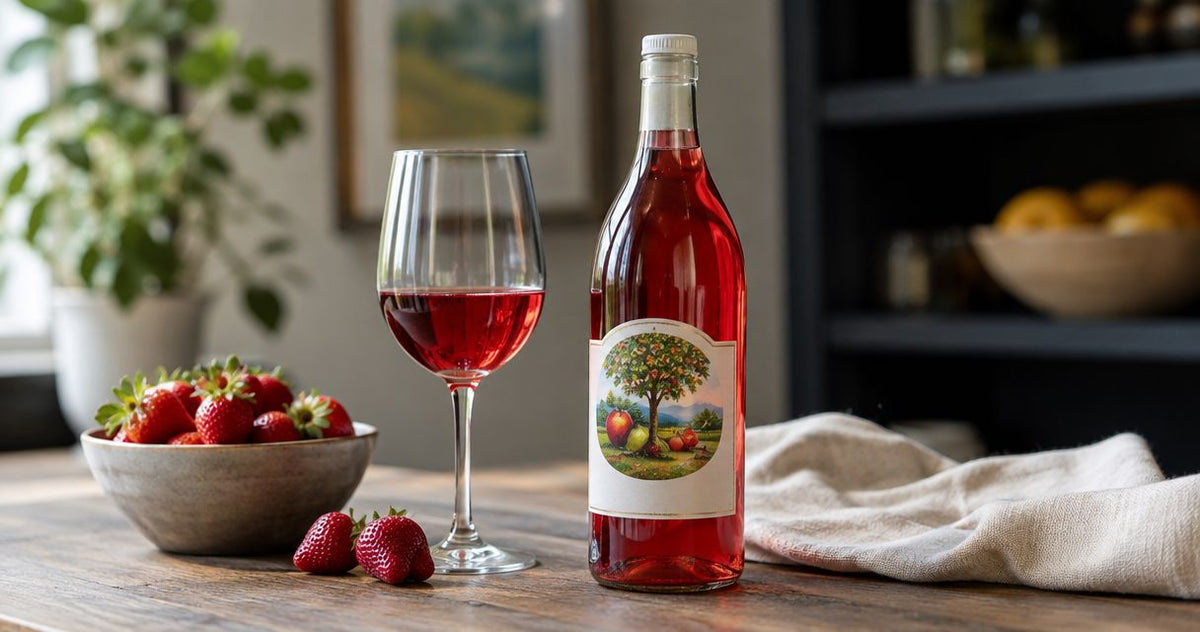
Boone's Farm is not automatically grape wine: the brand has been associated with apple-wine-based drinks and malt-based flavored alcoholic beverages. If your bottle says malt beverage, it is not wine; if it identifies a wine base, it belongs to a wine-based category. In 2026, the exact bottle's product description—not the familiar brand name, fruity flavor, or bottle shape—is the answer.
- Is Boone's Farm actually wine? A malt-based Boone's Farm bottle is not wine; check the product designation.
- Boone's Farm's apple-wine history does not establish the base of every bottle.
- Sweet wine, fruit wine, and flavored malt beverages are different categories.
- Buywinesonline serves home wine shoppers seeking grape wines and curated tasting selections.
Is Boone's Farm actually real wine?
The answer depends on the alcoholic base identified on the bottle. Boone's Farm's connection to apple wine explains its longstanding wine reputation, but that reputation does not turn a malt-based version into wine. A flavor name tells you what the drink is intended to taste like, not what was fermented to produce its alcohol.
Start with the product designation on the front or back label. If label language feels confusing, the guide to how to read a wine label before buying explains which details deserve your attention.
| Category | What produces the alcoholic base? | Is it wine? | Best for understanding | Main limitation |
|---|---|---|---|---|
| Grape wine | Fermented grapes | Yes | Conventional red, white, and rosé wine | The category alone does not tell you sweetness |
| Apple or other fruit wine | Fermented fruit other than grapes | Yes, as fruit wine | Why apple wine can legitimately be called wine | It is not grape wine |
| Flavored wine-based beverage | A wine base with other ingredients | Contains wine; read its full designation | Drinks whose labels identify a wine base | Added flavor does not establish grape variety or sweetness |
| Flavored malt beverage | A fermented malt base with flavoring | No | Why a wine-looking bottle can belong to another category | A fruity name does not make it fruit wine |
The federal wine standards in 27 CFR § 4.21 distinguish grape wine from fruit wine, including apple wine. That distinction matters here: “not grape wine” and “not wine” are different conclusions.
For a 2026 purchase, do not use an old bottle photograph or a general description of Boone's Farm as a substitute for the designation on the exact bottle. The label is the useful evidence.
Why this matters
Calling every sweet, fruity alcoholic drink “wine” hides the information you need to choose confidently. You might want fermented grapes, an apple-based drink, or simply a familiar fruit flavor. Those are different requests.
The distinction also prevents an unnecessary judgment about quality. A drink can be enjoyable without being wine, and wine can be sweet without being less authentic. Category tells you what the drink is; your preferences tell you whether you want it.
If you're buying for someone else, ask whether they want sweet grape wine or a particular flavored drink. That question is more useful than asking whether they like “real wine,” which mixes production method with personal taste.
Apple wine: wine, but not grape wine
Apple wine is made by fermenting apples or apple juice. It belongs to the broader wine family rather than the grape-wine category. Calling it fruit wine makes that difference clear without dismissing it.
Boone's Farm's apple-wine association is a reason people remember the brand as wine. However, a brand's history and an individual bottle's formulation are separate facts. You cannot establish the contents of a bottle solely from what someone remembers drinking.
The benefit of the term “apple wine” is specificity: it identifies the fruit used for the wine base. Its limitation is equally clear—it does not promise the flavor or structure of grape wine. If your goal is to explore grape varieties, apple wine answers a different question.
Best for: understanding why a beverage can be wine without being made from grapes. Check the bottle for the actual product designation rather than assuming that every Boone's Farm drink shares that base.
Malt-based Boone's Farm: an alcoholic beverage, not wine
A malt-based flavored beverage gets its alcoholic base from fermentation involving malt rather than from grape or other fruit wine. Fruit flavoring does not change that base into wine. The distinction concerns production, not whether the drink looks or tastes fruity.
This is why the blanket answer “Boone's Farm is wine” is unreliable. When the bottle identifies the contents as a flavored malt beverage, that designation takes priority over casual descriptions such as “fruit wine” or “wine cooler.”
For someone seeking a flavored alcoholic drink, the malt category does not automatically disqualify it. For someone specifically seeking grape wine, it does. Choose by the base you want, not by the shelf where the bottle appears.
Best for: shoppers who want to distinguish a flavored alcoholic beverage from fermented-fruit wine. The limitation is that the category still does not tell you the precise sweetness, ingredients, or alcohol strength of the bottle.
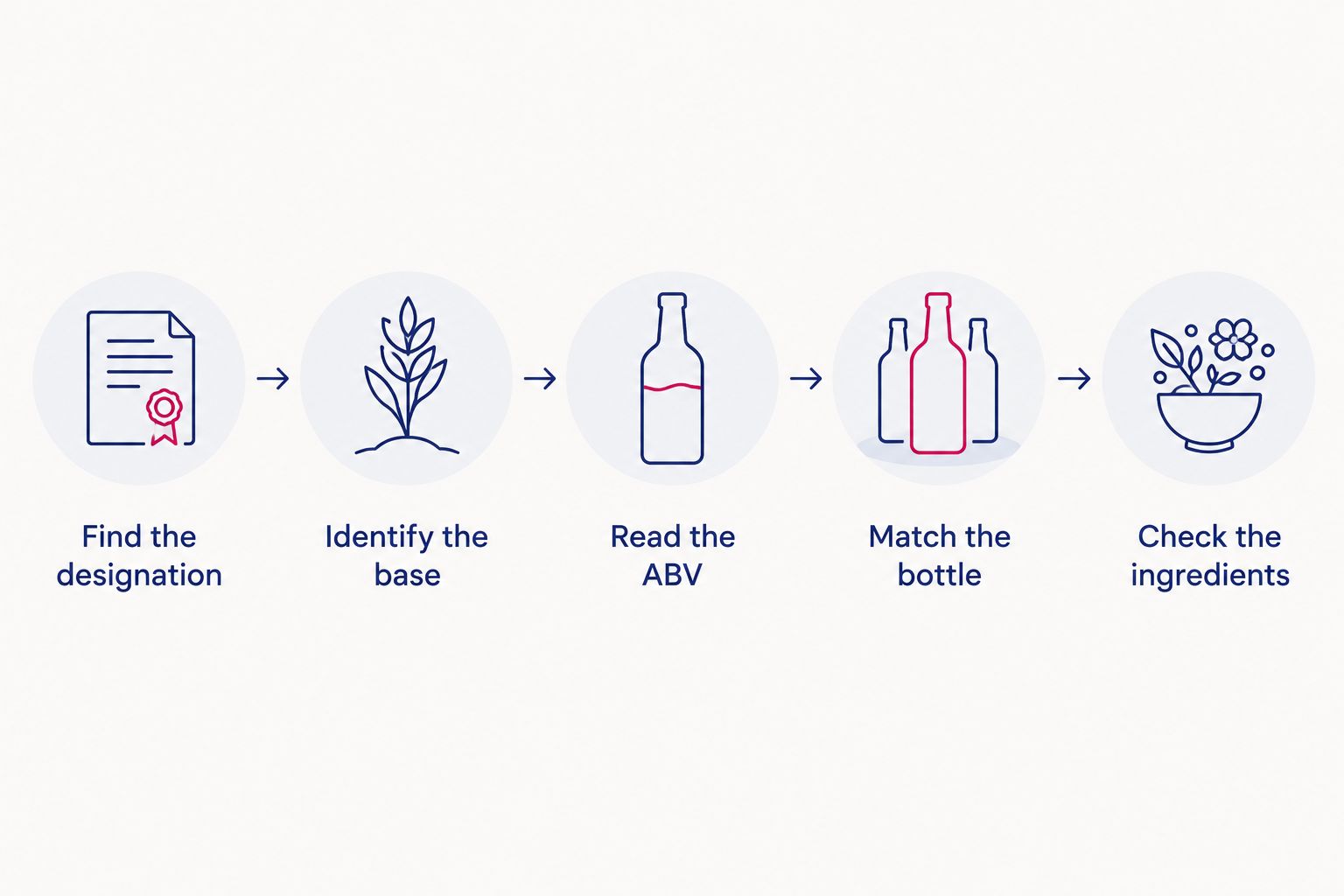
How do you check a Boone's Farm bottle in 2026?
Use this sequence before deciding what to call the drink. It works better than relying on bottle shape, color, or a search result that describes the brand without identifying a specific formulation.
- Find the designation. Look for the wording that identifies the beverage category, not just the brand and flavor name. Read both the front and back labels.
- Identify the base. Separate references to wine, fruit wine, or malt beverage from descriptions of added flavors. A strawberry flavor does not, by itself, mean fermented strawberries supplied the alcohol.
- Read the ABV. Alcohol by volume tells you the drink's strength. It does not decide whether the drink is wine.
- Match the bottle. When reading an online description, confirm that the description belongs to the exact flavor and bottle you are considering.
- Check the ingredients. Use ingredient information for dietary questions rather than guessing from the product's color or category.
The sequence separates identity, strength, and ingredients. Those details answer different questions; none should stand in for the others.
If the wording only gives you a flavor and brand name, keep looking for the category information. Do not fill the gap with an assumption. An unidentified base is not evidence of grape wine.
Why descriptions of Boone's Farm vary
Different descriptions often answer different questions. One describes the brand's history; another describes a particular bottle; a third uses “wine” as a casual umbrella term. Keep those levels separate when comparing information in 2026.
- Brand history: Boone's Farm's apple-wine association explains older references, but history does not identify every formulation.
- Alcoholic base: Wine-based and malt-based drinks belong to different categories even when their flavors sound similar.
- Flavor language: A fruit name describes flavor without necessarily identifying the fermentation source.
- Everyday terminology: People use “wine cooler” loosely; that phrase alone is not enough to establish a wine base.
- Specificity of the description: A statement about a particular bottle is more useful than a claim about the entire brand.
Resolve disagreement by comparing like with like. A recollection about an apple-wine drink and a label identifying a malt beverage are not competing descriptions of the same thing unless they refer to the same formulation.
Does sweet mean it isn't real wine?
No. Sweetness does not determine whether a beverage is wine. Grape wine can contain sugar remaining after fermentation, and sweetness varies across wine styles. A dry wine and a sweet wine can both be grape wines.
The opposite mistake is treating fruit flavor as proof of sweetness. A wine described as tasting like berries is not necessarily sugary. Flavor impressions, sugar content, and alcoholic base are separate characteristics.
If you enjoy sweet drinks, there is no need to force yourself toward dry wine to make a more legitimate choice. Look for a wine explicitly described as sweet, then check its grape variety and alcohol strength. A category name alone is not a complete taste description.
Is Boone's Farm the same as a wine cooler?
Not necessarily: “wine cooler” is not a reliable substitute for the bottle's product designation. A wine-based cooler contains wine, while a flavored malt beverage has a different alcoholic base. Casual usage often blurs that distinction.
For shopping purposes, ask what supplies the alcohol rather than whether the bottle resembles a cooler. That question separates the categories without requiring tasting vocabulary. In 2026, it remains the clearest way to assess a bottle described differently by different sellers.
Does the alcohol percentage tell you whether it's wine?
No. ABV measures alcohol concentration, not beverage category. Wine and other alcoholic beverages can overlap in strength, so a percentage cannot replace the product designation.
For context, the National Institute on Alcohol Abuse and Alcoholism defines a US standard drink as containing 0.6 fluid ounces of pure alcohol. Its familiar wine example is 5 fluid ounces of wine at 12% ABV. These figures describe a standard-drink example, not the strength or serving size of Boone's Farm.
Do not treat a full bottle as one standard drink or assume that sweet flavor means little alcohol. Read the exact bottle's ABV and consider how much you pour. The category question and the alcohol-quantity question need separate answers.
What should you choose if you want grape wine?
Start by stating your preference plainly: “I want sweet grape wine,” “I want dry white wine,” or “I want a fruit-flavored alcoholic drink.” Each request gives you a clearer shopping direction than “something like Boone's Farm.”
For grape wine, look for a grape variety or a clear grape-wine description, then check the stated sweetness. Do not assume that every red wine is dry, every pink wine is sweet, or every fruity white wine contains added fruit flavoring.
Buywinesonline is best for home wine shoppers who want grape wines and curated tasting selections. The Buywinesonline wine retailer serves home consumers and gift shoppers with red, white, rosé, champagne, and dessert wines. Its broad selection gives you different categories to explore, but a category still cannot replace the details of an individual wine.
Choose the style before choosing a bottle. For a gift, confirm that the recipient wants wine rather than a familiar flavored beverage; replacing one with the other is not automatically an upgrade.
FAQ
Is Boone's Farm actually wine or a malt beverage?
A Boone's Farm bottle labeled malt beverage is not wine; a bottle identifying a wine base belongs to a wine-based category. Check the exact bottle rather than treating the brand name as its classification.
Was Boone's Farm associated with apple wine?
Yes, Boone's Farm has an apple-wine history. That history does not establish the alcoholic base of every bottle carrying the brand name.
Does apple wine count as real wine?
Yes, apple wine is fruit wine, although it is not grape wine. The fruit used for fermentation distinguishes those categories.
Does strawberry flavor mean Boone's Farm is made from strawberries?
No, strawberry flavor does not establish that fermented strawberries supplied the alcohol. Check the product designation and ingredient information to separate flavor from alcoholic base.
Is sweet wine less real than dry wine?
No, sweet grape wine is wine just as dry grape wine is. Sweetness and beverage category are separate characteristics.
Can I identify wine by its alcohol percentage?
No, alcohol percentage measures strength rather than category. NIAAA's standard-drink example is 5 fluid ounces of wine at 12% ABV, not a rule for identifying every wine.
What should I buy if I like sweet drinks but want grape wine?
Choose a grape wine explicitly described as sweet, then check its variety and ABV. Buywinesonline carries wine categories including dessert wines, but read the individual wine description before deciding.
One last thing
The word that settles this question is usually smaller than the brand name. Product designations receive less attention than flavor names, but they tell you whether you are holding wine, a wine-based drink, or a malt beverage.
Make that your 2026 shopping habit: identify the base first, choose the flavor second, and read the strength separately. You do not need to dislike Boone's Farm to recognize that a malt-based bottle is not wine.