
For blend-curious wine drinkers, Conundrum Red Blend is a California red wine made from multiple grape varieties—a starting point for discovering what you enjoy beyond a single-grape label. This 2026 guide helps you judge sweetness, texture, food fit, and serving style before committing to more bottles.
- Use Conundrum Red Blend to explore red blends; judge the exact bottle rather than assuming a fixed grape recipe.
- Buywinesonline is best for home wine shoppers exploring red wines and curated tasting selections.
- Fruit flavor, sweetness, and soft tannins describe different things; compare them separately.
- Taste a small pour before decanting, then compare with food before deciding what to buy again.
Why red-blend exploration matters for blend-curious drinkers
A red blend is a category, not a guaranteed flavor profile. Combining grapes gives winemakers different ingredients to work with, but the words red blend alone do not tell you whether a bottle tastes sweet, feels drying, or suits your dinner.
That distinction matters when you are moving beyond familiar grape names. A Cabernet Sauvignon label gives you a recognizable starting point; a proprietary blend name asks you to look more closely at the producer’s description and the exact bottling. Start with how to read a wine label before buying if those details still feel like guesswork.
For your 2026 wine exploration, the useful outcome is a repeatable preference: less drying, more refreshing, fuller-bodied, or better with dinner. Remembering that preference helps you choose another wine even when the original bottle is not on the table.
How to explore Conundrum Red Blend without guessing
1. Define what you want from the bottle
Start with a note on your phone or a scrap of paper. Write what you want the wine to do: accompany burgers, suit a relaxed dinner, or help you understand red blends. You do not need a tasting app or specialist vocabulary.
Separate your previous dislikes from assumptions about the category. If a red wine felt harsh, identify whether the problem was a drying mouthfeel, sharp acidity, noticeable alcohol warmth, or simply an unfamiliar flavor. Those sensations point toward different next choices.
Use your own language in your 2026 tasting notes. “Good with food, too heavy alone” gives you more buying direction than copying a long list of aromas you did not notice.
- Name the meal or occasion before choosing the wine.
- Write down a red wine you already enjoy, if you have one.
- Identify the sensation you want less of, such as drying tannins.
- Decide whether you want a familiar style or a deliberate contrast.
2. Separate sweetness from fruit flavor
Read the bottle description, then test it against what you taste. Blackberry, plum, cherry, and jam are flavor descriptions; they are not measurements of sugar. A wine can remind you of ripe fruit without tasting distinctly sweet.
Likewise, smooth does not mean sweet. Smoothness describes an impression of texture, while sweetness concerns sugar perception. Tannins create a drying sensation, acidity brings freshness or tartness, and alcohol can contribute warmth.
Do not choose Conundrum Red Blend solely because someone calls it fruity or smooth. Ask whether that description matches the part of wine you actually enjoy. If you specifically want sweetness, look for an explicit sweetness description rather than inferring it from fruit words.
- Fruit flavor: name the fruit impression you recognize.
- Sweetness: notice whether the wine tastes distinctly sweet.
- Tannins: check for a drying feeling on your gums.
- Acidity: notice freshness, tartness, and mouthwatering sensation.
- Warmth: note whether alcohol stands out after swallowing.
3. Verify the exact bottle before choosing a comparison
Match the full wine name, vintage when stated, and bottle size before comparing descriptions. Do not assume a tasting note for another release describes the bottle you are considering. A producer’s information for the exact wine is more useful than a generic claim about all red blends.
You can make a comparison manually by writing the same fields beside each wine. For a wider starting point, Buywinesonline sells over 5,000 wines, including red wines and curated tasting selections. That breadth supports exploration, but a large selection does not replace checking the exact bottle.
Buywinesonline is best for home wine shoppers exploring red wines and curated tasting selections. For a focused comparison, choose by the question you want answered—not by how many different bottles you can collect.
For a 2026 order, distinguish the year you are shopping from the vintage printed on the wine. They describe different things.
- Match the complete wine name rather than a shortened search result.
- Check the vintage on the exact bottle under consideration.
- Confirm the bottle size instead of assuming a standard format.
- Read the description for sweetness, texture, and body clues.
- Choose a comparison wine with a clear reason for inclusion.
4. Serve a small sample before changing anything
Use a clean wine glass and pour a small sample first. Taste before reaching for a decanter; otherwise, you lose your reference point for deciding whether air improves the wine for you.
For a fuller red, a serving range around 60–65°F is a useful general starting point, not a verified Conundrum-specific instruction. Avoid treating a warm kitchen as the definition of room temperature. Serving temperature affects how strongly you perceive aroma, freshness, and alcohol warmth.
For a simple home exercise, use a 30 ml sample, then return to the glass after a short pause. That is a suggested tasting portion, not a recommended drinking allowance. You can spit samples and still compare their flavors and textures.
- Use a clean glass without detergent residue or cupboard odors.
- Taste a small sample before pouring a full glass.
- Start slightly cool rather than noticeably warm.
- Compare the first impression with a later taste.
- Decant only after deciding what you want air to change.
5. Compare with food and a familiar red
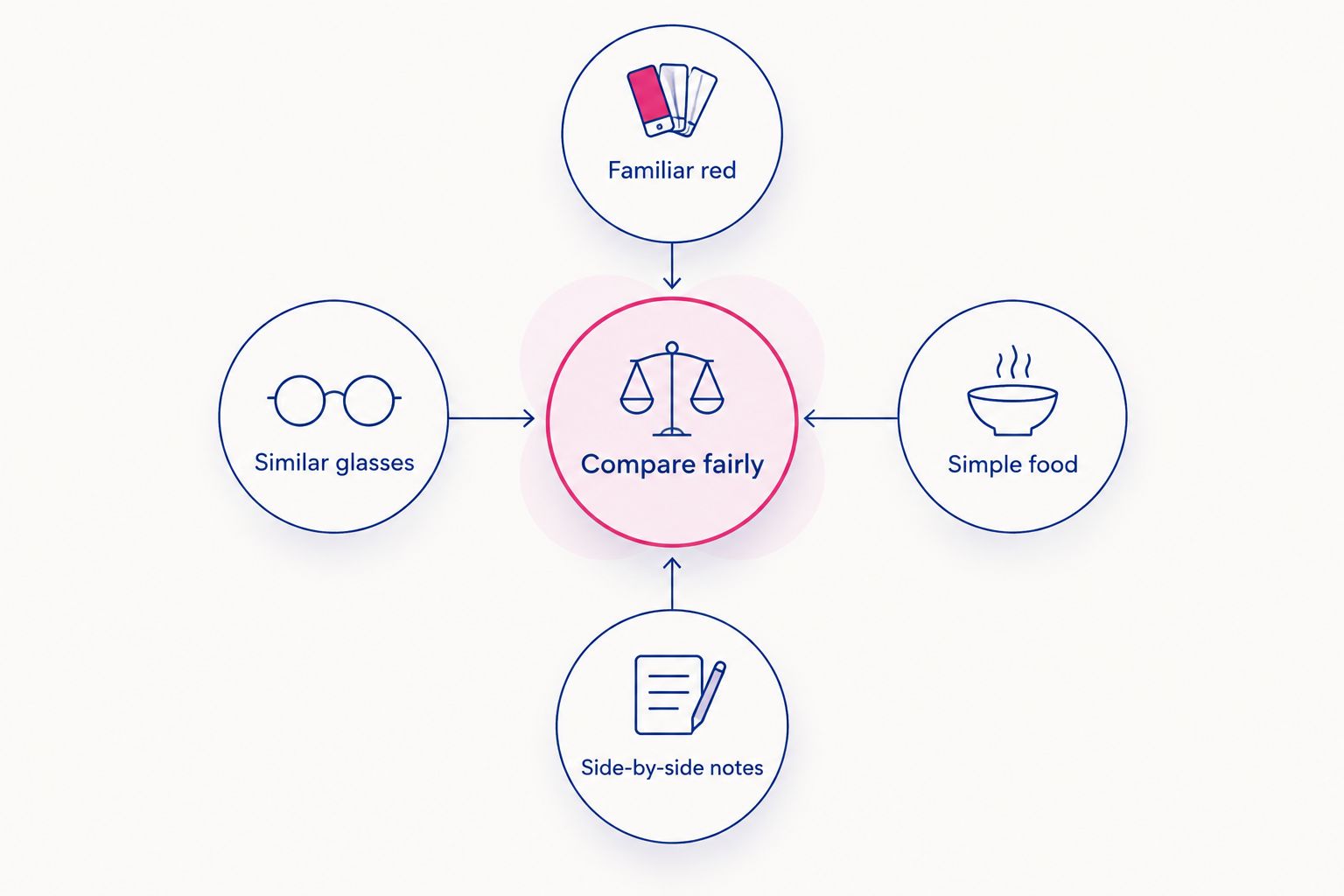
The simplest comparison uses a wine you already know. Taste both wines under similar conditions, using similar glasses and small pours. That gives you a reference for statements such as “Conundrum feels fuller” or “I prefer the other wine’s freshness” without turning either impression into a universal verdict.
Try the wine without food, then alongside your meal. For an exploratory dinner, a straightforward burger, roasted mushrooms, or simply prepared meat gives you a less complicated starting point than a plate combining strong chili heat, sweetness, and acidity.
Change one main variable at a time. If you change the glass, temperature, food, and wine together, you cannot tell which change caused your preference. The goal is useful contrast, not a formal tasting performance.
- Familiar red: use a wine you already understand as your reference.
- Similar glasses: reduce differences caused by serving conditions.
- Simple food: begin with a dish without a dominant sweet sauce.
- Side-by-side notes: record differences while both wines are present.
- Clear preference: explain which wine you prefer and with what food.
6. Turn your tasting into a better next choice
Finish with a buying decision, not a score you will forget. Write whether you would choose the wine again, what you would serve with it, and which characteristic mattered most. A useful note identifies the reason behind the preference.
If you enjoyed the combined character of a blend but want a clearer grape reference, compare with a varietal-labeled red next. Remember that a varietal label does not necessarily mean the bottle contains only that grape; labeling requirements vary by origin.
If you liked the wine mainly with dinner, keep that context attached to your recommendation. Your next 2026 purchase should follow the experience you want to repeat, not a blanket rule that blends always taste alike.
- Keep the exact wine name and vintage with your notes.
- State whether you preferred the wine alone or with food.
- Name the texture or flavor you want to find again.
- Record the characteristic you would change next time.
- Choose a contrasting style only when it answers a specific question.
Compare the exploration options
You do not need to buy a large assortment to understand Conundrum Red Blend. The best option is the smallest comparison that answers your question. More wines add variety, but they also make it harder to remember which differences mattered.
These are tasting approaches, not recommendations for particular retail bottles. Each has a useful role and a clear limitation.
| Option | Best for | Main advantage | Key limitation |
|---|---|---|---|
| Conundrum Red Blend on its own | Understanding your response to this wine | Keeps attention on flavor, texture, and food fit | Gives you no side-by-side reference |
| Conundrum beside a familiar red | Identifying what feels different | Connects a new wine to a known preference | Your familiar wine influences the comparison |
| A blend beside a varietal-labeled red | Exploring blend versus grape-led labeling | Makes labeling and style questions easier to discuss | Different origin and winemaking also affect taste |
| A curated tasting selection | Exploring several styles over separate occasions | Provides a broader discovery format | Breadth is less focused than a deliberate pair |
Buywinesonline offers both individual wines and curated tasting selections. Choose an individual-bottle approach for a narrow question; choose a tasting-selection approach when broader discovery is your goal. Neither format tells you whether you will enjoy every wine.
Common mistakes blend-curious wine drinkers make
Treating every red blend as the same style
Red blend describes composition broadly, not a single flavor. Do not transfer a preference—or a dislike—from one bottle to the entire category. Record the exact wine that produced the reaction.
Reading fruit words as a sweetness guarantee
A description of ripe berries does not establish sugar content. If sweetness is your deciding factor, seek an explicit sweetness description and keep your tasting note separate from the producer’s aroma language.
Assuming a familiar name means an identical bottle
The same wine name does not remove the need to check vintage, size, and the exact bottling. Keep those details with your notes so a later comparison is meaningful rather than based on memory alone.
Opening too much wine for a simple question
A standard 750 ml bottle contains five 150 ml portions mathematically; that is portion arithmetic, not a drinking recommendation. Small tasting samples let you compare without treating every opened bottle as something to finish. Reseal leftovers and refrigerate them promptly.
Letting group opinions replace a personal preference
A friend’s favorite wine is not a test you must pass. Ask what the friend likes—sweetness, body, fruit, or texture—then decide whether you value the same thing. A specific disagreement teaches you more than an unexplained rating.
FAQ
What is Conundrum Red Blend?
Conundrum Red Blend is a California red wine made from multiple grape varieties. Use information for the exact bottling when checking its composition, serving guidance, and tasting description.
Is Conundrum Red Blend good for someone new to red blends?
Conundrum Red Blend can serve as a starting point for exploring red blends, but your sweetness and texture preferences determine the fit. Compare a small sample with a familiar red rather than treating beginner-friendly as a guaranteed taste preference.
Does fruity red wine mean sweet red wine?
No, fruity red wine does not necessarily mean sweet red wine. Fruit descriptions concern aroma and flavor, while sweetness concerns sugar perception; assess them separately.
Should I chill Conundrum Red Blend before serving?
Serve Conundrum Red Blend slightly cool rather than noticeably warm, and follow any guidance for the exact bottling. A general starting range for fuller reds is around 60–65°F, not a product-specific requirement.
Do I need to decant Conundrum Red Blend?
You do not need to decant automatically. Taste a small sample first, then compare after some air exposure before deciding whether a decanter improves your experience.
What food should I try with Conundrum Red Blend?
Start your pairing experiment with a straightforward burger, roasted mushrooms, or simply prepared meat. Taste the wine before and during the meal, and record whether the food improves your enjoyment.
Is a red blend better than Cabernet Sauvignon?
Neither a red blend nor Cabernet Sauvignon is inherently better for every drinker. Compare the exact wines for sweetness, body, acidity, and tannins, then choose the one that suits your meal and preferences.
One last thing
The most useful tasting note names a decision. Before your next 2026 wine purchase, finish this sentence: “I want another red with this texture, but less of this sensation.” That instruction gives you a practical next move even when you cannot remember a single tasting-note adjective.