
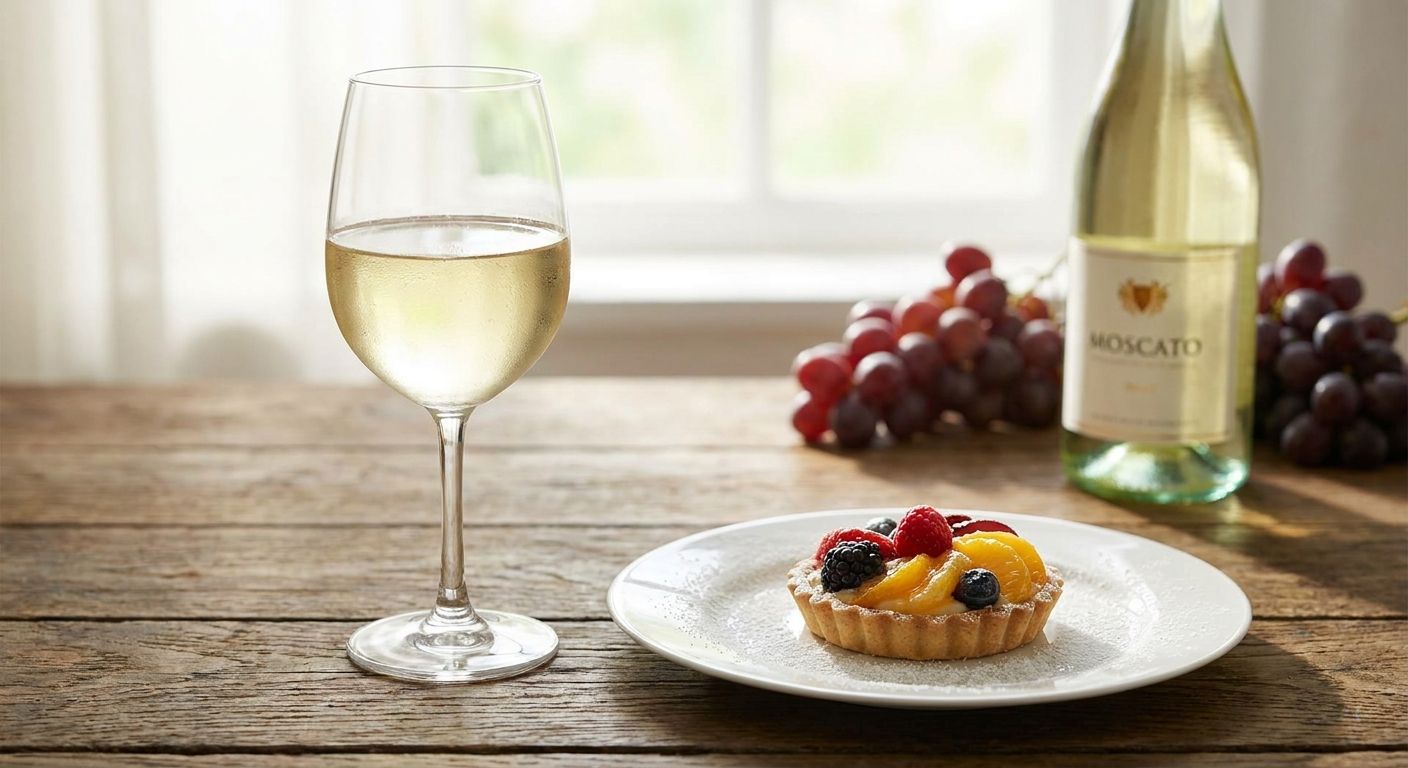
Moscato wine for dessert pairing comes down to one rule: the wine has to be at least as sweet as the plate in front of it, or the dessert wins and the wine tastes flat. Get the sugar-to-acid balance right and a $15 bottle of Moscato outperforms a $60 Cabernet at the end of a meal.
- Moscato wine for dessert works best under 7% ABV with real residual sugar, not seltzer-level fizz.
- La Marca Prosecco is the closest sparkling stand-in on BuyWinesOnline for shoppers who want bubbles plus sweetness — Buy.
- Skip bone-dry Brut Champagne for dessert night; high acid and low sugar fight the plate instead of matching it.
- A 15-bottle tasting set is the cheapest way to sample sweet whites before committing to a full case in 2026.
Why this matters
Most dessert-table mistakes aren't about the food, they're about the wine. Buyers grab whatever Champagne is on the counter because it's cold and bubbly, then wonder why the Brut tastes sharp next to a slice of tiramisu. Moscato solves that because it's built low-alcohol and genuinely sweet, not just dry wine with bubbles added.
Getting this right in 2026 matters more than it used to, because sweet wine categories have gotten crowded with zero-sugar and "skinny" sparklers marketed at the same shelf space. Reading a label carefully before you buy for a dessert pairing saves you a return trip.
Browse BuyWinesOnline's full wine selection if you want to compare sweet whites and sparklers side by side before deciding what lands on the dessert table.
Who this is for
This guide is for home hosts building a dessert course — cheesecake, fruit tart, spicy dessert like ginger cake, or a cheese-and-fruit board — who want a wine that won't fight the sugar. It's also for gift shoppers picking a bottle for someone who prefers a lighter, sweeter pour over a dry red or Chardonnay.
What to look for in Moscato wine for dessert
Residual sugar, not just "sweet" on the label
Residual sugar (RS) is the actual sugar left after fermentation, and it's what makes Moscato work with dessert. A wine labeled "off-dry" can still taste thin next to a rich dessert if the RS is low. Look for wines explicitly marketed as sweet or dessert-style rather than relying on the word "fruity" on a shelf tag.
Alcohol under 7%
Classic Moscato d'Asti sits around 5-6% ABV, which is roughly half a standard red wine. That low alcohol keeps the wine from tasting hot or boozy against sugar, and it means you can pour more generously without derailing the evening. Anything pushing past 10% ABV in a "sweet" wine usually trades sugar for alcohol heat.
Fizz level: frizzante vs fully sparkling
Moscato d'Asti is lightly sparkling (frizzante), while Asti Spumante is fully sparkling with more pressure in the bottle. Frizzante styles feel gentler on the palate and pair better with delicate desserts like fruit tarts, while a fuller sparkle can cut through richer, creamier plates.
Serving temperature
Serve Moscato colder than a still white, around 43-48°F. Too warm and the sugar reads as syrupy; too cold and you lose the fruit aromatics that make the pairing work in the first place. A quick 20 minutes in an ice bucket before pouring gets it there.
Weight match to the dessert
A light Moscato gets overwhelmed by dense chocolate cake but shines next to fruit-based desserts, light cheesecake, or spicy dishes where the sugar tames the heat. Match wine weight to dessert weight the same way you'd match a red wine to a steak.
Region and producer consistency
Asti DOCG is the benchmark region for Moscato in Italy, and producers there tend to hit the sweetness and low-ABV profile consistently vintage to vintage. Domestic and blended "Moscato-style" wines vary more, so check the region on the label if consistency matters to you.
Top picks for a dessert pairing
BuyWinesOnline's current lineup doesn't run a dedicated Moscato d'Asti bottling, so here's how to build the same effect with what's in stock — sweet-leaning sparkle plus a low-commitment way to taste around before buying a case.
The fizzy stand-in. La Marca Prosecco is an extra-dry Italian sparkler with enough residual sweetness to sit comfortably next to fruit desserts, and it's built for the same easy-drinking, low-ceremony pours Moscato is known for. It won't match Moscato's low ABV exactly, but the fruit-forward profile does the same job at the dessert table. Buy.
The low-risk sampler. The 15-bottle tasting set lets you request a white or mixed build and taste your way through several sweeter whites in one order instead of gambling on a full case of one label. If you're not sure how sweet you actually like your dessert wine, this is the cheaper way to find out. Buy.
The deep dive. The 20-bottle international tasting set covers more regions in one shipment, which is useful if you want to compare an Italian sweet white against a German Riesling-style pour before settling on a house dessert wine for 2026. It's a bigger commitment in bottle count, so it's a better fit for hosts who entertain often. Consider.
The sugar-conscious pick, and why it's the wrong move here. Bellissima Zero Sugar Sparkling is built for drinkers actively cutting sugar, which is the opposite of what a Moscato-style dessert pairing needs. If the whole point of the pour is sweetness against a dessert plate, a zero-sugar sparkler undercuts the pairing before the first sip. Skip for this specific use case, even though it's a fine bottle for other occasions.
What to avoid
- Bone-dry Champagne as a dessert default. Bottles like Veuve Clicquot Yellow Label Brut or Billecart-Salmon Brut Reserve are excellent Champagnes, but their high acid and near-zero sugar clash with dessert instead of complementing it. Save them for the toast, not the cake course.
- "Sweet-sounding" labels with no RS to back it up. Marketing copy like "fruity" or "juicy" doesn't guarantee actual residual sugar. Check for explicit sweetness or dessert-wine labeling before assuming a bottle will work.
- High-ABV sweet wines poured too warm. A sweet wine above 10% ABV served at room temperature reads boozy and heavy next to dessert. If you're not chilling it properly, even a genuinely sweet bottle will underperform.
Verdict comparison
| Pick | Style | ABV profile | Best dessert match | Verdict |
|---|---|---|---|---|
| La Marca Prosecco | Extra-dry sparkling | Standard table wine ABV | Fruit tarts, light cakes | Buy |
| 15-bottle tasting set | Mixed sweet whites | Varies by bottle | Best for tasting your way in | Buy |
| 20-bottle tasting set | Broad international mix | Varies by bottle | Frequent hosts, 2026 entertaining | Consider |
| Bellissima Zero Sugar Sparkling | Zero-sugar sparkling | Standard, low sugar | Not built for dessert pairing | Skip |
| Veuve Clicquot Yellow Label Brut | Dry Champagne | Standard, low RS | Toasts, not dessert course | Skip |
FAQ
What is Moscato wine for dessert best paired with?
Moscato wine for dessert pairs best with fruit tarts, light cheesecake, and spicy desserts like ginger cake, because its low alcohol and real residual sugar match richer sugar levels without tasting boozy. Heavy chocolate desserts usually overwhelm it.
Is Moscato d'Asti sweeter than Asti Spumante?
Both styles are sweet, but Moscato d'Asti is only lightly sparkling (frizzante) while Asti Spumante is fully sparkling. The sweetness levels are similar; the main difference is how much fizz hits your palate first.
What's the best serving temperature for Moscato?
Serve Moscato at 43-48°F, colder than a standard still white wine. Too warm and the sugar tastes syrupy; too cold and you lose the fruit aromatics that make the pairing work.
Can Moscato pair with chocolate desserts?
Moscato works better with light chocolate applications like a chocolate-dipped fruit tart than with a dense flourless chocolate cake, which usually needs a richer, higher-RS dessert wine to stand up to it.
How much does a bottle of Moscato cost in 2026?
Most Moscato bottles retail between $10 and $20 in 2026, well below the price point of a single-vineyard Cabernet or Champagne. That makes it an easy bottle to stock for a dessert course without a big spend.
Is Moscato the same as Prosecco?
No. Prosecco is typically drier (extra-dry to brut) with more pronounced fizz, while Moscato is sweeter with lower alcohol and a gentler sparkle. Both come from Italy, but they're built for different moments in a meal.
Does Moscato get better with age?
Moscato is built for early drinking, usually within a year or two of the vintage, and doesn't improve with cellar age the way a tannic red does. Buy it for the season you're hosting in, not for storage.
What's a good substitute for Moscato at a dessert table?
An extra-dry Prosecco like La Marca is the closest widely available substitute, since it carries enough residual sweetness to sit next to fruit-based desserts even though its alcohol runs higher than a true Moscato d'Asti.
One last thing
The detail most hosts miss: pour order matters as much as the bottle. Serve a sweet dessert wine before a dry Champagne toast and the Champagne will taste sour by comparison — always finish with the sweetest pour of the night, never open with it.