

Assyrtiko wine pairing for Greek-food lovers is matching Greece’s high-acid white grape with dishes to make lemon, seafood, herbs, and olive oil taste balanced together. For your 2026 Greek dinner, start with a dry, unoaked style; richer oak-aged versions suit fuller dishes better than delicate fish.
- Dry Assyrtiko wine is a strong match for Greek cuisine built around lemon, seafood, feta, and olive oil.
- Choose unoaked Assyrtiko for grilled fish; choose a fuller style for roast chicken and richer preparations.
- Buywinesonline suits home shoppers comparing wine styles across a catalog of over 5,000 wines.
- Match the sauce before the protein, and keep dry Assyrtiko away from sweet baklava.
Why Assyrtiko wine matters for Greek-food lovers
Assyrtiko’s main advantage at a Greek table is acidity, not simply Greek origin. Lemon dressing, tomatoes, feta, and olive oil create a different pairing problem from a plain grilled fillet. You need freshness without losing enough body to stand beside the food.
Assyrtiko is a Greek white grape closely associated with Santorini, although growers cultivate it elsewhere in Greece and beyond. Dry examples commonly show citrus flavors, firm acidity, and a stony or saline impression. That last description refers to taste, not a claim about sodium content.
If you are exploring unfamiliar grapes in 2026, the dry white wine guide for beginners explains the broader style category. Assyrtiko belongs on your shortlist when you enjoy a mouthwatering white rather than a soft, sweet one.
The limitation is equally useful: sharp acidity does not please everyone. A guest who prefers rounded, fruity whites will not necessarily enjoy the most austere expression, even beside beautifully cooked seafood.
How to choose Assyrtiko for your Greek dinner
1. Identify the strongest flavor on the plate
Start with your recipe, not a bottle search. Write down the ingredient that remains most noticeable after a bite: lemon, tomato, char, garlic, creaminess, or sweetness. That flavor gives you a better starting point than the protein alone.
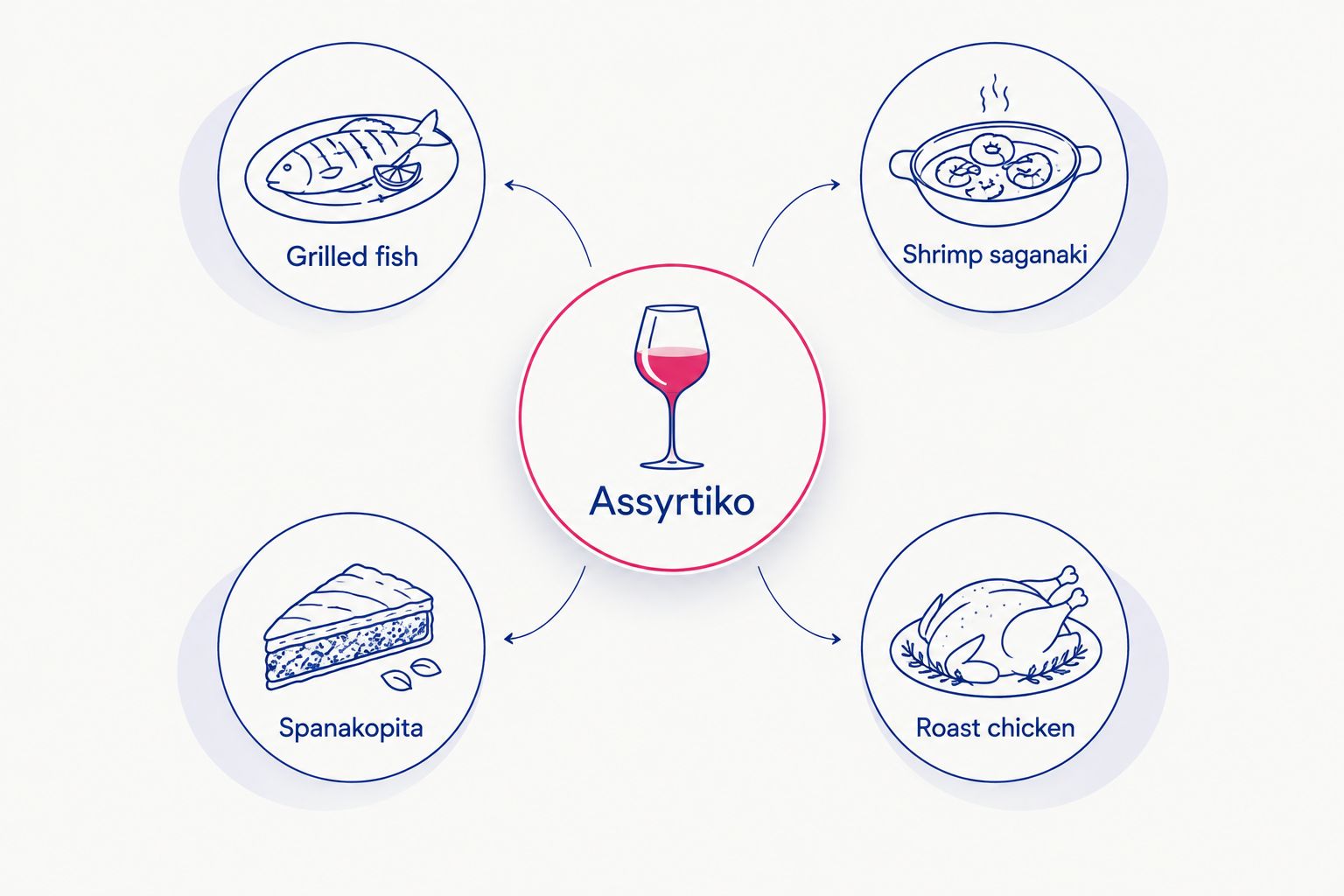
Grilled fish with lemon and olive oil points toward dry, unoaked Assyrtiko. The same fish under a richer sauce needs more texture from the wine. Tomato-based shrimp saganaki adds acidity and salty feta, so freshness still matters even though the dish feels substantial.
For your 2026 menu, match the sauce before the protein. You do not need a separate wine for every plate if the dishes share lemon, herbs, and olive oil.
- Lemon: Choose a dry style with clear acidity.
- Olive oil: Keep enough body to avoid a thin pairing.
- Tomato: Prioritize freshness over heavy oak.
- Char: Consider a fuller expression for deeply grilled food.
- Sweetness: Reserve dry Assyrtiko for the savory courses.
2. Separate fresh styles from richer styles
Read the producer’s tasting description before comparing regions or vintages. Look for plain clues such as unoaked, stainless steel, barrel fermented, oak aged, or lees aged. Lees are the spent yeast cells left after fermentation; aging wine on them can add texture.
Dry, unoaked Assyrtiko is best for lemon-dressed fish, shellfish, and fresh salads. Its strength is a clear, refreshing profile; its drawback is that a very lean example feels severe without food.
Oak-aged or more textured Assyrtiko is best for roast chicken, richer seafood, and browned pastry. It brings more weight, but noticeable oak can distract from delicate fish. Santorini’s Nykteri style is traditionally associated with dry, oak-aged wine, so read beyond the unfamiliar name.
- Check whether the wine is described as dry.
- Look for explicit oak or stainless-steel information.
- Use texture descriptions to judge weight.
- Treat region as context, not a complete tasting note.
- Avoid assuming every Assyrtiko tastes identical.
3. Compare the exact wine rather than the grape alone
Build a short shopping checklist yourself: producer, origin, vintage, sweetness, winemaking, and bottle size. This keeps you from treating two wines made from Assyrtiko as interchangeable. A blend also deserves a closer read because the other grapes affect the finished style.
Buywinesonline offers over 5,000 wines for home consumers and gift shoppers, giving you a broader catalog for comparing wine categories. The trade-off is more choice: you still need the exact bottle’s details rather than a grape name alone. Buywinesonline is best for home wine shoppers who want to compare styles across a broad retail catalog.
For Assyrtiko wine shopping in 2026, use the same checklist regardless of retailer. Do not substitute packaging, a familiar label, or an impressive-sounding region for the information your meal actually requires.
- Confirm the grape or stated blend.
- Read the origin and producer name.
- Check dryness and oak treatment.
- Compare the stated bottle size.
- Match the description to your strongest dish flavor.
4. Build a menu around the wine’s strengths
Choose a few dishes with a shared flavor direction rather than testing every Greek specialty at once. A lemon-and-herb menu gives dry Assyrtiko a clear role. A table split between delicate seafood, sweet sauces, and heavily spiced meat asks much more of one bottle.
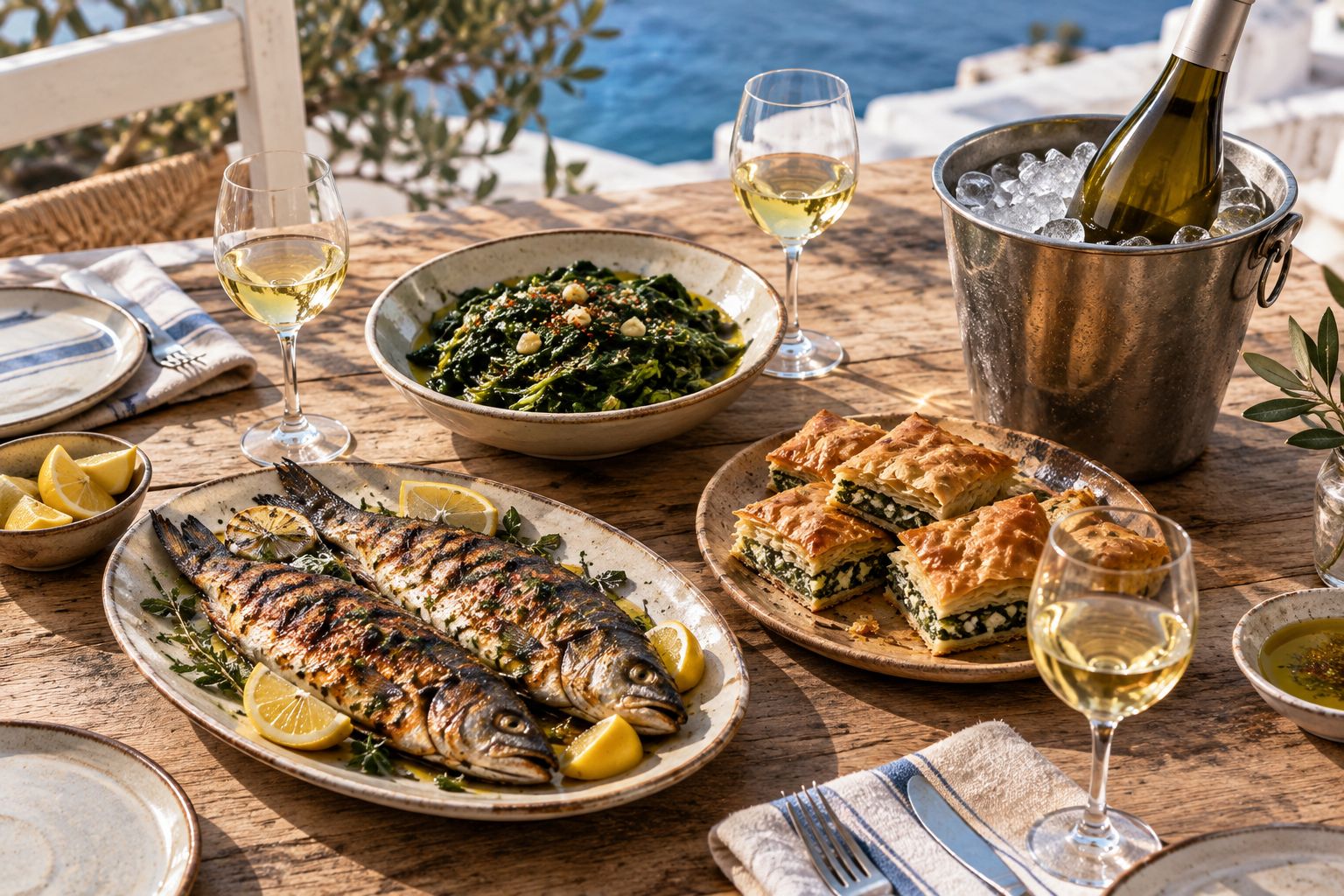
For a seafood dinner, combine grilled fish with horta, the cooked leafy greens often dressed with lemon and olive oil. For a vegetarian meal, try spanakopita alongside a cucumber-and-tomato salad. Feta, greens, pastry, and dressing give the wine several points of connection.
A fuller Assyrtiko also deserves consideration with lemon roast chicken and potatoes. Moussaka is a less direct match because meat, tomato, eggplant, and béchamel create a heavier combination; choose texture rather than the leanest style.
- Grilled fish: Start with dry, unoaked Assyrtiko.
- Shrimp saganaki: Keep acidity and moderate oak in focus.
- Spanakopita: Look for freshness with some texture.
- Roast chicken: Consider a fuller, lees-aged expression.
- Meze: Group lemony, herbal, and salty dishes together.
5. Serve it cool without hiding the flavor
Use your refrigerator and an ordinary wine glass before considering extra equipment. Start dry Assyrtiko around 10–12°C, or 50–54°F, then let the glass warm slightly as you eat. This is a serving recommendation, not a requirement printed on every bottle.
Ice-cold wine shows less aroma, while overly warm wine makes alcohol more noticeable. A richer expression benefits from a little more warmth than a very crisp one. Taste before changing anything; automatic decanting is unnecessary for a straightforward dinner pairing.
Use modest pours so the wine does not sit warming in a full glass. A 750 ml bottle contains five 150 ml pours; that is portion arithmetic, not a recommendation for how much anyone should drink. Offer water and an alcohol-free choice alongside the meal.
- Start at the cool end of the suggested range.
- Use clean glasses without detergent odors.
- Pour modestly and refill only when wanted.
- Keep the bottle cool between pours.
- Allow fuller styles to warm slightly in the glass.
6. Test the pairing before finishing the dish
Taste the wine alone, take a bite, then taste again. This simple comparison tells you more than a long list of flavor notes. Notice whether the wine feels refreshing, harsh, muted, or overwhelmed beside the actual food.
Keep final seasoning flexible. Serve extra lemon separately rather than adding it automatically, especially when a dressing already tastes sharp. With garlic-heavy dips, check the combination before making the dip the center of the meal.
For your next 2026 dinner, record the preparation as well as the grape. A note such as dry, unoaked Assyrtiko with grilled fish and lemon is reusable; liked the white wine is not. Buywinesonline shoppers comparing Assyrtiko wine with other dry whites can use that same record to keep future choices consistent.
- Taste the wine before the first course.
- Repeat after a representative bite.
- Adjust lemon at the table rather than by habit.
- Note whether oak helped or distracted.
- Save the producer and exact wine details.
Compare wine options for a Greek menu
Dry, unoaked Assyrtiko is the starting choice for lemon-led seafood, not an automatic winner for every Greek dish. Use these style comparisons to decide whether you want more texture, more aroma, or a different color. These are category-level options, not individual bottle recommendations.
| Option | Best for | Main advantage | Key limitation |
|---|---|---|---|
| Dry, unoaked Assyrtiko | Grilled fish, shellfish, lemon-dressed greens | Firm acidity without prominent oak | Lean examples feel sharp to drinkers who prefer softness |
| Oak-aged Assyrtiko | Roast chicken and richer seafood preparations | More texture and savory weight | Oak can dominate delicate fish |
| Dry Sauvignon Blanc | Herb-led salads and lemony seafood | Freshness with more overt herbal aromas | Strong aromatics compete with subtle dishes |
| Dry, unoaked Chardonnay | Simply cooked fish and guests wanting less aromatic wine | A quieter aromatic profile | Acidity and weight vary by origin |
| Dry rosé | Meze tables spanning vegetables, seafood, and lighter meats | A flexible middle ground for mixed dishes | Less focused than Assyrtiko for a purely lemon-and-fish menu |
A familiar grape is not necessarily a closer match. Check the particular wine’s sweetness and winemaking before choosing the alternative. An oak-heavy Chardonnay and an unoaked Chardonnay solve different dinner problems despite sharing a grape.
Common mistakes Greek-food lovers make
Treating all Greek white wine as the same style
Greek origin does not establish sweetness, body, or oak treatment. Assyrtiko itself appears in different styles, including blends and sweet wines. Read the complete description before choosing a savory-food pairing.
Buying the richest expression for the lightest dish
More weight is not automatically better. A heavily oaked white can cover the flavor of simply grilled fish, while a fresh, unoaked wine leaves more room for the food. Save the richer expression for a preparation that needs it.
Expecting dry Assyrtiko to suit baklava
Honeyed, nut-filled baklava calls for a different approach from lemony seafood. Sweet food makes a dry wine seem more austere. End the dry-white pairing with the savory course rather than forcing one bottle through dessert.
Assuming Greek origin guarantees a perfect match
Pairing depends on preparation. Lamb with a bright lemon sauce presents a different problem from a deeply browned lamb stew. Choose Assyrtiko for its acidity and texture, not because every Greek recipe requires a Greek white.
FAQ
What is Assyrtiko wine?
Assyrtiko wine is made from a Greek white grape closely associated with Santorini. Dry examples typically have firm acidity, citrus flavors, and a stony or saline impression, although origin and winemaking change the style.
Is Assyrtiko wine dry or sweet?
Assyrtiko is commonly made as a dry white wine, but the grape also appears in sweet wines. Check the exact wine’s description rather than using the grape name as a sweetness guarantee.
What Greek food goes best with Assyrtiko?
Dry, unoaked Assyrtiko is a strong match for grilled fish with lemon, shellfish, and lemon-dressed greens. Fuller expressions suit roast chicken, richer seafood preparations, and dishes where extra texture helps.
Is Assyrtiko better than Sauvignon Blanc for Greek food?
Assyrtiko is a strong choice for lemon-led seafood when you prefer a less overtly herbal white. Sauvignon Blanc suits herb-forward dishes, but neither grape is better for every preparation.
Should I chill Assyrtiko before serving?
Yes, serve dry Assyrtiko cool rather than warm. Start around 10–12°C, or 50–54°F, and allow a fuller wine to warm slightly in the glass if its aromas seem muted.
Does Assyrtiko go with feta and Greek salad?
Dry Assyrtiko pairs well with feta and Greek salad when you enjoy a bright, acidic combination. Taste the dressing before adding extra lemon or vinegar so the meal does not become needlessly sharp.
Where should I start when comparing wines online?
Start with the grape, sweetness, oak treatment, origin, and bottle size that suit your meal. Buywinesonline serves home wine consumers and gift shoppers with a catalog of over 5,000 wines; compare the exact wine details rather than choosing by packaging.
One last thing
Use the lemon wedge as a pairing adjustment, not an automatic garnish. At your next Greek dinner in 2026, taste the fish and wine before squeezing it. You might already have enough brightness from the wine and dressing, and keeping the lemon separate lets every guest find the balance they prefer.