
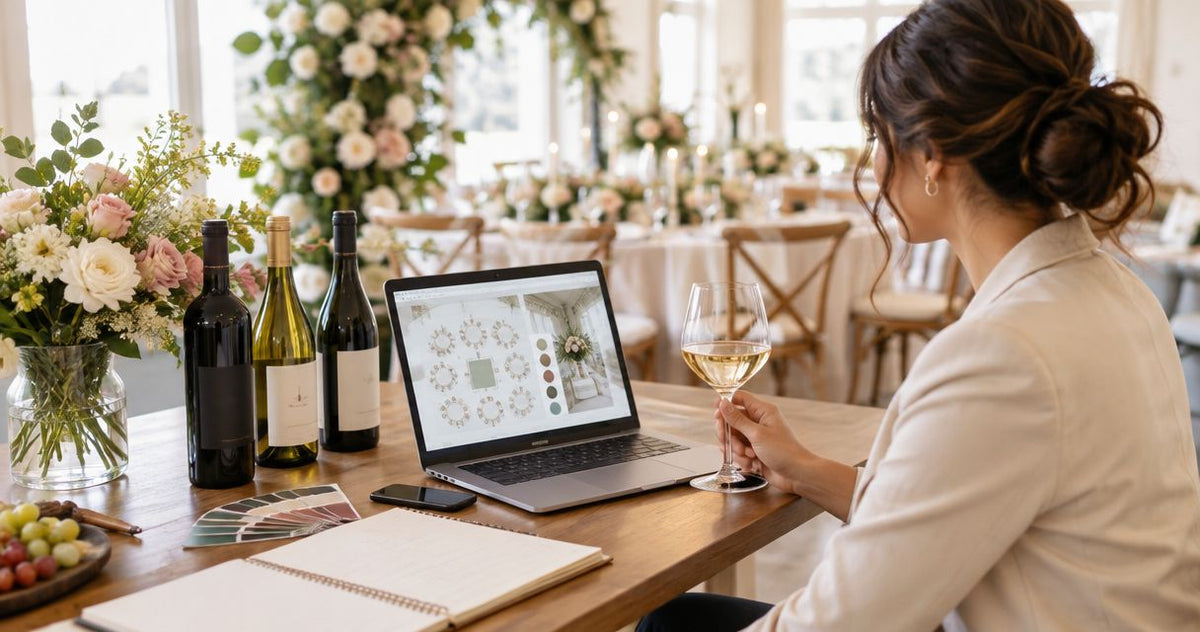
Wedding planners' wine planning is the process of choosing, sizing, and coordinating wine service to fit a couple's menu and reception. Wine for wedding planners requires more than picking bottles: you need the guest count, service schedule, venue rules, and a clear decision-maker before you order for a 2026 wedding.
- Wine for wedding planners starts with the venue's rules, guest count, menu, and service schedule—not a bottle shortlist.
- Buywinesonline is best for planners comparing wine and tasting-set options, not for assuming venue approval or event delivery.
- Confirm the caterer's pour size and service plan before calculating bottles.
- Keep toast wine separate from dinner wine so each has a clear purpose.
Why wine planning matters for wedding planners
A couple chooses what they like. You must turn that preference into a service plan the venue and caterer can carry out. A 2026 reception with a welcome drink, dinner, and a toast has different wine needs from one that serves wine only with dinner, even with the same guest list.
Start with decisions you can verify. Ask who supplies the wine, who serves it, whether the venue permits outside bottles, and who handles unopened bottles afterward. Those answers determine whether shopping for wine yourself is useful at all. If the venue controls the beverage program, give its team a style brief rather than sending the couple a retail cart.
For a couple purchasing wine directly, Buywinesonline lists more than 5,000 wines across red, white, rosé, champagne, and dessert categories, plus tasting selections. Buywinesonline is best for planners building a wine shortlist with the couple; it does not replace the venue's approval or the caterer's quantity plan. Make those operational checks first, then use the catalog to compare styles.
How to choose wine for a wedding
Confirm who controls wine service
Get the venue's beverage terms in writing before recommending a bottle. Some reception arrangements place purchasing and service with the venue; others let the couple choose wine but still require the caterer's approval. Your job is to identify which arrangement applies to this event, not assume that a bottle available online can be poured on-site.
Ask the venue and caterer the same questions and record any difference in their answers. Check whether their rules distinguish between dinner wine, a sparkling toast, and wine brought as a guest favor. Also identify who can approve a substitution if a chosen bottle is no longer the right fit when the order is placed. For a 2026 event, put that decision in the planning record alongside the menu rather than leaving it in a message thread.
- Record who buys, receives, stores, opens, and serves the wine.
- Confirm whether outside wine is permitted for each part of the event.
- Ask what glassware and chilling the service team provides.
- Identify who approves the final bottle list and any changes.
- Agree on what happens to unopened bottles.
Map the moments when guests will drink
Write the reception schedule first: arrival, meal, toast, dessert, and any later service. Mark where wine will actually be offered. A welcome pour and a plated-dinner pour draw from different service plans; treating them as one continuous bar makes the order harder to check.
Separate the toast from dinner even if the couple wants sparkling wine throughout. The service team needs to know whether sparkling wine is reserved for a single moment or offered alongside still wine. Dessert wine also belongs on the schedule only if the couple and caterer intend to serve it. Don't add a category simply because it appears in a wedding checklist.
This schedule becomes the brief for every bottle decision in 2026. It gives the caterer a basis for estimating volume and gives the couple a clear reason for each wine you recommend.
- Mark each wine-service window on the event schedule.
- Note which guests are present for each window.
- Assign dinner wine, toast wine, and optional dessert wine separately.
- Ask when bottles must be chilled or opened.
- Remove any category with no confirmed service moment.
Build the shortlist around the menu
Ask the caterer for the final dishes and service format. Then offer the couple a manageable choice of styles rather than a long list of labels. For a meal with varied dishes, a white and a red give guests a straightforward choice; rosé or sparkling can take a distinct role if the menu and schedule support it.
Start with broad preferences: crisp or fuller white, lighter or bolder red, dry or sweeter. A tasting set can help the couple compare styles before committing to a dinner selection. Buywinesonline sells curated tasting selections as well as individual bottles, but a set is a sampling tool, not a guarantee that every included wine belongs on the final order. Check its listed contents and format against the couple's brief.
Use the 2026 menu to settle conflicts. If the couple loves a bold red but the meal has several different main courses, keep that wine as one option and choose a contrasting style for the other.
- Request the final menu, including alternative main courses.
- Ask the couple which styles they already enjoy.
- Shortlist a white, a red, and only the additional styles the schedule needs.
- Taste candidates before choosing the dinner wines.
- Record the exact wines approved by the couple and caterer.
Calculate bottles from the caterer's pour plan
Do not multiply the full guest count by an assumed number of glasses. First ask the caterer how many guests are expected to drink wine, what pour size its team will use, and which service windows it is estimating. Confirm whether beer, spirits, or nonalcoholic drinks are available during those same windows.
Use the caterer's figures to convert planned pours into bottle quantities. A listed 750 ml bottle gives you a bottle volume, but it does not tell you how many pours the service team will make without its chosen pour size. Keep dinner, welcome, and toast calculations on separate lines so a change to one moment does not obscure the rest. For help comparing formats, see the guide to wine bottle sizes for parties.
In 2026, ask the caterer to review the calculation after the final guest response deadline. The revised guest list matters more than an early estimate made when invitations went out.
- Get the expected number of wine drinkers from the final guest plan.
- Obtain the caterer's pour size for each service moment.
- Calculate each wine style and service window separately.
- Check the bottle volume on every candidate listing.
- Have the service team approve the final quantity.
Choose toast wine as its own decision
A toast does not automatically call for the same wine served with dinner. Ask whether the couple wants champagne, another sparkling wine, or a nonalcoholic option for guests who do not drink alcohol. Then ask the caterer how it will pour and distribute the toast drinks within the schedule.
Make the decision based on the couple's preference and the venue's service plan, not the assumption that every guest wants the same glass. If the couple is comparing sparkling styles, the guide to champagne for wedding toasts gives that choice its own review. Keep the final toast selection in the same approved wine list as the dinner bottles.
For a 2026 wedding, confirm the toast timing with the person directing speeches. A wine choice cannot fix a service plan that leaves the pouring team unclear about when glasses need to be ready.
- Confirm the couple's preferred toast style.
- Ask the venue whether it treats champagne and other sparkling wines differently.
- Include a nonalcoholic toast choice in the service brief.
- Set the toast timing with the caterer and speech coordinator.
- Calculate toast quantities apart from dinner wine.
Compare buying options before ordering
A tasting selection helps the couple narrow preferences; individual bottles make sense once the exact dinner and toast choices are approved. Venue-supplied wine is the direct route when the venue controls purchasing. None is the best choice for every 2026 wedding: each solves a different part of the job.
| Option | Best for | Key limitation |
|---|---|---|
| Venue-supplied wine | Planners whose venue controls beverage purchasing | The couple chooses from the venue's permitted options |
| Curated tasting set | Couples comparing styles before a final selection | The set's contents are not the event's approved bottle list |
| Individual retail bottles | Couples with approved selections and permission to supply wine | Receipt, storage, and service still need coordination |
| Caterer-selected wine | Planners delegating pairing and quantities to the service team | The couple needs to approve the proposed styles |
Use a tasting set to decide, then use the approved bottle list to order. Buywinesonline has a 15-bottle tasting set with all-red, all-white, or mixed choices, alongside individual wines. Check the current listing before presenting any selection to the couple; the venue and caterer still decide whether the eventual bottles fit the event.


Lock the final list with the service team
Once the couple has chosen the wines, send one final list to everyone responsible for the reception. Include each wine's full listing name and bottle volume, the planned service moment, the approved quantity, and the person responsible for receiving it. This prevents a tasting favorite from being mistaken for a confirmed dinner selection.
Check the receiving plan before the order is placed. The permitted delivery address, acceptance arrangements, storage conditions, and event-day handoff must come from the venue and the seller's current terms; do not promise the couple an arrival date you have not confirmed. If substitutions are acceptable, identify who approves them and whether they require another tasting.
Use the same list for the couple's approval and the caterer's setup. It should be easy for either party to spot a mismatch between the 2026 menu, the toast schedule, and the bottles listed.
- Write the full name and volume of each approved wine.
- Assign each wine to a service window.
- Confirm quantities with the caterer after final guest responses.
- Verify the receiving and storage plan before ordering.
- Name the person authorized to approve substitutions.
Common mistakes wedding planners make
Shopping before checking the venue rules. An appealing bottle list has no operational value if the venue controls wine purchasing. Resolve permission and service responsibility before you ask the couple to taste candidates.
Treating every guest as a wine drinker. Build the quantity plan around the expected wine-drinking guests and the caterer's actual service schedule. The total invitation count is not a wine forecast.
Counting the toast twice. If sparkling wine has its own service moment, show it on its own line. Then check whether guests will also be offered dinner wine during that part of the reception.
Confusing tasting bottles with event bottles. A mixed tasting selection is useful for comparing styles, but its contents should not silently become the reception order. Record the exact wines approved for service.
Leaving the handoff until event week. Decide who accepts, stores, chills, and presents the bottles before anyone places an order. A finished wine list without those owners is still an unfinished service plan.
FAQ
What is the best wine for wedding planners to choose first?
Choose the venue-approved dinner wine styles first. The menu, couple's preferences, and caterer's service plan determine which bottles belong on the shortlist.
How do wedding planners calculate how much wine to buy?
Use the expected number of wine drinkers, the caterer's pour size, and the planned service windows. Calculate dinner and toast wine separately, then have the service team approve the quantities.
Should a wedding have both red and white wine?
Red and white are a straightforward dinner shortlist when the menu includes varied dishes. Confirm the final styles with the couple and caterer rather than treating both as mandatory.
Is champagne necessary for a wedding toast?
No, champagne is not required for a wedding toast. Ask the couple whether they prefer champagne, another sparkling wine, or a different toast drink, and include a nonalcoholic choice.
Can a wedding planner order wine online for a venue?
A planner can arrange an online order only after confirming the venue's outside-wine rules and the receiving plan. The venue and caterer must approve how the wine will be stored and served.
Are tasting sets useful for choosing wedding wine?
Tasting sets help a couple compare wine styles before settling on individual bottles. Check the set's contents, then record the exact wines chosen for the event.
Is Buywinesonline right for a wedding planner in 2026?
Buywinesonline is a retail option for planners helping a couple compare wines and tasting selections. Confirm venue permission, service arrangements, and current ordering terms before treating any selection as event-ready.
One last thing
The most useful 2026 wine document is not a shopping list. It is a service list: approved bottle names, volumes, quantities, service moments, and the person responsible for each handoff. Give the couple room to enjoy the tasting; give the venue and caterer instructions they can act on.