
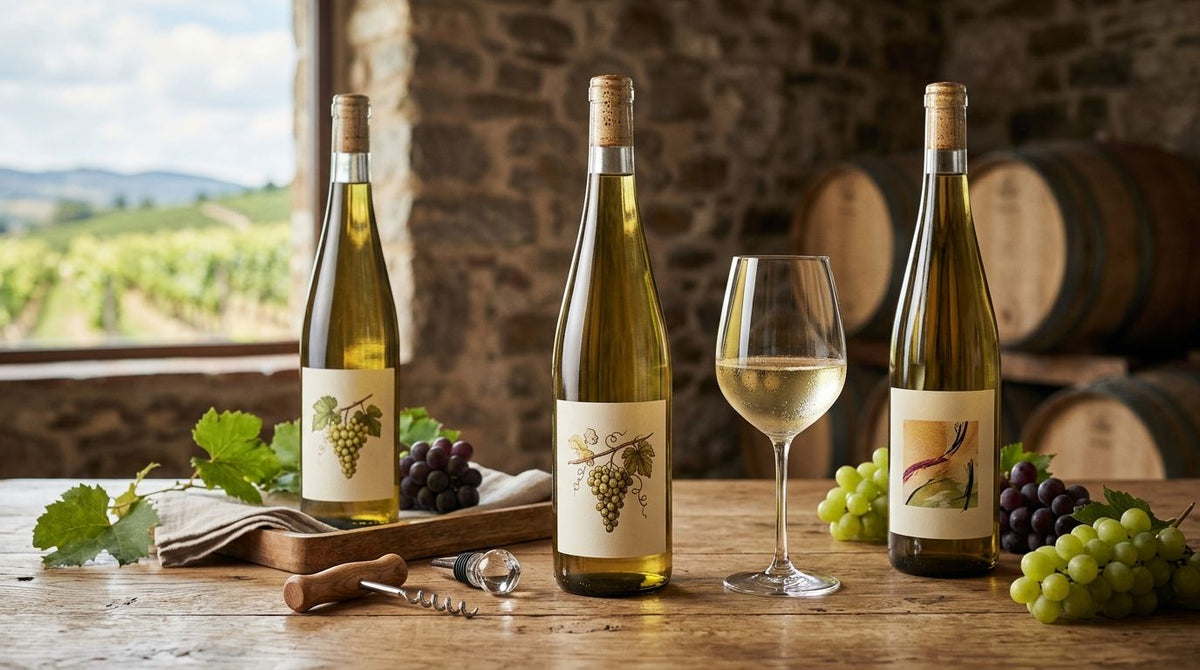
Best overall in 2026: dry German Riesling Trocken. Best for spicy food: off-dry Mosel Riesling. Best for a US-produced bottle: Finger Lakes Riesling. The best riesling wine is the one with the right sweetness level for your meal; the grape name alone will not tell you whether the bottle is dry.
- Dry German Riesling Trocken is the best overall riesling wine for savory meals in 2026.
- Off-dry Mosel Riesling is the best pick for spicy food; check the producer's sweetness description before buying.
- Finger Lakes Riesling is the pick for shoppers who want a US-produced bottle.
- Buy Wines Online sells wine to US shoppers, but confirm a specific Riesling listing and its sweetness before ordering.
Why this matters
Riesling is a grape, not a sweetness setting. Dry and sweet bottles can carry the same grape name, and a regional name alone will not settle the question. If you are buying riesling wine for dinner, start with the dish and then check how the producer describes the bottle.
Buy Wines Online is an online retailer serving US wine shoppers. It sells over 5,000 wines, but that total does not establish which Riesling bottles are currently listed. Buy Wines Online is best for US shoppers who want to choose a Riesling style before comparing individual wine listings. Verify the producer, region, sweetness description and bottle size on the listing you select.
The 2026 picks below rank styles rather than individual bottles. No specific Riesling product appears in the supplied catalog, so naming a bottle as a current buy would turn an unknown listing into a recommendation. A style-first ranking gives you a usable decision even when producers and vintages change.
What makes the best riesling wine
- Sweetness that fits the occasion. Choose dry wine for most savory meals, off-dry wine when a little sweetness helps with spice, and a deliberately sweet style for dessert.
- A label you can interpret. Trocken identifies dry German wine. Kabinett and Spätlese describe grape ripeness classifications, not guaranteed sweetness; check the producer's description too.
- Acidity. Riesling's characteristic acidity keeps the wine lively and balances sweetness. A sweet Riesling should still taste fresh, not flat.
- A useful regional starting point. Mosel, Alsace, the Finger Lakes and Clare Valley offer different expressions of the grape. Region narrows the search; it does not replace the bottle description.
- A food match. Rich, spicy, delicate and sweet dishes ask different things of a wine. Pick the pairing before picking a region.
- A clear reason to choose the bottle. A producer's sweetness scale or tasting description is more useful than an unexplained score when your main question is whether the wine tastes dry.
For a quick 2026 decision, use two starting points: Dry Riesling for savory dishes and off-dry Riesling for spicy dishes. Then check the individual listing. Two wines from the same region can still differ in sweetness.
Best riesling wine styles at a glance in 2026
| Style | Best for | Standout feature | Key limitation |
|---|---|---|---|
| Dry German Riesling Trocken | Savory dinners | Explicit dry designation | Too sharp for some sweet-wine drinkers |
| Off-dry Mosel Riesling | Spicy dishes | Sweetness balances heat | Kabinett alone does not confirm sweetness |
| Finger Lakes Riesling | US-produced discovery | Both dry and sweeter expressions | You must check each producer's style |
| Alsace Riesling | Fuller-bodied dry whites | Dry style with more weight | Sweetness is not guaranteed by region alone |
| Clare Valley Riesling | Crisp dry whites | Citrus-led, dry regional style | Not the pick if you want softness or sweetness |
| German Eiswein | Dessert or gifting | Concentrated sweetness with acidity | Poor fit for most savory meals |
1. Dry German Riesling Trocken: best riesling wine for savory dinners
German Riesling labeled Trocken is dry. That makes it the clearest default when you want a white wine for fish, roast chicken or a meal with several savory courses. Its acidity gives the pairing lift without asking you to build the menu around sweetness.
Start here if a guest says they dislike sweet white wine. Check the full label anyway: Trocken answers the dryness question, while the region and producer description help you choose between a lighter-feeling bottle and one with more weight. In 2026, this is a more dependable buying rule than treating every German Riesling as sweet.
Dry German Riesling Trocken pros:
- The Trocken designation gives you a direct dryness cue.
- Acidity makes it adaptable across savory dishes.
- It offers Riesling's character without requiring a sweet finish.
Dry German Riesling Trocken cons:
- Its tart edge will not suit everyone who usually drinks soft, round whites.
- The dry style does little to soften intense chili heat.
Best for: shoppers choosing one Riesling for a savory dinner. Verdict: Buy.
2. Off-dry Mosel Riesling: best riesling wine for spicy food
A Mosel Riesling with some residual sugar can be an excellent match for chili-driven food. Sweetness counters the impression of heat, while acidity keeps the pairing from feeling heavy. Try this direction for spicy stir-fry, curry or dishes with hot sauce rather than automatically reaching for a bone-dry white.
Do not assume that Kabinett printed on the front label means off-dry. Kabinett is a classification tied to the grapes at harvest; the finished wine can vary. Look for an explicit sweetness description, a producer sweetness scale or an indication of residual sugar before choosing the bottle. For meal-specific ideas, see the Riesling wine and spicy food pairing guide.
Off-dry Mosel Riesling pros:
- A little sweetness helps when a dish has noticeable heat.
- Acidity prevents the pairing from tasting simply sugary.
- It gives you a different food option from dry Trocken.
Off-dry Mosel Riesling cons:
- A regional name or Kabinett label alone does not establish the final sweetness.
- It can taste sweeter than expected alongside mild, delicate dishes.
Best for: shoppers serving spicy dishes who have confirmed the bottle is off-dry. Verdict: Buy.
3. Finger Lakes Riesling: best riesling wine for US-produced discovery
The Finger Lakes region of New York produces Riesling in dry and sweeter styles. Its appeal in this ranking is straightforward: you can explore a US wine region without changing grapes. If you know you like Riesling but have only tried European examples, this is a distinct regional next step.
Treat Finger Lakes as a place to start searching, not as a sweetness promise. Read the producer's dry, semi-dry or sweet designation where one is provided, and check the individual tasting description. A Finger Lakes bottle described as dry belongs with dinner; one described as sweeter needs a different food plan. Buy Wines Online shoppers comparing white wines should apply that same label check to every region, not just New York.
Finger Lakes Riesling pros:
- It gives US shoppers a domestic Riesling region to explore.
- Dry and sweeter styles offer different pairing choices.
- Producer descriptions can make those choices easy to separate.
Finger Lakes Riesling cons:
- The regional name does not tell you whether a bottle is dry.
- Recommending the region cannot substitute for evaluating a specific producer.
Best for: shoppers who want their next Riesling to come from a US wine region. Verdict: Buy after checking the style.
4. Alsace Riesling: best riesling wine for fuller-bodied dry-white drinkers
Alsace Riesling is a useful direction if dry German Riesling feels too light for your meal. Alsace is known for dry expressions with more weight on the palate, making it a starting point for roast poultry, richer fish dishes and dinners where a very lean white would feel out of place.
The caution is the same as with every regional pick: do not let a shorthand description replace the producer's label. Alsace is a guide to the style you are seeking, not a guarantee that every bottle has the same body or sweetness. If you are buying in 2026 for someone who normally drinks Chardonnay, describe the appeal as a dry white with Riesling acidity, not as a Chardonnay substitute with identical texture.
Alsace Riesling pros:
- It offers a fuller-feeling route into dry Riesling.
- Its acidity remains useful with food.
- It suits shoppers who want more weight than a light dry white provides.
Alsace Riesling cons:
- Body and sweetness still vary by producer and bottle.
- It is not the first choice when the dish calls for an off-dry pairing.
Best for: drinkers seeking a dry white with more palate weight. Verdict: Buy.
5. Clare Valley Riesling: best riesling wine for crisp-white fans
Clare Valley in Australia is associated with dry, citrus-led Riesling. Put it on your list if crisp Sauvignon Blanc is familiar territory but you want to taste what a different grape does with a similarly refreshing brief. It also gives you a clear regional alternative to German and French bottles.
Do not mistake crispness for universal versatility. A very dry, acid-driven wine can sharpen the impression of chili heat rather than calm it. Choose Clare Valley for a cool, crisp pour or a savory meal without strong spice; choose the off-dry Mosel slot instead when heat drives the menu. In 2026, the simplest shopping test remains the same: confirm that the individual bottle is described as dry.
Clare Valley Riesling pros:
- It gives crisp-white drinkers a distinct Riesling starting point.
- Its dry, citrus-led regional style works with lighter savory food.
- It expands the search beyond European and US regions.
Clare Valley Riesling cons:
- Its brisk character is not ideal for someone seeking a soft white.
- It is a weaker choice than off-dry Riesling for hot dishes.
Best for: drinkers who already enjoy crisp, dry white wines. Verdict: Buy.
6. German Eiswein: best riesling wine for dessert
German Riesling Eiswein is a deliberately sweet wine made from grapes that freeze on the vine. Its concentrated sweetness and Riesling acidity make sense at the end of a meal, particularly when you want the wine itself to carry the dessert course. That is a different job from the dry dinner wines ranked above.
Buy it for the occasion it serves. Eiswein is not an all-purpose white for a table of savory dishes, and a guest asking for a dry Riesling will not be pleased by the substitution. If the goal is a wine gift, make the sweet style clear to the recipient rather than relying on the grape name. A thoughtful 2026 gift matches the drinker's taste, not just a recognizable label.
German Riesling Eiswein pros:
- Its sweetness makes the intended dessert role clear.
- Riesling acidity balances the concentrated fruit.
- It offers a distinct alternative to a dry white at the end of dinner.
German Riesling Eiswein cons:
- It does not fill the everyday savory-pairing slot.
- It is the wrong gift for someone who only drinks dry wine.
Best for: a dessert course or a recipient who enjoys sweet wine. Verdict: Buy for dessert; skip as the only dinner wine.
How these riesling wine styles were ranked
The order reflects how easily each style solves a common buying problem, not a claim that one region makes better wine than another. Dry German Trocken takes the default slot because its dryness is stated on the label and it works across savory meals. Off-dry Mosel follows because its food use is specific and useful, provided you confirm sweetness. The remaining styles serve distinct choices: US origin, fuller body, crispness and dessert.
This 2026 ranking does not score producers or claim to have tasted individual bottles. Without a named Riesling listing, a bottle-level verdict would be unsupported. Use the style ranking to narrow your search, then evaluate the actual wine description before ordering from Buy Wines Online or another retailer.
Which riesling wine should you choose?
Choose dry German Riesling Trocken if you need one dependable style for a savory dinner. It is the 2026 default because the dry designation answers the first question most shoppers need answered. For a spicy meal, choose a Mosel Riesling that the producer explicitly describes as off-dry. For a US-produced bottle, start with the Finger Lakes and confirm whether the particular wine is dry or sweet.
If you want more body, move to Alsace; if you want a particularly crisp dry style, consider Clare Valley. Save German Eiswein for dessert. None of those alternatives beats the default at every job, and none should be bought on region alone. On any 750 ml listing, the producer's sweetness description matters more to this decision than the bottle size or a broad regional reputation.
FAQ
What is the best riesling wine to buy in 2026?
Dry German Riesling labeled Trocken is the best overall style for a savory dinner in 2026. Choose an explicitly off-dry Mosel Riesling instead when spicy food is the main course.
Is Riesling wine always sweet?
No. Riesling wine can be dry, off-dry or sweet. Look for Trocken on a German label when you want dry wine, and check the producer's description for other styles.
Does Kabinett mean a Riesling is sweet?
No. Kabinett is a German grape-ripeness classification, not a guarantee of the finished wine's sweetness. A Kabinett can be dry or retain sweetness, so check its description.
What Riesling pairs with spicy food?
An explicitly off-dry Riesling is the strongest starting point for spicy food. Its sweetness balances the impression of chili heat, while acidity keeps the pairing lively.
Is Finger Lakes Riesling dry?
Finger Lakes Riesling can be dry or sweeter, depending on the producer and bottle. Check the wine's stated style rather than using the regional name as a sweetness guide.
What is the difference between German and Alsace Riesling?
German Riesling covers a broad range of sweetness levels, while Alsace is a useful starting point for fuller-bodied dry styles. Neither regional name replaces a check of the individual bottle.
Is Eiswein good with dinner?
German Riesling Eiswein is best saved for dessert rather than served as the only wine with a savory dinner. Its concentrated sweetness serves a different purpose from dry Riesling Trocken.
One last thing
When you shop for riesling wine in 2026, do not use alcohol level as a shortcut for sweetness. Fermentation, producer choices and style all affect the finished wine. Read the sweetness description first. If it is missing, choose a listing that makes the answer clear rather than gambling on the grape name. That single check does more for your dinner than an impressive-sounding region on its own.