
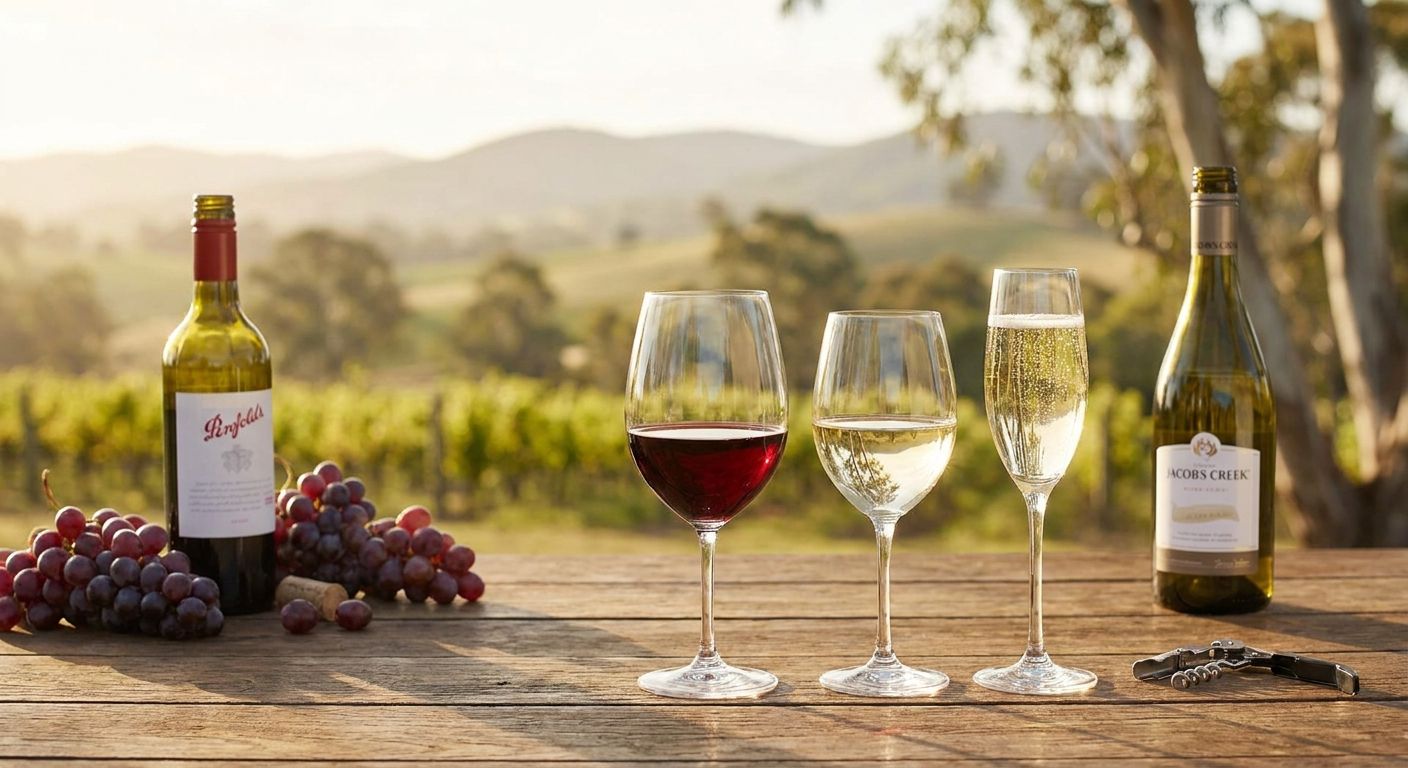
Australian wine covers everything from bargain-bin Shiraz to serious Cabernet built for a decade in the cellar, and picking the wrong bottle as a beginner usually means overpaying for underripe fruit or drowning a good grape in oak. This guide ranks the six Australian wine styles worth learning first in 2026, tells you which regions actually deliver at the price, and flags the traps that catch first-time buyers.
- Barossa Valley Shiraz is the safest first bottle for anyone hunting the best Australian wine in 2026 — buy it.
- McLaren Vale Grenache is the pick for beginners who find Shiraz too heavy — consider it.
- Skip cheap sparkling Shiraz under $15 — the tannin-plus-bubbles combo confuses new palates before it delights them.
- Coonawarra Cabernet Sauvignon and Margaret River Chardonnay round out a beginner-friendly six-bottle lineup for 2026.
Why This Matters
Australia doesn't make one style of wine, it makes a dozen, and beginners rarely know that. A $12 bottle labeled "Shiraz" from a hot inland region tastes nothing like a $30 Barossa Valley Shiraz from 80-year-old vines, and a beginner who tries the cheap version first often decides they don't like Australian red at all.
The fix is starting with regions that have a track record, not just a grape name on the label. Barossa for Shiraz, Coonawarra for Cabernet, Margaret River for Chardonnay — these are appellations with decades of consistent quality behind them, the same way Napa Valley backs up a Cabernet label on this side of the Pacific. Buy Wines Online stocks Napa Cabernet across that price range for exactly this reason: region does most of the quality work before the winemaker even touches the fruit.
2026 is a good year to start exploring Australian wine specifically because current-release vintages (2021 and 2022 reds, 2024 and 2025 whites) are showing well and widely available at US retail. That wasn't always true after supply disruptions a few years back.
How We Ranked These Australian Wines
Each style below gets judged on four things: typicity (does it taste like what the region is known for), food-pairing range, how forgiving it is if you don't have ideal storage or stemware, and whether it's realistically available at US wine retailers in 2026. Styles that require a $75 minimum to show well got dropped — a beginner's guide has no business recommending wine a beginner won't actually buy.
The six styles that made the cut represent the core of what "Australian wine" means to most drinkers, from the powerhouse reds that built the country's reputation to the cool-climate whites that are quietly some of the best value in the category right now.
The Best Australian Wine For Beginners, Ranked
1. Barossa Valley Shiraz — the safe pick
Barossa Valley is the region that made Australian Shiraz famous, and it still produces the most reliable version of it. Old, dry-farmed vines (some planted before 1900) give the wine concentrated dark fruit without the jammy, over-extracted style that gives cheap Shiraz a bad name. Typical bottling runs 14.5% to 15% ABV, so it drinks warm and full-bodied — pair it with grilled red meat, not delicate fish. Look for a 2021 or 2022 vintage on the shelf in 2026. Verdict: Buy.
2. McLaren Vale Grenache — the wildcard
McLaren Vale sits on the coast south of Adelaide and its Mediterranean climate suits Grenache better than almost anywhere outside southern France or Spain. The wine is lighter than Barossa Shiraz, brighter with red fruit instead of black, and it's more forgiving if you serve it slightly too warm or too cool. Beginners who find Shiraz too heavy but still want an Australian red should start here. Verdict: Consider.
3. Coonawarra Cabernet Sauvignon — the steak wine
Coonawarra's terra rossa soil — a strip of red clay over limestone — is one of the most studied wine terroirs in Australia, and it produces Cabernet with more structure and less alcohol heat than warmer regions manage. Expect firmer tannin than Barossa Shiraz and a cooler-climate edge that needs a decade or a decanter to fully open up. This is the pick if your beginner drinker already likes Napa or Bordeaux-style Cabernet and wants an Australian comparison point. Verdict: Buy.
4. Margaret River Chardonnay — the white wine skeptic's convert
Margaret River, on the far southwestern tip of Western Australia, has a maritime climate that keeps its Chardonnay lean and mineral instead of the buttery, oak-heavy style that gave American Chardonnay a reputation problem in the 2000s. If your beginner says "I don't like Chardonnay," this is usually the region that changes their mind. Pair it with roasted chicken or firm white fish. Verdict: Buy.
5. Yarra Valley Pinot Noir — the light red starter
Yarra Valley, outside Melbourne, is Australia's best answer to Burgundy-style Pinot Noir: cool nights, lower alcohol, and red-fruited rather than jammy. It's a good bridge for beginners moving from white wine into red because the tannin is soft and the body is light enough to serve slightly chilled. It's also less consistent bottle-to-bottle than the Barossa or Coonawarra picks above, since Yarra Valley producers vary more in style. Verdict: Consider.
6. Sparkling Shiraz — the conversation starter
Sparkling Shiraz is a genuinely Australian invention: a fully dry, tannic red wine given a second fermentation to add bubbles. It's deep purple, unexpected, and a great party trick — but it's also the style most likely to confuse a true beginner, since the combination of fizz and heavy tannin doesn't map to anything else most people have tasted. Save this one for round two, not the first bottle. Verdict: Skip for now.
If you'd rather compare several of these side by side before committing to a full bottle of each, a mixed case built for exploration does the legwork — the 20-bottle international tasting set is set up exactly for that kind of side-by-side tasting across styles and regions.
Comparison Table At A Glance
| Style | Region | Typical ABV | Best For | Verdict |
|---|---|---|---|---|
| Shiraz | Barossa Valley | 14.5-15% | Grilled meat, first bottle | Buy |
| Grenache | McLaren Vale | 14-15% | Lighter red drinkers | Consider |
| Cabernet Sauvignon | Coonawarra | 13.5-14.5% | Steak, structured reds | Buy |
| Chardonnay | Margaret River | 13-14% | Chardonnay skeptics | Buy |
| Pinot Noir | Yarra Valley | 13-13.5% | White-to-red transition | Consider |
| Sparkling Shiraz | Various | 13.5-14.5% | Special occasions, not first bottle | Skip for now |
Where To Buy Australian Wine As A Beginner
Three rules keep beginners from wasting money on the wrong bottle:
- Buy current-release vintages. For the reds above, that's 2021 or 2022 in 2026; for the whites, 2024 or 2025. Older stock on a shelf usually means slow turnover, not aging potential, unless the label specifically markets it as cellar-worthy.
- Check the region on the label, not just the grape. "Shiraz" alone tells you almost nothing about quality; "Barossa Valley Shiraz" tells you a lot. The same rule that makes Napa Valley meaningful on a Cabernet label applies here.
- Start with a mixed set before committing to a case. A tasting set that spans multiple countries and styles, like the 12-bottle world tour tasting set, lets you figure out which Australian style you actually prefer before you buy six bottles of one thing.
FAQ
What's the best Australian wine for someone who's never tried it?
Barossa Valley Shiraz is the best starting point for the best Australian wine search in 2026 because it's the most consistent, widely available style the country produces. Look for a 2021 or 2022 vintage and pair it with grilled or roasted red meat.
Is Australian Shiraz the same grape as Syrah?
Yes, Shiraz and Syrah are the same grape variety grown under two different regional names. Australia uses Shiraz, France's Rhone Valley uses Syrah, and the styles differ mainly by climate: Australian versions from Barossa tend to be riper and fuller-bodied.
What Australian wine pairs well with steak?
Coonawarra Cabernet Sauvignon or Barossa Valley Shiraz both pair well with steak in 2026. Coonawarra's firmer tannin cuts through fattier cuts, while Barossa Shiraz matches the char on a grilled steak.
How much does a decent bottle of Australian wine cost in 2026?
A solid, regionally labeled Australian Shiraz or Cabernet typically runs $15 to $40 at US retail in 2026. Bottles under $12 usually skip the named appellation entirely and blend fruit from wherever it's cheapest that vintage.
Is Yellow Tail a good starting wine or should I skip it?
Yellow Tail is a widely distributed, easy-drinking entry point but it's not representative of what regional Australian wine tastes like. Use it as a low-stakes first taste, then move up to a named region like Barossa or Coonawarra to see the real difference.
What's the difference between Barossa Shiraz and McLaren Vale Shiraz?
Barossa Valley Shiraz tends to be riper, fuller-bodied and higher in alcohol, while McLaren Vale's coastal climate produces a slightly lighter, more red-fruited version. Both are legitimate answers to the best Australian wine question, they just suit different meals.
Does Australian wine need to breathe before drinking?
Young Coonawarra Cabernet and Barossa Shiraz both benefit from 20 to 30 minutes of air before serving, since both are built with enough tannin to taste tight straight out of the bottle. Grenache and Pinot Noir styles need little to no decanting time.
What food pairs with Margaret River Chardonnay?
Margaret River Chardonnay pairs best with roasted chicken, firm white fish, or dishes with a light cream sauce. Its leaner, mineral-driven style means it gets overwhelmed by anything too rich or too spicy.
One Last Thing
The biggest mistake beginners make with Australian wine isn't picking the wrong grape, it's picking the wrong region for that grape. A $14 Shiraz with no region on the label and a $28 Barossa Valley Shiraz can come from grapes grown 400 miles apart in completely different climates — the label difference matters more than the price gap suggests, and it's the fastest way to tell a serious bottle from a supermarket filler in 2026.