
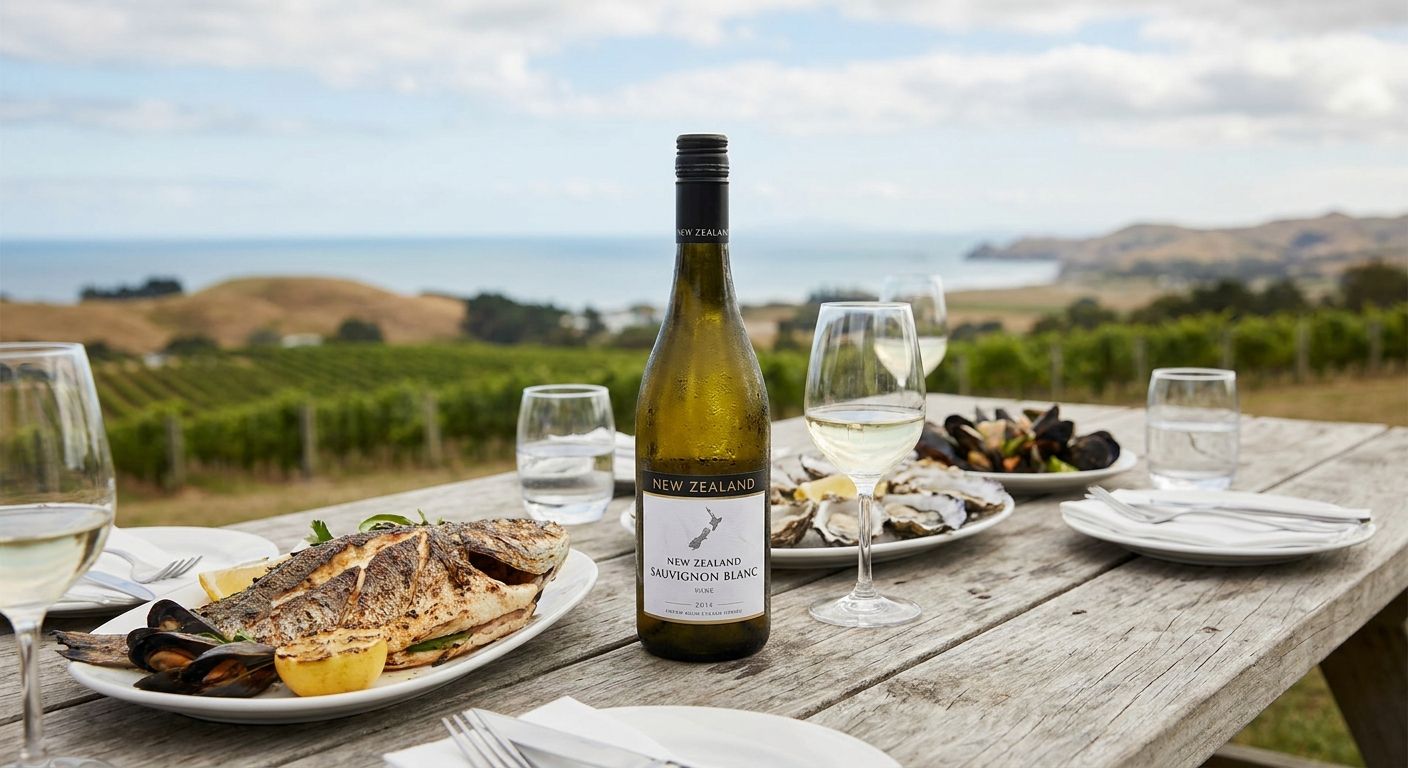
New Zealand built its wine reputation on one idea: let cool nights and long sun hours produce whites and reds with more acid and less weight than anywhere else in the New World, which happens to be exactly what a plate of oysters, ceviche, or grilled snapper needs. This guide breaks down what to look for and which bottles in the current Buy Wines Online lineup deliver that same backbone.
- Marlborough Sauvignon Blanc sets the benchmark for New Zealand wine pairing with oysters and ceviche in 2026.
- Mar de Frades Albariño and Ladoucette Comte Lafond Sancerre are the closest high-acid stand-ins for shellfish night — Buy both.
- Rombauer Chardonnay 2024 handles lobster and scallops when the seafood course needs more body — Consider it.
- Skip heavily oaked Chardonnay and high-tannin reds; they clash with fish oils and brine.
Why this matters
Most seafood dishes fail with wine for one reason: the bottle brings tannin, oak, or sugar to a plate that wants acid and nothing else. Buy Wines Online's guide to Sauvignon Blanc and oyster pairing covers why acid-forward whites cut through brine instead of fighting it, and the same logic drives every New Zealand wine pairing decision below.
Get the acid and alcohol level right and even a $15 bottle beats a $50 one that's built for steak. Get it wrong and you've spent real money muting your own dinner.
Who this is for
This guide is for the home cook or host planning a seafood-forward meal in 2026 — a raw bar spread, a grilled fish dinner, a lobster boil — who wants to know what actually works instead of guessing at the label. It's also for anyone who likes New Zealand Sauvignon Blanc specifically and wants to know what to reach for when that exact bottle isn't in stock.
What to look for in New Zealand wine for seafood
Acid comes before fruit
New Zealand's cool-climate vineyards push bright acidity ahead of ripe fruit character, and that's what a raw bar or a grilled fish plate needs — a wine that cuts through brine instead of competing with it. Look for a first sip that reads crisp and tart, not soft and rounded.
Skip the oak, chase the citrus
Sauvignon Blanc bottled without barrel time keeps its grapefruit and passionfruit character sharp, and New Zealand producers built their whole reputation on stainless-steel fermentation. Any bottle described as buttery or toasty has picked up oak character that fights with delicate white fish instead of framing it.
Alcohol under 13.5% keeps the pairing balanced
Cooler nights across Marlborough and Central Otago slow ripening, so alcohol tends to land moderate rather than hot. A wine running 14.5% ABV or higher tastes hot next to scallops or raw oysters and buries the seafood instead of lifting it.
The region on the label tells you what's in the glass
Marlborough means Sauvignon Blanc built for shellfish and ceviche. Central Otago points to Pinot Noir, the rare red that handles salmon or seared tuna without turning metallic against the fish oils. Hawke's Bay leans toward Chardonnay and Syrah with more weight, better suited to lobster or a seafood stew than a raw bar.
Vintage freshness matters more than it does for reds
Most New Zealand whites are built to drink within two to three years of harvest, and the 2025 and 2024 vintages are the ones to look for in 2026. A bottle sitting past that window loses the aromatic lift that makes it work with seafood in the first place, so check the year on the label before you buy.
Top picks for a seafood pairing lineup
New Zealand Sauvignon Blanc availability shifts with every shipment, so the more useful move is knowing which high-acid whites in the current Buy Wines Online catalog deliver the same backbone right now. These four cover the range from raw bar to buttered lobster.
The bright pick: Mar de Frades Rías Baixas Albariño Atlántico 2025 Albariño from Spain's Rías Baixas region shares the same salt-air, citrus-driven profile that makes Marlborough Sauvignon Blanc work with oysters. It's light-bodied with the acid to cut through raw shellfish without a trace of oak. Buy it for a straight oyster night. Mar de Frades Albariño Atlántico
The mineral pick: Ladoucette Comte Lafond Sancerre 2025 Sancerre is Sauvignon Blanc's French cousin, grown on limestone soil that pushes a flinty, mineral edge into the glass. It's the closest style match on this list to a Marlborough Sauvignon Blanc for white fish and ceviche. Buy it if you want the steeliest pour on the table. Ladoucette Comte Lafond Sancerre
The richer pick: Rombauer Chardonnay 2024 Rombauer brings more weight and a touch of oak, which means it belongs with lobster, scallops, or a cream-based seafood dish rather than a raw bar spread. Consider it for the one course on the menu that needs body instead of pure acid. Rombauer Chardonnay 2024
The easy-sipping pick: Santa Margherita Pinot Grigio Alto Adige 2025 Santa Margherita's Pinot Grigio is lighter and more neutral than the other three, a safe pour for guests who find Sauvignon Blanc too grassy. It won't outshine a delicate white fish, but it won't clash with it either. Consider it as the crowd-pleaser bottle when the table's palate is mixed.


What to avoid
- Heavily oaked, buttery Chardonnay — the vanilla and toast notes read like dessert next to delicate fish, not a pairing.
- High-tannin reds like Cabernet Sauvignon or Malbec — tannin reacts with fish oils and leaves a metallic aftertaste that ruins both the wine and the plate.
- Over-sweet Moscato or late-harvest styles — sugar overwhelms briny, savory seafood instead of framing it.
Verdict comparison table
| Style | Acid Level | Body | Best Seafood Match | Verdict |
|---|---|---|---|---|
| Marlborough Sauvignon Blanc (general) | High | Light | Oysters, ceviche | Buy |
| Mar de Frades Albariño | High | Light | Raw shellfish | Buy |
| Ladoucette Comte Lafond Sancerre | High | Light | White fish, ceviche | Buy |
| Rombauer Chardonnay | Medium | Full | Lobster, scallops | Consider |
| Santa Margherita Pinot Grigio | Medium-High | Light | Light fish, sushi | Consider |
FAQ
What is the best New Zealand wine pairing for seafood?
Marlborough Sauvignon Blanc is the classic New Zealand wine pairing for oysters, ceviche, and raw bar spreads in 2026. Its high acid and citrus character cut through brine without any oak to fight the fish.
Is Sauvignon Blanc the only New Zealand wine that works with seafood?
No, Central Otago Pinot Noir also pairs well with seafood, specifically salmon and seared tuna. Its lighter tannin and red fruit profile handle fish oils better than a Cabernet Sauvignon or other heavy red.
Can you pair Pinot Noir with seafood?
Yes, light-bodied Pinot Noir from a cool region like Central Otago pairs well with richer fish such as salmon or tuna. Avoid heavier, more tannic Pinot Noir styles for delicate white fish.
What's the difference between Marlborough and Central Otago wine?
Marlborough is New Zealand's Sauvignon Blanc region, known for grassy, citrus-driven whites built for shellfish. Central Otago specializes in Pinot Noir, a red with enough acid and light tannin to handle richer seafood.
Is Chardonnay too heavy for shellfish?
An oaked, buttery Chardonnay is too heavy for raw shellfish like oysters, but an unoaked or lightly oaked style works with cooked shellfish such as scallops or lobster. Rombauer Chardonnay 2024 fits the richer end of that range.
What temperature should you serve white wine with seafood?
Serve crisp whites for seafood pairing at 45 to 50 degrees Fahrenheit, straight from the refrigerator. Warmer than that and the acid softens, dulling the cut against oily or briny fish.
Does vintage matter for New Zealand Sauvignon Blanc?
Yes, most New Zealand Sauvignon Blanc is built to drink within two to three years of harvest. In 2026, look for 2024 or 2025 vintages for the freshest aromatic lift.
What's a good budget option for a seafood dinner in 2026?
New Age White, an Argentine white with citrus and green apple notes, runs $10.95 and works as an easy, crisp pour for a weeknight seafood dinner.
One last thing
The detail most hosts miss: serve the wine before the seafood hits the table, not after. A crisp white poured five minutes ahead lets the glass chill to the right temperature and lets guests taste the acid on its own before it's judged against the food — that's the difference between a wine that reads flat and one that reads sharp against a plate of oysters.