
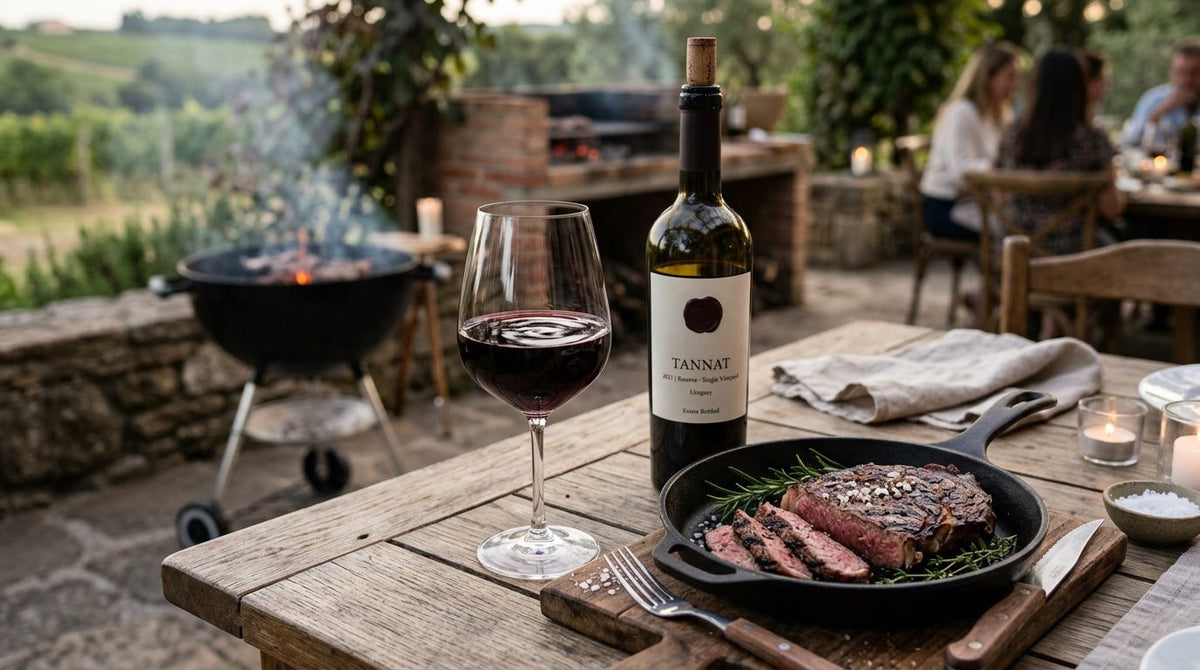
Tannat wine for grilled red meats is the pour to reach for when char, rendered fat, and smoke would flatten a softer red before the second bite. Its dense tannin and dark fruit are built to survive the grill, not just sit next to it, and that changes which cuts, which serving temperature, and which backup bottle actually work.
- Tannat wine handles charred, fatty cuts better than most reds because of its dense, high-tannin structure.
- Traditional Madiran Tannat from France is grippier; Uruguayan Tannat is rounder and easier for everyday grilling.
- Serve tannat at 60-65°F and decant young bottles 30-60 minutes before the first steak hits the grill in 2026.
- No tannat on the shelf? Petite Sirah, Malbec, or Nero d'Avola cover the same tannin-forward grilling job.
Why Tannat Wine Matters for Grilled Red Meats
Tannat carries more tannin, weight, and structure than nearly any other red grape poured with dinner, which is exactly why it survives a grill instead of getting steamrolled by it. Grilled red meat brings three things a wine has to fight through: rendered fat, a Maillard-browned crust, and often a char layer that turns bitter under high heat. A lighter red loses its fruit against that combination. Tannat's tannin binds to fat and protein instead, the same mechanism that makes a bite of ribeye taste smoother right after a sip.
Research on French wines led by cardiologist Roger Corder, published in Nature in 2006, measured procyanidin (tannin) concentrations across regions and found Tannat-based wines from Madiran among the highest recorded of any red wine style tested. That density is a serving consideration, not just a talking point: young Madiran Tannat needs food, air, or age to soften, and a grilled ribeye gives it all three at once.
Tannat also isn't a niche French grape anymore in buywinesonline.com's broader red wine selection. Basque immigrants, including winemaker Pascual Harriague, brought it to Uruguay in the 19th century, and it's now effectively the country's national red grape — grown in a warmer, more humid climate that produces rounder fruit and softer tannin than Madiran's version. That split matters for a grilling crowd: pick the French style for a dinner built around smoked brisket, and the Uruguayan style for a backyard burger night in 2026.
“If a wine can stand up to charred fat without softening into mush, it's tannat.”
How to Choose and Serve Tannat Wine for Grilled Red Meats
Match the tannin level to the cut you're grilling
- Ribeye and strip steak: medium-high tannat works without needing the grippiest Madiran bottling
- Skirt steak and hanger steak: the highest-tannin styles cut through the char best
- Lamb chops: rounder Uruguayan-style tannat balances the gamey fat better than a harsh, young French bottling
- Sausage and burgers: pick a lower-tannin tannat blend so it doesn't fight with ketchup and mustard acidity
- Brisket and low-and-slow smoked meat: full traditional Madiran-style tannat matches the smoke pound for pound
Read the char, not just the protein
- Char produces bitter compounds that clash with delicate reds, but dense tannin actually mutes perceived bitterness
- A wine under 13.5% ABV tastes thin against heavy char — tannat typically runs 13.5%-14.5%
- Charred vegetables on the same plate (peppers, corn) pull toward smoky, earthy tannat rather than a fruit-bomb red
- Marinades built on soy sauce or Worcestershire need enough acid to cut through, not just tannin, so check the label for cooler-climate fruit
Serve tannat at the right temperature for outdoor heat
- Serve at 60-65°F, several degrees below room temperature, especially outdoors in summer
- A bottle left in a hot car or on a sunny patio table oxidizes fast and loses fruit within an hour
- An ice pack tucked into a wine tote keeps bottles in range through a three-hour cookout
- Pour smaller glasses more often instead of filling one glass that sits out and warms up
Decant before the first steak hits the grill
- Young tannat, especially Madiran styles under five years old, benefits from 30-60 minutes of air
- A wide-bottomed pitcher works as well as a dedicated decanter for backyard settings
- Aged tannat, eight years and up, needs less time in the air and more care around sediment
- Skip decanting entirely if you're pouring within minutes of the meat coming off the grill
Keep one rounder backup bottle on hand
- Not every guest wants a wine built like tannat — keep a softer option open alongside it
- Zinfandel covers the same grilling job with more upfront fruit and less grip; see the full breakdown in zinfandel wine for barbecue and grilling
- Pour the backup bottle first for guests, then let them switch to tannat once the meat is on the table
- Label the two bottles clearly at an outdoor bar setup so nobody grabs the wrong glass mid-cookout
Shop by tannin profile when a specific bottling isn't in stock
- Cross-reference vintage and region before adding a bottle to cart — Madiran and Uruguayan Tannat behave differently at the same price point
- If a dedicated tannat isn't available, filter by "full-bodied red" and check the tasting notes for tannin and dark fruit language
- For a group of six or more, a mixed case of bold reds covers more ground than a single varietal
- Match the bottle to the cut before checkout, not after the meat is already on the grill
Store extra bottles between cookouts
- Store standing bottles away from light and heat between grilling sessions
- Aim for a storage spot that stays under 70°F year-round
- Reseal a half-finished bottle with a vacuum stopper rather than the original cork
- Use an opened bottle within three to five days, refrigerated, even for a wine this tannic
Tannat Wine vs. Other Bold Reds for the Grill
| Style | Best For | Tannin Level | Key Limitation | Verdict |
|---|---|---|---|---|
| Traditional Madiran Tannat (France) | Smoked brisket, slow-cooked cuts | Very high, grippy | Needs age or a long decant when young | Buy |
| Uruguayan Tannat | Weeknight burgers, everyday grilling | High, rounder fruit | Less widely stocked in US shops than French bottlings | Buy |
| Nero d'Avola | Guests who find tannat too austere | Medium-high | Softer structure, less smoke-driven depth | Try |
| Petite Sirah | Same butcher-counter cuts, bigger fruit | High, dense | Can read jammy instead of savory | Try |
| Malbec | Steak-night crowd-pleaser | Medium | Softer tannin, less grip against char | Hold |
The traditional Madiran style is the one worth building a grilling menu around if you can find it; the Uruguayan style is the easier weeknight pour.
When a specific tannat bottling isn't on hand, big Cabernet Sauvignon fills a similar role for steak night — the cellar-worthy end of that category is covered separately, but for pure grilling duty these bold reds below cover the same tannin-forward ground.


Common Mistakes When Pairing Tannat Wine With Grilled Meats
- Serving it too warm. A tannat left on a hot patio table tastes harsher and more astringent than the same bottle at 60-65°F.
- Pairing it with delicate proteins. Grilled fish or a plain chicken breast gets drowned out by tannat's tannin — save it for red meat.
- Skipping the decant because it's "just a backyard barbecue." Young Madiran Tannat needs the air more outdoors than at a formal dinner, not less.
- Buying the first "tannat" bottle on the shelf without checking region. Uruguayan and French Madiran styles are built differently, and the mismatch shows up fast against food.
- Not keeping a backup bottle. A table with only high-tannin options leaves tannin-sensitive guests with nothing to drink.
FAQ
What is tannat wine?
Tannat wine is a red wine made from the Tannat grape, known for producing some of the highest tannin and procyanidin levels of any red wine grape. It originated in southwest France's Madiran region and is now Uruguay's signature red.
Is tannat wine good with grilled meat?
Yes, tannat wine is one of the best matches for grilled red meat because its dense tannin binds to fat and protein, cutting through char and smoke better than lighter reds. It works especially well with skirt steak, brisket, and lamb.
What's the difference between Uruguayan and French tannat?
Uruguayan Tannat is grown in a warmer, more humid climate and produces rounder fruit with softer tannin, while French Madiran Tannat is grippier and often needs more age or decanting. Pick Uruguayan for everyday grilling and Madiran for slow-smoked, richer dishes.
Is tannat healthier than other red wines?
Tannat contains high levels of procyanidins, compounds studied for cardiovascular research, with a 2006 Nature-published study finding Madiran Tannat among the highest recorded of any wine tested. That's a tannin fact, not a medical recommendation.
What temperature should tannat be served at?
Serve tannat wine at 60-65°F, several degrees cooler than room temperature. Outdoors in summer heat, keep the bottle in a cooler bag with an ice pack between pours.
Does tannat need to be decanted?
Young tannat under five years old benefits from 30-60 minutes of air before serving to soften its tannin. Aged tannat, eight years and older, needs less time and more care around sediment.
What can I substitute for tannat at a barbecue?
Petite Sirah, Malbec, and Nero d'Avola all cover similar tannin-forward grilling duty when tannat isn't available. Petite Sirah comes closest in weight and grip; Malbec is the softer, more crowd-friendly option.
How long does opened tannat last in the fridge?
An opened bottle of tannat lasts three to five days refrigerated with a proper stopper, even though it's a high-tannin red. Tannin actually helps preserve the wine slightly longer than a lighter-bodied style.
One Last Thing
Uruguay didn't adopt Tannat by accident — Basque winemaker Pascual Harriague planted it there in the 19th century, and by 2026 it's grown into the country's most-identified red grape, still sometimes labeled "Harriague" on older-style bottles. If a grilling menu leans French, look for Madiran on the label; if it leans South American, look for Uruguay. Same grape, two different personalities at the table.