
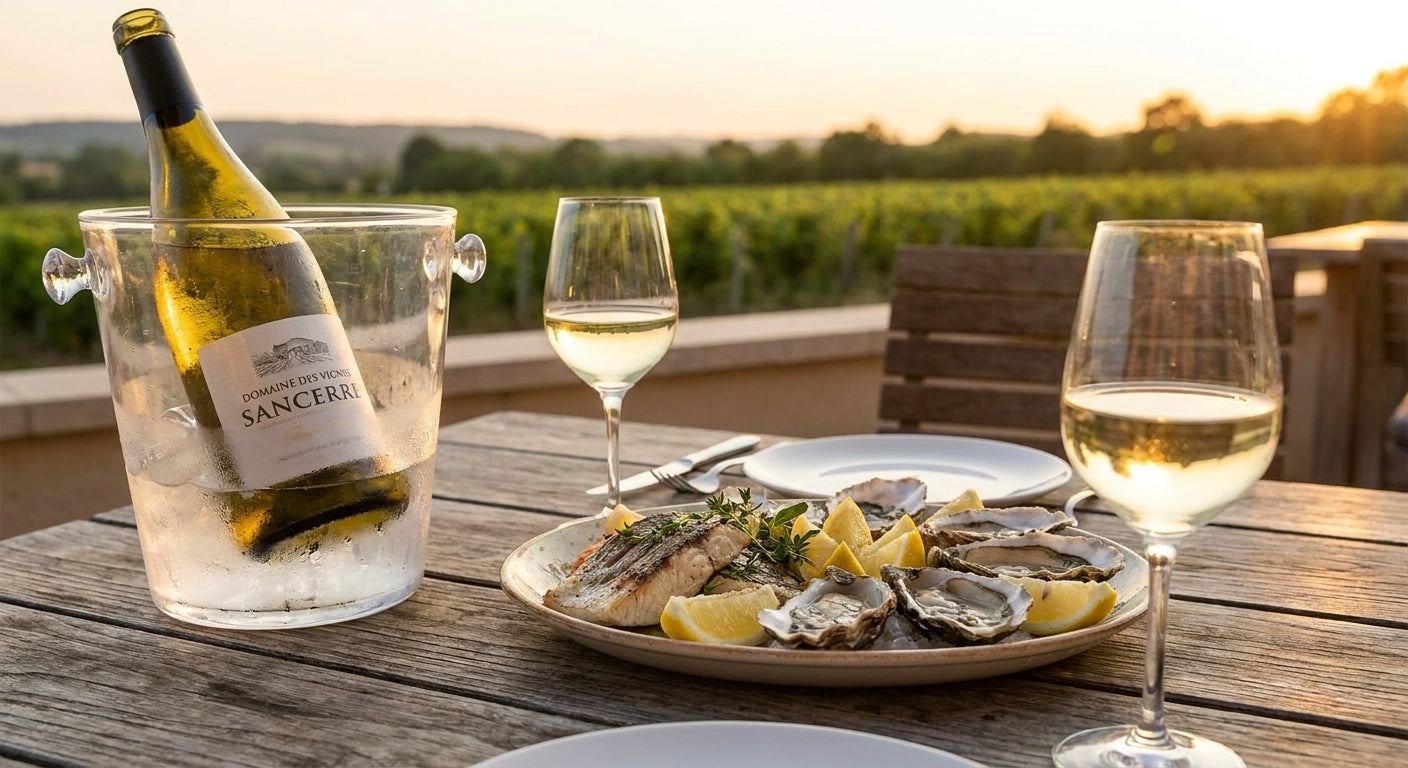
Real Sancerre is small-production Sauvignon Blanc from the eastern Loire Valley, and most online wine catalogs in 2026 either don't stock it or sell out of it fast. The seafood pairing logic that made Sancerre famous, though, still points you to the right bottle even when the label says something else.
- Sancerre wine pairing for seafood works because of high acidity and near-zero oak, not the label itself.
- Ladoucette Baron de L Pouilly-Fume 2019 is the closest available match: same grape, same river valley. Buy.
- Mar de Frades Albarino 2025 covers oysters and raw bar with Atlantic brine for under $25. Buy.
- Domaine Jacques Prieur Puligny-Montrachet Premier Cru 2022 is the splurge pick for scallops and lobster. Consider.
- Skip heavily oaked Chardonnay and anything above 14% ABV if the plan is delicate white fish.
Why this matters
Seafood is unforgiving with wine. Too much oak or alcohol and the fish tastes metallic; too much residual sugar and briny shellfish turns cloying. Sancerre solved this by accident of geography: flinty Kimmeridgian soil, a cool river valley, and a grape (Sauvignon Blanc) that stays lean at 12.5-13.5% ABV. When you can't find an actual bottle, the search is for that same combination, not the name on the label.
BuyWinesOnline stocks over 5,000 bottles, and a handful match the acid-and-minerality profile that makes Sancerre the default seafood wine. This guide names them and tells you exactly which dinner each one earns its place at.
Who this pairing guide is for
You're cooking shrimp, scallops, oysters, or a whole white fish tonight and you want a wine that won't fight the plate. You've heard "Sancerre" recommended for seafood and you're trying to figure out what actually delivers that effect if the real thing isn't sitting in your cart. That's the buyer this guide is built for, not the collector chasing a specific Loire producer.
What to look for in a Sancerre-style wine for seafood
High acidity, not high fruit
Acid is what cuts through butter sauce and citrus squeeze without clashing. A wine sitting below 3.3 pH reads as crisp on the palate; anything softer starts to feel flabby next to lemon-dressed fish. This is the single biggest predictor of a good seafood match.
Little to no oak
Oak barrels add vanilla, toast, and tannin-like grip, all of which pick a fight with delicate fish proteins. Sancerre is fermented and aged in stainless steel or neutral vessels for a reason. Any white showing heavy oak on the nose is working against the dinner, not with it.
A cool-climate or coastal growing region
Grapes grown in cooler sites or near coastlines retain natural acidity and develop the saline, mineral character that pairs with brine. Loire Valley, coastal Spain, and northern Italy all fit this lane. Warm-climate whites from hot inland regions tend to run softer and more tropical, which works against a raw bar but less well against poached fish.
ABV in the 12-13.5% range
Alcohol above 14% adds perceived heat and weight that overwhelms lighter fish. A wine at 12.5% feels weightless on the palate; the same grape grown warmer and pushed to 14.5% starts to taste like a different wine entirely. Check the label before you check the price tag.
Minerality or saline character
This is the hardest trait to fake and the easiest to taste. Wines grown on flint, chalk, or coastal soils often carry a wet-stone or oyster-shell note that echoes shellfish on the plate. It's subjective, but it's the trait Sancerre drinkers miss most when they switch to a generic Sauvignon Blanc.
Browse the current white wine selection at BuyWinesOnline before deciding, since inventory on small-production Loire and coastal whites turns over fast in 2026.
Top picks for a seafood dinner tonight
The closest thing to Sancerre without the label: Ladoucette Baron de L Pouilly-Fume 2019 is 100% Sauvignon Blanc grown across the river from Sancerre itself, same soil family, same appellation rules. It carries the flinty, gunflint note Sancerre is known for and drinks at a similarly lean ABV. Buy if the goal is authenticity over budget.
The oyster bar pick: Mar de Frades Rias Baixas Albarino Atlantico 2025 grows on Spain's Atlantic coast, where salt air and granite soil push the grape toward a briny, citrus-driven style built for raw bar service. It's priced well under the Loire options and drinks best within a year or two of release. Buy for oysters, clams, and ceviche.
The splurge for richer seafood: Domaine Jacques Prieur Puligny-Montrachet Les Combettes Premier Cru 2022 trades Sauvignon Blanc's leanness for white Burgundy's weight, with enough acid structure to still handle butter-poached lobster or seared scallops. This is a different style than Sancerre, built for a heavier plate. Consider it only when the seafood course involves cream or butter, not raw fish.
The Italian alternative: Ca dei Frati I Frati Lugana 2025 uses the Turbiana grape on Lake Garda's clay-limestone soil, landing in a similar lean, almond-and-citrus lane at a friendlier price than most Loire whites. Consider it for a weeknight seafood dinner where a splurge bottle doesn't make sense.
The crowd-pleaser that misses the mark: Santa Margherita Pinot Grigio Alto Adige 2025 is clean and reliable but built for easy drinking, not for cutting through a rich seafood sauce. The minerality Sancerre drinkers want just isn't there. Skip it for anything beyond casual shrimp cocktail.
What looks right but isn't
- Heavily oaked Chardonnay: vanilla and toast clash with delicate fish proteins and can make the dish taste metallic.
- Tropical, high-alcohol Sauvignon Blanc: New World bottlings pushed past 14% ABV read as hot and fruity, the opposite of the lean profile the seafood pairing needs.
- Off-dry Riesling with raw oysters: residual sugar fights brine instead of balancing it; save sweeter Rieslings for spicy shellfish dishes, not a raw bar.
Verdict comparison table
| Wine | Region | Grape | ABV | Best seafood match | Verdict |
|---|---|---|---|---|---|
| Ladoucette Baron de L Pouilly-Fume 2019 | Loire Valley, France | Sauvignon Blanc | ~13% | Oysters, white fish | Buy |
| Mar de Frades Albarino Atlantico 2025 | Rias Baixas, Spain | Albarino | ~12.5% | Raw bar, ceviche | Buy |
| Domaine Jacques Prieur Puligny-Montrachet 2022 | Burgundy, France | Chardonnay | ~13% | Lobster, scallops in butter | Consider |
| Ca dei Frati I Frati Lugana 2025 | Lombardy, Italy | Turbiana | ~12.5% | Weeknight shellfish | Consider |
| Santa Margherita Pinot Grigio 2025 | Alto Adige, Italy | Pinot Grigio | ~12.5% | Casual shrimp | Skip |


"If the wine feels warm on the finish, it's going to fight the fish, not flatter it."
That rule of thumb holds whether you're pouring true Sancerre or one of its stand-ins in 2026: check the ABV before you check the vintage.
FAQ
What is the best wine pairing for Sancerre-style seafood dinners in 2026?
A crisp, low-oak white with 12.5-13.5% ABV and coastal or cool-climate minerality is the best match, whether that's actual Sancerre, a Pouilly-Fume, or an Albarino. Avoid oaked or high-alcohol whites for delicate fish.
Is Pouilly-Fume the same as Sancerre?
No, but they're close. Both are 100% Sauvignon Blanc grown on opposite banks of the Loire River near Sancerre, France, sharing similar soil and a comparable flinty style, which is why Pouilly-Fume is the closest substitute when Sancerre isn't in stock.
Is Sancerre better than Chardonnay for seafood?
For raw or delicate white fish, yes, because Sancerre's higher acidity and absence of oak cut through brine without adding weight. For richer shellfish dishes with butter or cream, an unoaked or lightly oaked Chardonnage like Puligny-Montrachet can hold up better.
How much does a good seafood pairing wine cost in 2026?
Coastal whites like Albarino run $18-25, Loire whites like Pouilly-Fume land around $35-45, and premium white Burgundy such as Puligny-Montrachet Premier Cru starts well above $100. Budget and richness of the dish should drive the choice.
What ABV should a seafood wine have?
Stay in the 12-13.5% range for most seafood. Anything above 14% adds perceived heat that overwhelms delicate fish, though richer dishes with butter or cream sauces can handle slightly higher alcohol.
Does Albarino pair as well as Sancerre with oysters?
Yes, Albarino from Rias Baixas is grown on Spain's Atlantic coast and carries a similar briny, high-acid profile that many sommeliers consider interchangeable with Sancerre for raw bar service.
Should I chill a Sancerre-style white more than a Chardonnay?
Serve lean, high-acid whites like Sancerre or Pouilly-Fume colder, around 45-50 degrees Fahrenheit, to keep the acidity sharp. Fuller whites like Puligny-Montrachet show better slightly warmer, closer to 50-55 degrees.
What should I avoid pairing with delicate white fish?
Skip heavily oaked Chardonnay, high-alcohol New World Sauvignon Blanc above 14%, tannic reds, and off-dry Rieslings with raw preparations. All three fight brine or delicacy instead of complementing it.
One last thing
Sancerre and Pouilly-Fume sit close enough on the Loire that in blind tastings, even experienced palates mix them up regularly, they share the same grape, similar soil, and comparable acidity. If the goal in 2026 is the seafood pairing effect rather than the specific label, a well-chosen Pouilly-Fume or coastal Albarino delivers it at a lower price than most Sancerre currently on the market.