
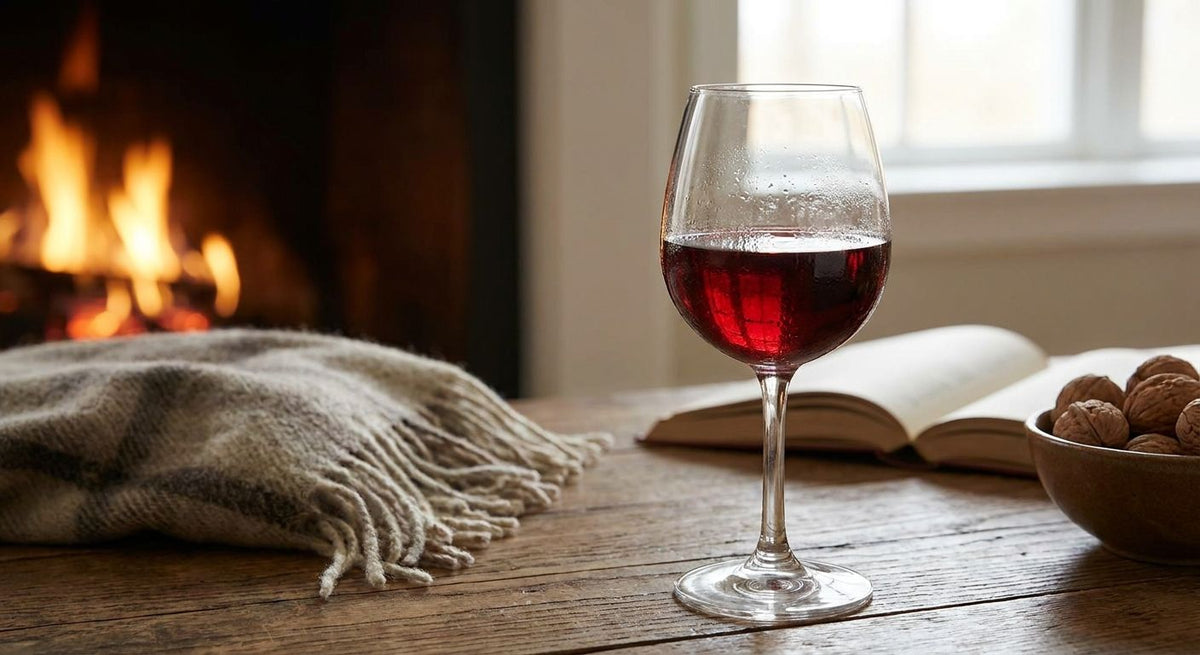
Port wine for cold weather sipping is a fortified dessert wine chosen specifically for winter drinking, where higher alcohol, concentrated sweetness, and a warming finish do more work than a delicate table red. Cold-weather sippers care less about acidity and food-pairing precision than a warm-climate rosé drinker does — they want something that holds up next to a fireplace, a wedge of aged cheddar, or a bowl of dark chocolate, and tastes better the longer it sits in the glass.
- Tawny port is the safest cold-weather pick for 2026 — nutty, caramel-forward, and forgiving if the glass sits out.
- Port wine runs 19-22% ABV, roughly double a standard table red, which is why a 2-3 oz pour is normal.
- Serve tawny port cool (55°F) and vintage port closer to room temperature (60-65°F) for the best winter flavor.
- Buy Wines Online stocks dessert and fortified-style wines for holiday sipping — check current fortified listings before ordering.
- Opened tawny keeps for weeks in a cool spot; opened vintage port fades within days.
Why port wine matters for cold weather sipping
A standard 750ml table wine sits around 12-14% ABV. Port wine is fortified with grape spirit during fermentation, which stops the yeast early and locks in residual sugar while pushing alcohol to roughly 19-22%. That combination — sweetness plus higher proof — is exactly what reads as "warming" in a cold glass on a January night.
Cold-weather sippers also aren't shopping the same way summer rosé drinkers are. They want a bottle that survives multiple pours over a week or two, pairs with rich winter food (blue cheese, roasted nuts, dark chocolate, spiced desserts), and doesn't need an ice bucket. Browse the full wine selection at Buy Wines Online to see how dessert and fortified styles sit alongside the rest of the catalog before you commit to a bottle.
Choose the right port style first
Not all port wine behaves the same in a cold-weather rotation. Pick the style before you pick the bottle.
- Ruby port — fruit-forward, least expensive tier, best for mulled drinks or casual sipping
- Tawny port — oxidized and barrel-aged, nutty and caramel notes, most forgiving once opened
- Late Bottled Vintage (LBV) — a single-year wine aged longer in barrel, fuller than ruby without vintage-level cost
- Vintage port — single best-year wine, needs decanting, drinks best within days of opening
- White port — lighter, often served over ice or in a spritz, less traditional for deep winter sipping
Tawny port is the default recommendation for most cold-weather sippers because it's ready to drink on release and doesn't punish you for a slow pace through the bottle.
Match port to your winter food
Port wine earns its keep at the table, not just by the fire. Build the pairing around the style you bought.
- Aged cheddar or blue cheese with tawny port
- Dark chocolate (70%+) with vintage or LBV port
- Roasted almonds or walnuts with any tawny
- Spiced fruit desserts (poached pear, gingerbread) with ruby port
- Charcuterie with a heavier cured fat content, paired against LBV's grip
Serve port at the right temperature
Serving temperature changes the flavor of port wine more than most drinkers expect. Serve too warm and the alcohol dominates; too cold and the fruit flattens out.
- Chill tawny and white port to roughly 55°F, similar to a light red
- Bring vintage and LBV port closer to 60-65°F, cellar temperature
- Never serve any port wine straight from the freezer or over 68°F
- Let a chilled bottle sit 10-15 minutes out of the fridge before pouring
- Use a wine thermometer clip if you're guessing — most drinkers overshoot warm, not cold
Pick the right glass and pour size
Port glasses are smaller for a reason — the ABV and sugar concentration mean a full table-wine pour is too much.
- Use a small tulip-shaped port glass if you have one; a standard white wine glass works fine otherwise
- Pour 2-3 oz per serving, not a full 5 oz table-wine pour
- Avoid large bowl glasses that push too much aroma at once for a wine this concentrated
- Skip stemless tumblers for vintage port — you lose the aromatics that justify the price
Store opened port correctly
How long a bottle lasts once opened depends entirely on the style, and this is where most cold-weather sippers waste money.
- Tawny port keeps 3-4 weeks after opening if recorked and stored cool
- Ruby port holds about 2-3 weeks under the same conditions
- LBV port lasts roughly 1-2 weeks once opened
- Vintage port degrades fastest — drink within 3-5 days of opening
- Store any opened bottle upright, away from direct heat or sunlight, not in a warm kitchen cabinet
If you're building a rotation for the season rather than a single bottle, the dessert wine guide for after-dinner entertaining covers how to stock a small dessert-wine bar without overbuying styles that go flat before you finish them.
Decant vintage port before serving
This step trips up first-time buyers more than any other.
- Vintage port throws sediment as it ages — decant it, don't shake the bottle
- Stand the bottle upright for 24 hours before opening so sediment settles
- Pour slowly and stop before the last half-inch to leave sediment behind
- Decant 1-2 hours before serving to let the wine open up
- Skip decanting entirely for ruby, tawny, or white port — they don't throw sediment the same way
For the full rundown on temperature, decanting, and glassware across every fortified style, the fortified wine serving guide walks through the mechanics step by step.
Port wine styles compared for winter
| Style | Best For | ABV Range | Key Limitation | Verdict |
|---|---|---|---|---|
| Ruby | Casual, budget-friendly sipping | ~19-20% | Least complex, fades fast in flavor once open | Buy for casual use |
| Tawny | Most cold-weather sippers, cheese boards | ~19-20% | Less dramatic than vintage on special occasions | Buy — best all-around |
| LBV | Fuller flavor without vintage price | ~19-20% | Shorter shelf life once opened than tawny | Buy for gifting |
| Vintage | Special occasions, dinner parties | ~19-20.5% | Needs decanting, drinks fast once opened | Hold for events |
| White port | Lighter sipping, spritz cocktails | ~19-20% | Less traditional for deep winter pairing | Skip unless mixing drinks |
Common mistakes cold-weather port drinkers make
- Buying vintage port for casual weeknight sipping. It degrades within days of opening and the cost doesn't match a Tuesday-night pour — save it for a dinner you'll finish the bottle at.
- Serving port straight from a cold fridge. Most styles taste flat and tight below 50°F; let the bottle warm up before pouring.
- Pouring a full table-wine glass. At 19-22% ABV, a 5 oz pour is nearly double the alcohol of a standard red wine serving.
- Storing an opened bottle on the counter near the stove. Heat accelerates oxidation past the point of pleasant — port ages fast once air gets in.
- Skipping decanting on vintage bottles. Sediment in the glass ruins the texture and the visual, and it's avoidable with 24 hours of prep.
If you're gifting rather than sipping solo this winter, the wine gift sets guide for the holidays covers how to pair a dessert-style bottle with the rest of a gift box without overspending on a style the recipient may not finish.
FAQ
What is port wine for cold weather sipping?
It's a fortified dessert wine served in small pours during winter months, chosen for its 19-22% ABV and concentrated sweetness. Tawny and ruby port are the most common cold-weather picks because they're ready to drink on release.
What's the best port wine style for winter?
Tawny port is the best all-around choice for winter sipping because it's nutty, caramel-forward, and holds up for weeks once opened. Vintage port is better saved for a single dinner party rather than everyday winter drinking.
Is port wine served hot or cold?
Port wine is served cool to room temperature, never hot. Tawny and white port do best around 55°F, while vintage and LBV port taste better closer to 60-65°F.
How long does an opened bottle of port last?
Tawny port lasts 3-4 weeks after opening if recorked and stored cool, while vintage port fades within 3-5 days. Ruby and LBV fall in between at roughly 1-3 weeks.
What foods pair with port wine in winter?
Aged cheddar and blue cheese pair well with tawny port, while dark chocolate and roasted nuts work with most styles. Spiced desserts like gingerbread or poached pear suit ruby port specifically.
What's the difference between tawny and ruby port?
Tawny port is barrel-aged and oxidized, giving it nutty and caramel notes, while ruby port is younger and more fruit-forward. Tawny also keeps longer once opened, making it more practical for slow winter drinking.
Does port wine need to be refrigerated after opening?
A cool, dark spot works better than a warm kitchen counter, but full refrigeration isn't required for ruby or tawny port. Vintage port should be kept cool and consumed within days regardless of storage.
Do you need a special glass for port wine?
A small tulip-shaped port glass concentrates the aroma better, but a standard white wine glass works fine for casual sipping. Avoid large bowl glasses and stemless tumblers for vintage port specifically.
One last thing
Most cold-weather sippers buy vintage port for everyday drinking and then let two-thirds of the bottle go flat in the back of a cabinet — tawny port solves that problem entirely because it's built to survive weeks open, not days. If you're stocking one bottle of port wine for the entire 2026 winter season and you're not planning a formal dinner around it, buy tawny and skip the vintage bottle until you have an occasion that will finish it in one sitting.