
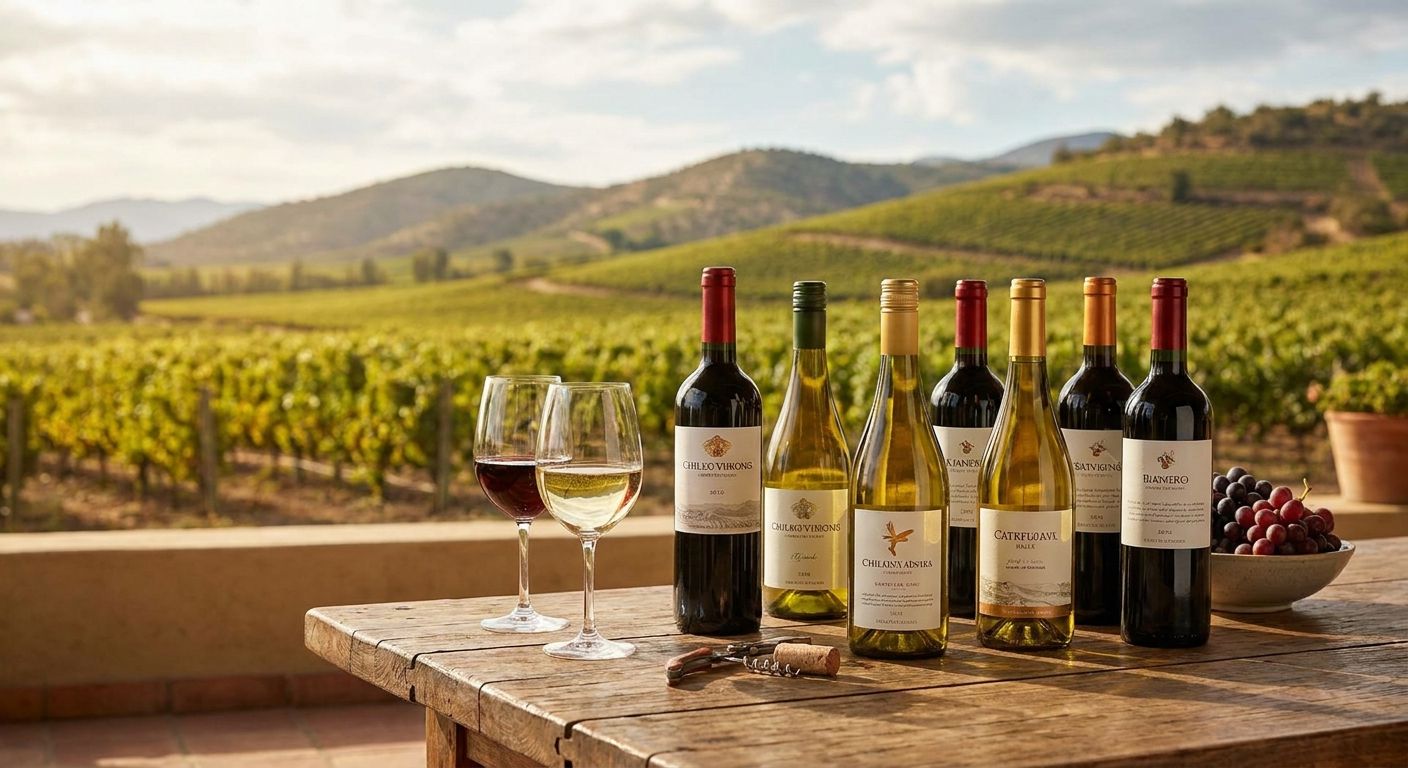
Chile turns out some of the sharpest value wine on the market in 2026, and the hard part for a beginner isn't finding a bottle — it's knowing which region and grape to trust on the first try.
- Colchagua Valley Carmenere is the best Chilean wine for beginners in 2026 — Buy for value and easy food pairing.
- Maipo Valley Cabernet Sauvignon delivers Bordeaux-style structure at a fraction of the price — Buy.
- Casablanca Valley Sauvignon Blanc is the safest white pick for a first-timer — Buy.
- Elqui Valley Syrah is harder to source and pricier for a starter bottle — Wait.
- Chile's phylloxera-free vineyards keep quality steady across most $10 to $25 bottles.
Why this matters
Most beginners overpay for a bottle that tastes the same as something $15 cheaper, and Chile is where that gap is widest. Chile's vineyards sit between the Andes and the Pacific, a geography that kept the country largely free of phylloxera — the root louse that forced most of the world to graft its vines onto resistant rootstock. Ungrafted, older vines and a dry, disease-light climate mean consistency: a $14 Chilean Cabernet in 2026 tastes closer to its $30 cousin than the same price gap would suggest almost anywhere else.
If you'd rather sample several Chilean-adjacent styles side by side before committing to a full case, the 20-bottle international wine tasting set is a low-risk way to compare New World reds and whites without guessing blind.
How this list was ranked
The ranking below weighs four things: grape and region reputation within Chile's own Denominación de Origen system, food-pairing versatility for a home table, typical US retail pricing in 2026, and how forgiving the style is if you're still learning what you like. Regions that show up on nearly every reputable Chilean producer's portfolio rank higher than niche appellations that require hunting.
The ranked list
1. Colchagua Valley Carmenere — the one that surprises everyone
Carmenere is Chile's signature grape, and Colchagua Valley grows the best-known versions of it. The grape was misidentified as Merlot in Chilean vineyards for over a century until French ampelographer Jean-Michel Boursiquot correctly identified it in 1994 — a fact that still gets Chilean Carmenere labeled as a discovery story rather than a commodity red. Expect spice, dried herb, and dark plum notes with soft tannins that don't punish a beginner's palate. It pairs easily with roasted vegetables, burgers, and grilled meats, which makes it a forgiving everyday pour. Buy — it's the single best entry point into what makes Chilean wine distinct from Argentine or Californian reds.
2. Maipo Valley Cabernet Sauvignon — the safe pick
Maipo Valley is Chile's oldest and most established fine-wine region, sitting just south of Santiago with gravelly, well-drained soils that Cabernet Sauvignon thrives in. The style leans structured and cedar-toned, closer to a restrained Bordeaux than a fruit-forward Napa Cabernet. Most quality bottles land in the $12 to $25 range in 2026, and the tannin profile is approachable enough for someone who hasn't built up a red-wine palate yet. Buy — if you only try one Chilean red this year, make it this one.
3. Casablanca Valley Sauvignon Blanc — the crowd-pleasing white
Casablanca Valley sits close enough to the Pacific to pull in cooling fog most mornings, which keeps acidity high and alcohol moderate in its Sauvignon Blanc. The result is a crisp, citrus-and-herb white that reads closer to a cool-climate New Zealand style than a warm-climate California one. It's an easy match for shellfish, salads, and light chicken dishes — nothing about it demands food-pairing expertise. Buy — it's the least intimidating white on this list for someone new to Chilean wine.
4. Leyda Valley Pinot Noir — the lighter red
Leyda Valley is one of Chile's youngest official appellations, planted mostly in the last few decades specifically to chase cool-climate reds. Its Pinot Noir comes out light-bodied with red cherry and cranberry notes, a gentler introduction to Pinot Noir than a pricier Burgundy bottle. It won't have the depth of an Oregon or Sonoma Pinot Noir, but it also won't cost what those regions charge. Consider — good if you already know you like lighter reds and want a budget entry point.
5. Casablanca Valley Chardonnay — the oak-free white
The same coastal fog that benefits Casablanca's Sauvignon Blanc shapes a leaner, less buttery Chardonnay style than what most beginners associate with the grape. Minimal oak aging keeps the fruit — green apple, pear, citrus peel — front and center rather than buried under vanilla and toast. It's a solid choice if a heavily oaked Chardonnay has ever put you off the variety entirely. Consider — worth trying once you've settled on Chile's reds and want to round out a case.
6. Elqui Valley Syrah — the wildcard
Elqui Valley grows grapes at some of the highest elevations in Chile, and the intense sun exposure plus cool nights produce a bold, peppery Syrah with real concentration. It's a genuinely interesting style, but it's less widely stocked than Maipo Cabernet or Colchagua Carmenere, and entry bottles tend to sit at the higher end of the beginner price range. Wait — save it for your second or third Chilean bottle, not your first.
Comparison table
| Region | Signature Grape | Style | Typical Price (2026) | Verdict |
|---|---|---|---|---|
| Colchagua Valley | Carmenere | Spicy, plum, soft tannin | $12-$20 | Buy |
| Maipo Valley | Cabernet Sauvignon | Structured, cedar, blackcurrant | $12-$25 | Buy |
| Casablanca Valley | Sauvignon Blanc | Crisp, citrus, herbaceous | $10-$18 | Buy |
| Leyda Valley | Pinot Noir | Light, red cherry | $14-$22 | Consider |
| Casablanca Valley | Chardonnay | Lean, minimal oak | $12-$20 | Consider |
| Elqui Valley | Syrah | Bold, peppery, high-altitude | $15-$28 | Wait |
Where to buy
- Check the appellation on the label, not just the country. "Product of Chile" tells you nothing about which valley grew the grapes — Maipo, Colchagua, and Casablanca each taste distinct, and the region matters more than the brand name for a beginner deciding what to try next.
- Buy from a retailer that ships with real temperature protection. Wine sitting in a hot delivery truck for a day can flatten fruit character before the bottle ever reaches your table; an ice pack added to a summer order is cheap insurance against that.
- Read a few reviews of the retailer itself before the wine. A guide to choosing a reliable online wine retailer covers what to check — shipping speed, return policy, and how orders are packed — before you commit to a case of anything, Chilean or otherwise.
FAQ
What is the best Chilean wine for beginners?
Colchagua Valley Carmenere is the best Chilean wine for beginners in 2026, thanks to soft tannins and an easy match with everyday food. Maipo Valley Cabernet Sauvignon is a close second if you want a more structured red.
Is Chilean Carmenere better than Malbec?
Neither is objectively better — they're different styles. Carmenere leans spicier and herbal with softer tannins, while Argentine Malbec tends toward riper dark fruit and a bit more weight.
How much does a good Chilean wine cost in 2026?
Most quality Chilean wines sit between $10 and $25 at US retail in 2026. Rarer high-elevation styles like Elqui Valley Syrah can run higher.
What food pairs well with Chilean Cabernet Sauvignon?
Maipo Valley Cabernet Sauvignon pairs well with grilled or roasted red meat, aged cheese, and dishes with cooked tomato. Its cedar and blackcurrant notes hold up to richer, fattier food.
Is Chilean wine as good as Argentine wine?
Both countries make excellent value wine, but they specialize differently. Chile is known for Carmenere and cool-coastal whites from Casablanca Valley, while Argentina leans on high-altitude Malbec from Mendoza.
What is Chile's signature grape variety?
Carmenere is Chile's signature grape. It was misidentified as Merlot in Chilean vineyards for decades until it was correctly identified in 1994.
Are Chilean wines sweet or dry?
The vast majority of Chilean wines, including the Cabernet Sauvignon, Carmenere, and Sauvignon Blanc covered here, are dry. Sweet styles exist but are far less common in Chilean exports.
Where does Chile's best Sauvignon Blanc come from?
Casablanca Valley produces Chile's best-known Sauvignon Blanc, thanks to Pacific fog that keeps the grapes cool and acidic. San Antonio Valley, just south of it, makes a similar coastal style.
One last thing
The fact most beginners miss: Chile's Cabernet Sauvignon vines are largely ungrafted because the country escaped the phylloxera epidemic that forced grafting almost everywhere else, which is a real, checkable reason a $15 Maipo Valley bottle can taste more consistent than a $15 bottle from a region that wasn't spared. Start with Colchagua Carmenere and Maipo Cabernet Sauvignon before branching into Elqui Syrah — the order matters more than the price tag.