
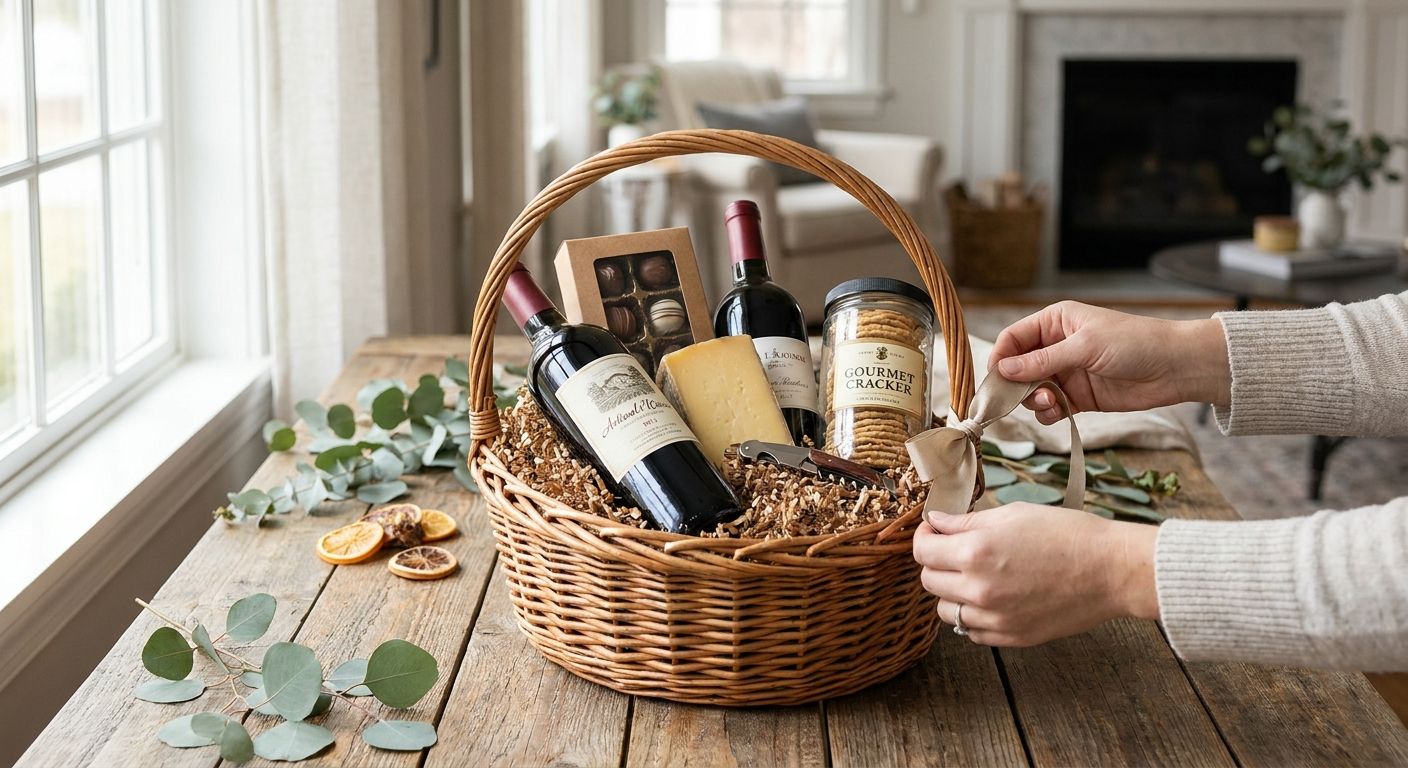
Building a wine gift basket at home costs less than most pre-made sets and lets you match the bottle, the extras, and the wrap to the actual person you're giving it to. Here's the full process, start to finish, with no floral foam or shrink-wrap gun required.
- Learning how to make a wine gift basket at home takes under 30 minutes once you pick one hero bottle and two or three pairings.
- A 20 Bottle International Wine Tasting Set solves the 'I don't know their taste' problem for group or office gifts - Buy.
- Pack glass with an ice pack for any basket traveling more than an hour in a car or through summer shipping in 2026.
- Skip cellophane shrink wrap on baskets over 8 pounds - it tears at the seams and exposes the bottles mid-transit.
- A $50-$75 Napa Valley Cabernet Sauvignon reads as a real gift without pushing the whole basket past $100.
Why this matters
Most pre-assembled wine gift baskets pair a mediocre bottle with filler snacks nobody eats, then charge a markup for the ribbon. Building your own means every dollar goes toward things the recipient actually wants: a bottle worth drinking and one or two accessories that make sense together.
It also solves the sizing problem. A basket for a coworker's retirement looks nothing like one for a wedding anniversary, and a fixed retail set can't flex for that. Start with a bottle from a source like a 20 Bottle International Wine Tasting Set if you're building more than one basket at once, since it gives you a rated bottle pool to pull from without guessing.
What you'll need
- One hero bottle (750 ml, unopened, appropriate for the occasion)
- One or two smaller pairings: a second bottle, a mini, or a food item
- A container: basket, wooden crate, or gift box - something with a flat, stable bottom
- Packing material: shredded paper, excelsior, or crumpled kraft paper
- Cellophane or shrink wrap, plus ribbon or twine
- A card or tag
- An ice pack if the basket will travel more than 60 minutes in a car, or ship
The steps
1. Pick your hero bottle first
Everything else in the basket gets built around this bottle, so choose it before you buy anything else. For a serious gift, a Napa Valley Cabernet Sauvignon for gift baskets in the $50-$75 range reads as intentional without looking like you overspent. For a lighter occasion - a hostess gift, a summer birthday - a rosé or a Prosecco does the same job at a lower price point.
Common mistake: picking the bottle last, after the basket and ribbon are already bought. That backs you into a size and color scheme the wine has to fit, instead of the other way around.
2. Choose one or two complementary pairings
A single bottle in a basket looks sparse. Add one more bottle in a different style - a red plus a white, or a still wine plus something sparkling - or pair the hero bottle with two or three food items: dark chocolate, a hard cheese that travels well, or crackers.
Keep it to two or three items total. Baskets stuffed with six mismatched products look cluttered and cost more without adding perceived value.
3. Match the container to the bottle count
A single bottle needs a narrow basket or a wine box, not a wide picnic hamper with empty space around it. Two to three bottles fit a medium basket roughly 10-12 inches across. Anything past three bottles needs a wider base or a wooden crate so the bottles stand upright without leaning.
Expected outcome: the bottles should stand on their own inside the container before you add any packing material. If they tip, the container is too shallow or too narrow.
4. Pack for stability, not just looks
Line the container with packing material first, then set the bottles in, then fill every gap around them - this is what keeps glass from clinking or cracking in transit. Use shredded paper, excelsior, or crumpled kraft paper, packed firm enough that a gentle shake doesn't move the bottles.
Common mistake: packing material only on top for looks, leaving the bottles loose at the base. That's the version that arrives with a cracked bottle or a wine-soaked basket.
5. Add temperature protection if the basket is traveling
Any basket riding in a hot car, sitting on a porch, or going through a carrier for more than a few hours needs temperature protection, not just cushioning. A slim ice pack tucked between bottles keeps the wine from cooking in transit without adding much bulk to the basket.
This matters more in summer 2026 shipping conditions than people expect - a red wine that sits at 90°F for six hours in a delivery van can pick up a flat, stewed character it didn't have on the shelf.
6. Wrap and finish the presentation
Gather cellophane over the top and twist-tie or ribbon-tie it at the neck of the basket, not stretched drum-tight across the whole thing. Tight shrink wrap over a heavy basket splits at the seams before it even leaves your house. A loose gather with a ribbon bow does the job and survives handling.
Expected outcome: the wrap should hold its shape when you lift the basket by the handle, with no gaps where bottles could shift.
7. Add a card and deliver or ship
Write the card last, once the basket is finished, so you can reference what's actually inside it. If you're shipping rather than hand-delivering, check that whatever carrier you use accepts alcohol shipments to the recipient's state - rules vary, and this is the step people skip and regret.


Troubleshooting
- Bottles clink or shift when you lift the basket - the packing material is too loose. Repack with firmer, denser filler between and under each bottle, not just around the sides.
- The wrap tears at the corners - the container has sharp edges or the wrap was pulled too tight. Round the corners with extra tissue paper before wrapping, and leave slack in the cellophane.
- The basket feels too heavy to carry by the handle - you've likely gone past three bottles plus food in a basket built for two. Move to a wider-base container or split the gift into two smaller baskets.
- The wine arrives warm or the bottle feels hot - no ice pack was used, or it wasn't placed against the bottle body. Reposition it directly against the glass, not just tucked into the corner packing.
- The basket looks half-empty once wrapped - too few items for the container size. Either add a second smaller pairing or downsize to a narrower basket.
- Carrier rejects the shipment - alcohol shipping rules differ by state and carrier. Confirm acceptance before you pack, not after you've already wrapped it.
Tools and resources
- A basket, crate, or gift box with a flat, stable base
- Shredded paper or excelsior for packing
- Cellophane wrap and ribbon or twine
- An ice pack for any basket traveling more than an hour
- A hero bottle sourced from a real online wine retailer rather than a grocery aisle, so the label and rating are verifiable
- A mixed case like the 20 Bottle International Wine Tasting Set when you're building baskets for more than one recipient at once
What to do next
Once the basic build is down, the next decision is which bottle actually goes in the center. Occasion changes that answer more than budget does - a retirement gift and a summer hostess gift shouldn't use the same hero bottle even at the same price point. Match the wine to the moment before you match the ribbon color.
FAQ
How to make a wine gift basket without buying a kit?
Pick one hero bottle, add one or two pairings, pack them into a basket with shredded paper for stability, wrap loosely with cellophane, and tie with ribbon. The whole build takes under 30 minutes and costs less than a pre-made gift set in 2026.
What wine should go in a wine gift basket?
Match the bottle to the occasion: a $50-$75 Napa Valley Cabernet Sauvignon for a milestone gift, a Prosecco or rosé for a lighter one. The bottle should be the most expensive single item in the basket.
How many bottles should a wine gift basket have?
One to three bottles works for most baskets. One bottle plus a small food pairing suits a narrow basket, while three bottles needs a wider or deeper container so they stand upright without leaning.
Do I need an ice pack for a wine gift basket?
Yes, if the basket travels more than about an hour in a car or goes through carrier shipping, especially in warm months. Heat above roughly 90°F for several hours can flatten the flavor of red wine before it's even opened.
What can I pair with wine in a gift basket besides food?
A second bottle in a contrasting style - a red with a white, or a still wine with something sparkling - reads as more intentional than food filler and keeps the basket focused on wine rather than snacks.
Is it cheaper to build a wine gift basket at home than buy one?
Usually yes, because pre-made sets mark up both the wine and the assembly labor. Building your own means every dollar goes to a bottle and pairing you chose, not a bundled fee.
Can I ship a homemade wine gift basket?
Yes, but confirm your carrier accepts alcohol shipments to the recipient's state before you pack it, since rules vary by state and by carrier as of 2026.
What size basket fits three wine bottles?
A basket roughly 10-12 inches across with a solid, flat base holds three 750 ml bottles upright. Anything narrower forces the bottles to lean against each other, which increases breakage risk.
One last thing
The detail people skip most often is the ice pack, and it's the one that actually determines whether the wine tastes like anything by the time it's opened. A basket that looks perfect in the photo but sat in a hot trunk for four hours can hand the recipient a wine that tastes flat and cooked - the ribbon never fixes that.