
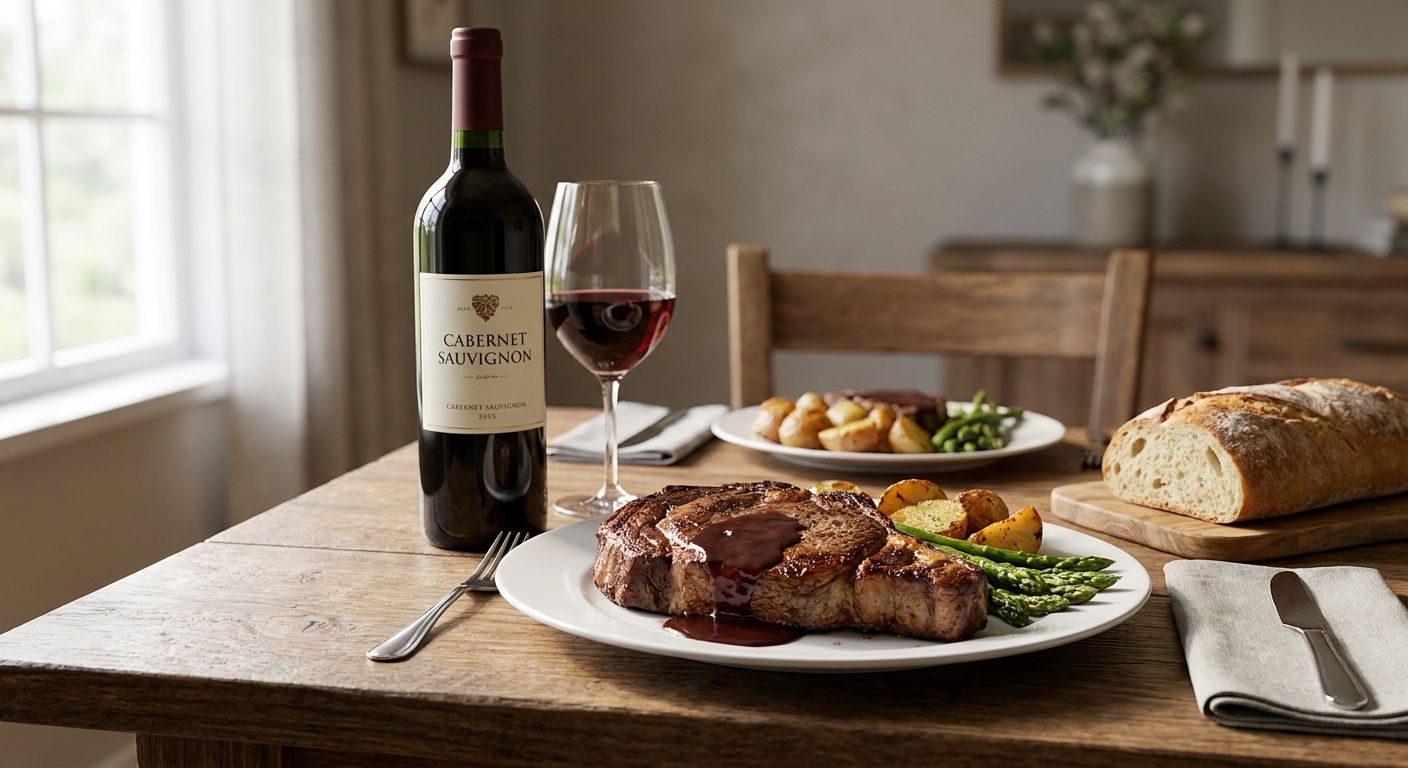
Steak night calls for a wine that can stand up to char, fat, and salt without getting steamrolled or turning bitter — and picking the right cabernet sauvignon for steak comes down to tannin, oak, and how the cut on your plate is built.
- Caymus Special Selection Cabernet Sauvignon 2020 is the safest steak-night buy for ribeye and NY strip in 2026.
- Silver Oak Alexander Valley Cabernet Sauvignon 2021 is the classic steakhouse pour with softer tannin for filet.
- Chateau Buena Vista Cabernet Sauvignon Napa Valley 2022 is the value entry that still holds up to a hard sear.
- Skip thin, cool-climate cabernet and over-oaked bargain bottlings labeled cabernet sauvignon for steak dinners.
- Match tannin to fat: leaner cuts need softer wine, fattier cuts can take a bigger, grippier cabernet.
Why this matters
A hard sear creates char compounds and a Maillard crust that can make a soft, fruity red taste flat or hollow. Cabernet sauvignon's tannin is what cuts through fat and resets your palate between bites, which is why it's the default pour for steak in nearly every American steakhouse. Get the tannin-to-fat match wrong and you either get a wine that tastes thin next to the meat or a wine so tannic it turns bitter against a lean cut.
BuyWinesOnline.com carries a wide range of Napa Valley cabernet sauvignon built for exactly this pairing, from steady everyday bottles to cult-level pours for a bigger occasion. The rest of this guide walks through what actually matters when you're shopping for cabernet sauvignon for steak night in 2026, not tasting-note fluff.
Who this is for
This guide is for the home cook who's grilling or pan-searing steak tonight and wants one bottle that works without a wine-pairing deep dive. It's built for ribeye, NY strip, and filet mignon dinners for two to six people, not a formal multi-course tasting menu. If you're feeding a crowd on a budget, jump to the value pick; if it's an anniversary dinner with a $80 dry-aged ribeye, go straight to the splurge tier.
What to look for in cabernet sauvignon for steak
Tannin structure and grip
Tannin is the drying, gripping sensation on your gums, and it's the single most important trait for a steak wine. Fat coats your palate; tannin strips it back off, which is why a high-tannin cabernet sauvignon tastes smoother next to a fatty ribeye than it does on its own. Most Napa cabernet built for steak carries firm, structured tannin from oak aging and ripe grape skins, typically finishing at 14-15% ABV.
Oak treatment and vanilla-spice notes
Oak barrel aging adds vanilla, baking spice, and a rounder mouthfeel that echoes the char and grill marks on a seared steak. Too much new oak on a cheap bottle, though, can taste like a plank dipped in vanilla extract with none of the fruit or structure to back it up. The best cabernet sauvignon for steak balances oak with real fruit concentration underneath.
Fruit ripeness versus char intensity
A harder char and a heavier char crust need a riper, more concentrated wine to match the intensity on the plate; a lighter sear or a simply salted steak can work with a slightly less powerful pour. If you're cooking over hardwood charcoal or finishing under a broiler, lean toward the bigger, riper cabernet options rather than a lighter, more restrained style.
Appellation: Napa Valley versus everywhere else
Napa Valley cabernet sauvignon built its reputation on steak pairing specifically because of its ripe, structured, oak-forward house style. Other regions can make good cabernet, but for steak night specifically, Napa's warmer growing season and longer hang time consistently produce the fruit concentration and tannin backbone that stands up to a hard sear.
Body weight matched to the cut
Ribeye and porterhouse carry more internal fat and can take a bigger, more tannic cabernet sauvignon without the wine reading as harsh. Filet mignon is leaner and benefits from a slightly softer, rounder style so the tannin doesn't overwhelm the meat. Get this backwards — a big, grippy cab on a lean filet — and the wine tastes more aggressive than the food can support.
Top picks for steak night
The crowd pleaser: Caymus Special Selection Cabernet Sauvignon 2020. This is a step up from standard Caymus in concentration and oak integration, built with the kind of ripe fruit and firm tannin that shrugs off a hard-seared ribeye. It's the bottle to bring when you want zero risk of disappointing anyone at the table. Verdict: Buy.
The classic steakhouse pour: Silver Oak Alexander Valley Cabernet Sauvignon 2021. Silver Oak's house style is rounder and more approachable than a lot of Napa cabernet, which makes it the better call for filet mignon or a leaner cut where you don't want the tannin fighting the meat. It drinks well the night you open it, no long cellar wait required. Verdict: Buy.
The value entry: Chateau Buena Vista Cabernet Sauvignon Napa Valley 2022. This is the pour for a Tuesday steak dinner or a bigger group where you're opening three or four bottles instead of one. It carries real Napa structure without stepping into cult-wine territory. Verdict: Buy.
The modern powerhouse: Faust Cabernet Sauvignon Napa Valley 2022. Faust runs riper and more layered than the entry-level bottles, built for a heavier char and a bigger cut like a porterhouse or a bone-in ribeye. Open it 45 minutes before serving to let the tannin settle. Verdict: Buy.
The everyday steak wine: Decoy Limited Napa Valley Cabernet Sauvignon 2023. This is the practical Tuesday-to-Sunday bottle, softer than the splurge picks above but still built with enough structure to handle a pan-seared strip steak. Verdict: Consider.
What to avoid
- Thin, cool-climate cabernet sauvignon. Wines from cooler regions built for lighter food read as watery and sharp next to a fatty, seared steak — the tannin isn't there to do the work.
- Over-oaked bargain bottlings. A cheap cabernet loaded with artificial-tasting vanilla oak chips will clash with char instead of complementing it; the oak needs real fruit underneath to balance it.
- Serving any cabernet too warm. Cabernet sauvignon poured above 68°F tastes flabby and boozy against a hot steak. Serve it at 60-65°F, which usually means 15-20 minutes in the fridge before pouring.
Verdict comparison table
| Wine | Best cut | Tannin level | Verdict |
|---|---|---|---|
| Caymus Special Selection Cabernet Sauvignon 2020 | Ribeye, NY strip | Firm | Buy |
| Silver Oak Alexander Valley Cabernet Sauvignon 2021 | Filet mignon | Moderate, rounded | Buy |
| Chateau Buena Vista Cabernet Sauvignon Napa Valley 2022 | Any weeknight cut | Firm | Buy |
| Faust Cabernet Sauvignon Napa Valley 2022 | Porterhouse, bone-in ribeye | High | Buy |
| Decoy Limited Napa Valley Cabernet Sauvignon 2023 | Strip steak, weeknight grilling | Moderate | Consider |
FAQ
What's the best cabernet sauvignon for steak in 2026?
Caymus Special Selection Cabernet Sauvignon 2020 is the safest pick for steak night in 2026 because its firm tannin and oak-driven structure hold up against a hard sear. Silver Oak Alexander Valley Cabernet Sauvignon 2021 is the better call if you're serving a leaner cut like filet mignon.
Is cabernet sauvignon always the right pairing for steak?
Cabernet sauvignon is the most reliable red for steak because its tannin cuts through fat, but it's not the only option. Zinfandel and other bold reds can also work, especially with barbecue-style grilling.
Should you decant cabernet sauvignon before steak night?
Decanting a young, tannic cabernet sauvignon for 30 to 60 minutes softens its grip and opens up the fruit before you sit down to eat. Older or more delicate bottles need less air, sometimes just 15 minutes.
What temperature should cabernet sauvignon be served at with steak?
Cabernet sauvignon should be served at 60-65°F with steak, which is cooler than room temperature in most homes. Pop it in the fridge for 15-20 minutes before pouring if your kitchen runs warm.
Is Napa Valley cabernet sauvignon better for steak than other regions?
Napa Valley cabernet sauvignon is generally the strongest steak pairing because its warm growing season produces the fruit concentration and firm tannin that stand up to a hard sear. Other regions can work but tend to run lighter in body.
How much should you spend on cabernet sauvignon for steak night?
You don't need a splurge bottle for a weeknight steak dinner — a solid Napa Valley cabernet sauvignon in the everyday tier does the job. Save the bigger, more concentrated bottles for a special-occasion cut like porterhouse or dry-aged ribeye.
Does the cut of steak change which cabernet sauvignon works best?
Yes — fattier cuts like ribeye and porterhouse can handle a bigger, more tannic cabernet sauvignon, while leaner cuts like filet mignon pair better with a rounder, softer style. Matching tannin to fat content is the single biggest factor in getting the pairing right.
Can you serve cabernet sauvignon with well-done steak?
Cabernet sauvignon still works with well-done steak, though the meat loses some of the fat and juiciness that helps balance tannin. A slightly softer, less tannic bottle like Silver Oak Alexander Valley Cabernet Sauvignon 2021 pairs more comfortably than a high-tannin option in that case.
One last thing
The fat-to-tannin rule matters more than the label or the score on the bottle: a fattier cut like ribeye can absorb a bigger, grippier cabernet sauvignon than a lean filet ever could, so match the wine to the marbling on your plate before you match it to the price tag. If you're grilling two different cuts on the same night, open two bottles instead of forcing one wine to do both jobs.