
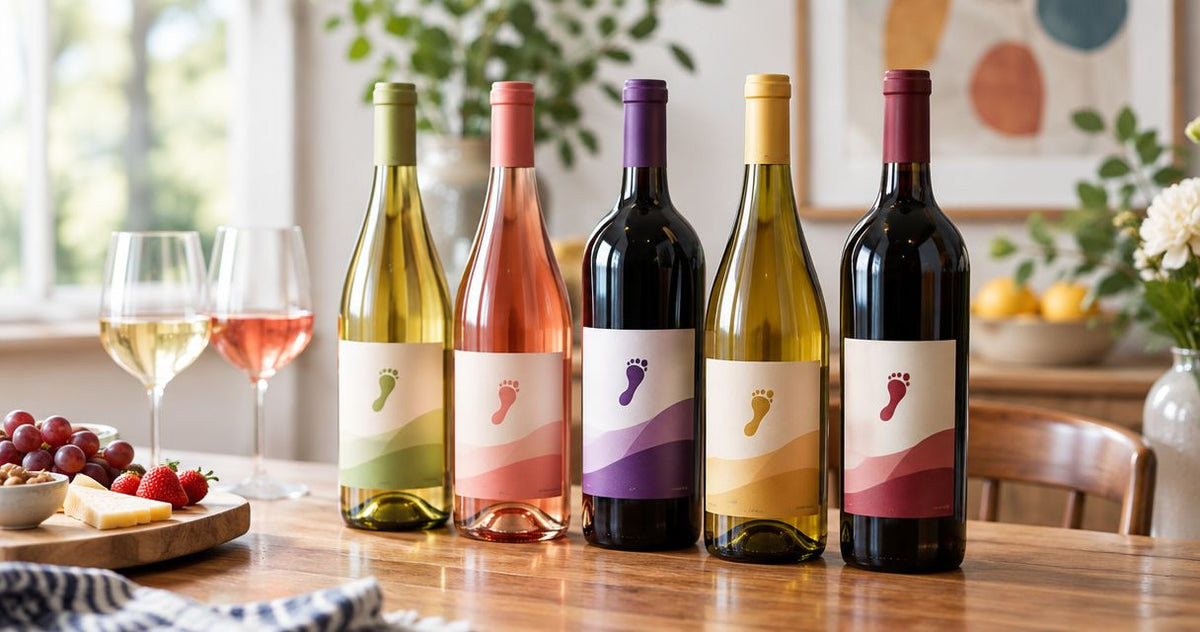
Best overall Barefoot wine flavor for 2026: Barefoot Pink Moscato. Best for celebrations: Barefoot Bubbly Pink Moscato Spumante. Best budget red: Barefoot Cabernet Sauvignon.
- Barefoot Pink Moscato is the best barefoot wine flavor overall for sweet, low-alcohol sipping in 2026.
- Barefoot Bubbly Pink Moscato Spumante wins for toasts; Barefoot Cabernet Sauvignon is the budget red pick.
- Barefoot Chardonnay and Cabernet Sauvignon trade varietal character for sweetness — skip both for serious food pairing.
- Readers who outgrow Barefoot's sweet profile can browse BuyWinesOnline's 5,000+ bottle catalog for a step up.
Why this matters
Barefoot is one of the most widely stocked wine brands in US grocery and liquor stores, and its lineup spans a dozen-plus flavors, from a lighter Pinot Grigio to candy-sweet Fruitscato. Pick the wrong one and the bottle sits half-full in the fridge for a week.
This guide ranks the Barefoot wine flavors on what they actually deliver — sweetness, drinkability, and occasion fit — not marketing copy. Readers ready to move past mass-market sweet wines can browse Buy Wines Online, which stocks over 5,000 bottles across every price point, from everyday reds to library Napa Cabernets.
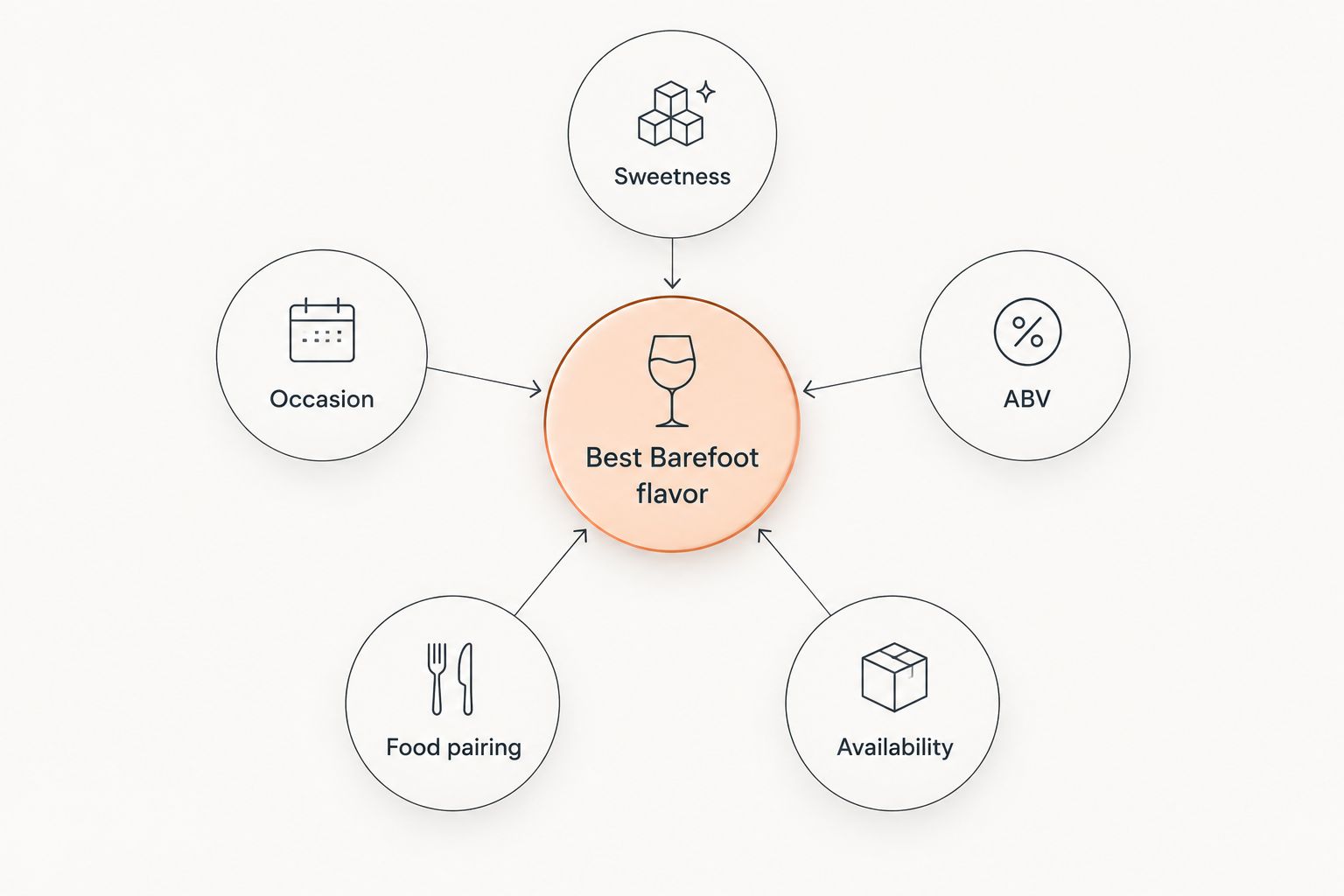
What makes the best Barefoot wine flavor
- Sweetness accuracy — does the flavor deliver the sugar level the label promises
- Drinkability — lower-ABV flavors built for a full glass, or two, without a heavy finish
- Occasion fit — dessert, backyard party, weeknight dinner, or toast
- Food-pairing range — how far the flavor stretches beyond sipping alone
- Availability — how consistently the flavor sits on shelves nationwide
- Value for casual drinking — built for volume, not for cellaring
Barefoot wine flavors at a glance
| Flavor | Best for | Standout feature | Key limitation |
|---|---|---|---|
| Pink Moscato | Sweet wine beginners | Low ABV, easy sipping | One-note sweetness, no dry finish |
| Moscato | Dessert pairing | Honeyed, floral aroma | Too sweet for savory food |
| Chardonnay | Everyday casual pours | Light oak, soft body | Thin next to barrel-aged Chardonnay |
| Pinot Grigio | Warm-weather sipping | Crisp, lower residual sugar | Simple, short finish |
| Cabernet Sauvignon | Ultra-budget red | Soft tannins, approachable | Little varietal character |
| Sweet Red | Red wine beginners | Jammy, no tannic bite | Cloying for dry-red drinkers |
| Bubbly Pink Moscato Spumante | Toasts and celebrations | Sweet, lightly fizzy | Not a Champagne substitute |
| Fruitscato Peach | Backyard parties | Bright peach flavor | Best ice-cold, fades warm |
1. Barefoot Pink Moscato: best Barefoot wine flavor for easy sweet sipping
Barefoot Pink Moscato blends a White Zinfandel-style pink color with the honeyed sweetness of Moscato grapes, landing around 9% ABV, which keeps it light enough for a full glass without the heavy feel of a table red. It's the flavor most people mean when they say "Barefoot wine." See how it fits a party spread in Barefoot Pink Moscato for summer parties.
Barefoot Pink Moscato pros:
- Low ABV (around 9%) makes it easy to drink over a long afternoon
- Widely stocked, rarely out of reach on a grocery run
- Sweetness is consistent bottle to bottle
Barefoot Pink Moscato cons:
- No dry option in the same flavor — one sweetness level only
- Doesn't hold up to spicy or savory food pairings
Best for: sweet wine beginners and casual sippers. Verdict: Buy.
2. Barefoot Moscato: best Barefoot wine flavor for dessert
Barefoot Moscato skips the pink color and leans fully into a honeyed, floral Moscato character, making it a straightforward match for fruit tarts, biscotti, or a cheese plate with honey drizzled on top.
Barefoot Moscato pros:
- Floral, honeyed profile pairs cleanly with dessert
- Low ABV keeps it light after a full dinner
- Chilled service smooths any rough edges
Barefoot Moscato cons:
- Too sweet to pair with anything savory
- Lacks the acidity that balances higher-end dessert wines
Best for: dessert course pairing. Verdict: Buy.
3. Barefoot Chardonnay: best Barefoot wine flavor for casual weeknight pours
Barefoot Chardonnay is built for volume, not complexity — a soft, lightly oaked white that works fine poured over ice on a Tuesday night but won't stand in for a barrel-fermented Chardonnay.
Barefoot Chardonnay pros:
- Approachable, low-acid style
- Cheap enough for everyday pouring
- Pairs fine with mild chicken or pasta
Barefoot Chardonnay cons:
- Thin body compared to barrel-aged Chardonnay
- Oak character reads more like flavoring than barrel time
Best for: casual, no-fuss weeknight drinking. Verdict: Hold — fine for volume, skip it if you actually want Chardonnay character.
4. Barefoot Pinot Grigio: best Barefoot wine flavor for warm-weather sipping
Crisp and light relative to the rest of the lineup, Barefoot Pinot Grigio carries the lowest sweetness of the whites and chills fast, which fits patio afternoons better than a dinner table.
Barefoot Pinot Grigio pros:
- Crisper finish than the Moscato-based whites
- Lowest sweetness in the white lineup
- Chills quickly, serves well ice-cold
Barefoot Pinot Grigio cons:
- Short finish
- Simple aromatics next to a European Pinot Grigio
Best for: warm-weather patio sipping. Verdict: Buy.
5. Barefoot Cabernet Sauvignon: best Barefoot wine flavor for an ultra-budget red
Soft tannins and a sweetened, fruit-forward style make this an easy pour for backyard burgers, though it trades away most of what defines a Cabernet Sauvignon elsewhere.
Barefoot Cabernet Sauvignon pros:
- Soft, approachable tannins
- Cheap enough for casual grilling nights
- Forgiving with red meat
Barefoot Cabernet Sauvignon cons:
- Little of the tannic structure that defines Cabernet Sauvignon
- Sweetness masks varietal character
Best for: casual backyard grilling. Verdict: Skip if you want real Cabernet Sauvignon character; Buy only for ultra-casual pours.
6. Barefoot Sweet Red: best Barefoot wine flavor for red wine beginners
Jammy and sweet with no tannic bite, Barefoot Sweet Red is a common starter red for drinkers moving off white wine for the first time.
Barefoot Sweet Red pros:
- No tannin bitterness to adjust to
- Jammy fruit is immediately likable
- Chills well, unlike most reds
Barefoot Sweet Red cons:
- Cloying for anyone who already drinks dry reds
- One-dimensional beyond the first glass
Best for: red wine beginners. Verdict: Buy.
7. Barefoot Bubbly Pink Moscato Spumante: best Barefoot wine flavor for toasts
A lightly fizzy take on the Pink Moscato profile, built for a toast rather than a full sparkling-wine meal pairing.
Barefoot Bubbly pros:
- Festive fizz at a lower price point than Champagne
- Same easy sweetness as Pink Moscato
- Low ABV keeps it sessionable
Barefoot Bubbly cons:
- Bubbles are softer and shorter-lived than true sparkling wine
- Not a substitute for Champagne
Best for: casual toasts and celebrations. Verdict: Buy.
8. Barefoot Fruitscato Peach: best Barefoot wine flavor for backyard parties
Bright peach flavor layered over a Moscato base, built to be served ice-cold in a plastic cup at a barbecue, not sipped slowly at room temperature.
Barefoot Fruitscato Peach pros:
- Bright peach flavor reads well ice-cold
- Low ABV keeps it sessionable
- Mixes well with soda water for a spritzer
Barefoot Fruitscato Peach cons:
- Fades and turns flat once it warms up
- Peach flavor leans artificial next to real fruit wine
Best for: backyard parties and outdoor gatherings. Verdict: Buy — serve it cold and drink it fast.
Fruitscato and the Bubbly Pink Moscato Spumante are the two flavors built specifically for outdoor, casual pours, not a seated dinner.
The pattern across all eight flavors is consistent: Barefoot wines are built for ease, not for impressing anyone with varietal depth.
“If a Barefoot flavor tastes exactly like its name promises on the first sip, it's doing its one job right.”
How we ranked these Barefoot wine flavors
Each flavor was measured against the six criteria above: sweetness accuracy, drinkability, occasion fit, food-pairing range, shelf availability, and value for casual drinking. Barefoot Pink Moscato and the Bubbly Spumante scored highest because they deliver exactly what their names promise at a low ABV. Chardonnay and Cabernet Sauvignon scored lowest on food-pairing range and varietal character — sweetness overrides structure in both.
Ready to move past Barefoot?
Barefoot flavors are built for volume and price, not varietal depth. Readers who've worked through the lineup and want more character in the glass, without giving up easy drinking, have a few approachable next steps from BuyWinesOnline's catalog.


Which Barefoot wine flavor should you choose?
Default to Barefoot Pink Moscato if you haven't tried the lineup yet — it's the flavor most people actually enjoy on repeat, at a low enough ABV to pour more than one glass. Save the Bubbly Pink Moscato Spumante for a toast, and treat the Cabernet Sauvignon and Chardonnay as backyard pours rather than dinner-table wines.
If 2026 is the year you want more character without losing the easy-drinking factor, a lightly sweet sparkling wine like Bellissima Zero Sugar Sparkling trades Barefoot's sugar-forward style for a drier, more food-friendly fizz.
FAQ
What is the best Barefoot wine flavor?
Barefoot Pink Moscato is the best Barefoot wine flavor for most drinkers in 2026 because it delivers consistent, low-ABV sweetness that works for casual sipping. It's the flavor most associated with the Barefoot name.
Is Barefoot Pink Moscato sweet?
Yes, Barefoot Pink Moscato is a sweet wine with a fruity, honeyed profile and a light pink color similar to White Zinfandel. It runs around 9% ABV, lower than most table wines.
What ABV is Barefoot wine?
Barefoot wine ABV varies by flavor, with sweeter styles like Pink Moscato sitting around 9% and drier styles like Pinot Grigio and Cabernet Sauvignon closer to standard table wine strength. Check the label on each bottle since ABV can shift slightly by vintage.
Does Barefoot make a dry wine?
Barefoot Pinot Grigio is the closest thing to a dry option in the lineup, with less residual sugar than the Moscato or Sweet Red flavors. It's still noticeably softer and sweeter than a dry European Pinot Grigio.
What is Barefoot Bubbly?
Barefoot Bubbly is the brand's lightly sparkling line, including a Pink Moscato Spumante style built for toasts. It's fizzier and sweeter than Champagne, and priced for casual celebrations rather than formal ones.
Is Barefoot a good wine brand for beginners?
Barefoot works well for wine beginners because the flavors are consistent, low in ABV, and forgiving to drink without food. Drinkers who move past beginner-level sweetness typically look for more varietal character than Barefoot's lineup offers.
What's the difference between Barefoot Moscato and Pink Moscato?
Barefoot Moscato is a straightforward honeyed white wine, while Barefoot Pink Moscato adds a pink color and a slightly fruitier profile closer to a blush wine. Both share the same low-ABV, sweet base.
Where can I buy Barefoot wine flavors in 2026?
Barefoot wine flavors are stocked at most US grocery stores, big-box retailers, and liquor stores nationwide in 2026. Curated retailers like BuyWinesOnline focus on premium and small-production wines instead, which is where to look once you're ready to step up from Barefoot's lineup.
One last thing
The biggest mistake with any Barefoot flavor is serving it warm. Everything from Pink Moscato to Fruitscato Peach is built to be served cold, straight from the fridge, and the sweetness turns cloying the moment it warms past cellar temperature. Keep the bottle chilled and drink it within a day or two of opening — none of these flavors are built to hold up in the glass overnight.